
You’ve likely noticed coffee’s energetic appeal and tea’s calming vibe, both vying for your caffeine fix. Coffee has a stronger punch and a rich history tied to Western productivity and social life. Tea, on the other hand, offers a gentle boost with deep cultural roots in Asia and Europe, emphasizing rituals of mindfulness. This rivalry shaped global customs and lifestyles. Keep exploring, and uncover how these beverages reflect more than just caffeine—they embody traditions and identities around the world.
Key Takeaways
- Coffee and tea have long-standing cultural histories, symbolizing productivity in the West and mindfulness in Asia and the Middle East.
- The rivalry is reflected in their distinct social rituals: vibrant coffeehouse culture versus tranquil tea ceremonies.
- Coffee’s stronger caffeine content supports quick energy, while tea provides a gentler, sustained alertness.
- Brewing methods and cultural practices shape each beverage’s role in society and daily routines.
- Their symbolic significance reflects differing lifestyles: energetic modernity versus calm tradition.
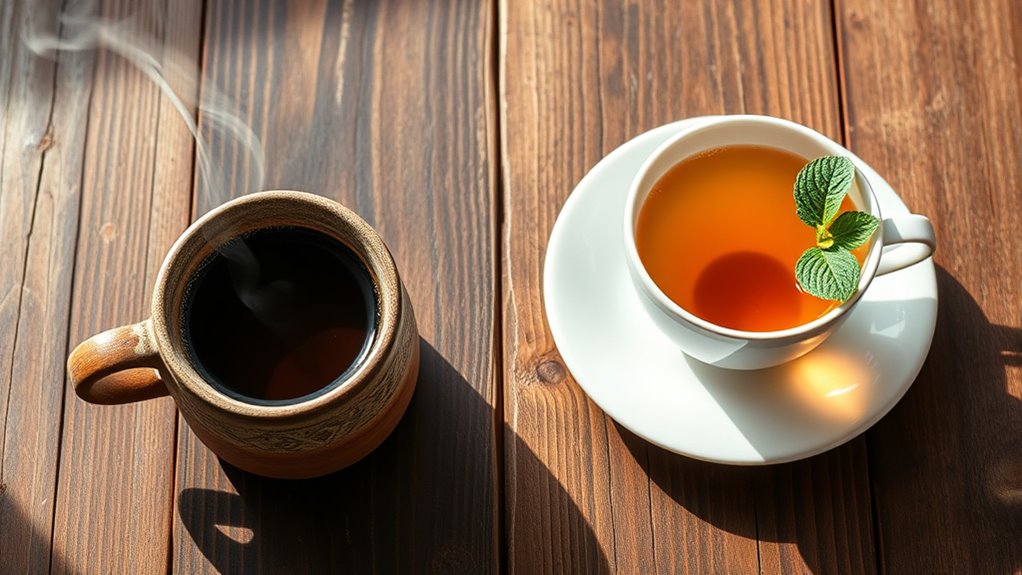
Have you ever wondered whether coffee or tea is the better choice for your morning boost? The answer often depends on what you’re after—whether it’s the caffeine kick, a sense of tradition, or simply the flavor you prefer. When considering caffeine content, coffee generally packs a stronger punch, with an average 95 milligrams per 8-ounce cup, compared to tea’s 20-60 milligrams, depending on the type. That means if you need a quick, powerful jolt to start your day, coffee might be your go-to. But it’s not just about the caffeine levels; cultural significance also plays a big role in your choice. Coffee has a storied history in Western countries, often symbolizing productivity and socialization, from bustling cafes in Italy to the morning routines of Americans. It’s become embedded in the fabric of modern work life, fueling countless mornings and meetings. Conversely, tea carries a deep cultural heritage in Asia, the Middle East, and parts of the UK. In countries like China and Japan, tea ceremonies are revered traditions that emphasize mindfulness and respect. In Britain, afternoon tea is a cherished social ritual, evoking a sense of elegance and tradition. These cultural significances shape how people perceive and consume these beverages, influencing your own habits and preferences. Additionally, the technology behind brewing methods influences how these drinks are prepared and enjoyed, impacting flavor and experience.
Your choice might also be influenced by the social context. Coffee shops often serve as hubs for social interaction, business meetings, or even solo reflection, creating a vibrant atmosphere that invites conversation. Tea, on the other hand, can evoke a more tranquil, reflective mood, often linked to calmness and mindfulness. Different cultures have developed unique rituals around each drink, reinforcing their importance beyond mere caffeine delivery. These traditions add layers of meaning, making the decision between coffee and tea more than just a matter of caffeine content. It’s about how each beverage connects you to a history, a community, or a way of life.
Ultimately, whether you prefer coffee or tea, your choice is shaped by both the physiological effects and the cultural stories that surround each drink. Coffee’s robust caffeine content offers an immediate boost, while its cultural significance often associates it with energy and productivity. Tea’s gentler caffeine levels and rich tradition promote calmness and reflection. Both have evolved into symbols of different lifestyles and values across the world. So, the next time you reach for your morning beverage, consider not only what you need physically but also the cultural story you want to be part of.
best coffee beans for brewing
As an affiliate, we earn on qualifying purchases.
As an affiliate, we earn on qualifying purchases.
Frequently Asked Questions
Which Has More Antioxidants, Coffee or Tea?
You might wonder which drink has more antioxidants, coffee or tea. Generally, tea tends to have higher antioxidant levels, especially green and white teas, offering notable health benefits like improved heart health and reduced inflammation. Coffee also provides antioxidants, but in slightly lower amounts. Your choice depends on your health goals and taste preference, but both drinks contribute valuable antioxidants that support your overall well-being.
How Did Coffee and Tea Influence Global Trade Routes?
You might think trade routes just connect places, but coffee and tea reshaped them. Their demand fueled colonial influence, prompting Europeans to establish new trade routes across oceans. Coffee’s rise in the Middle East and Europe expanded global commerce, while tea’s popularity in Britain led to the growth of trade networks to China and India. These beverages didn’t just energize people—they transformed economies and shaped the world’s interconnected trade system.
Are There Health Risks Associated With Excessive Caffeine Intake?
You should know that excessive caffeine intake can lead to health effects like insomnia, increased heart rate, and anxiety. It also raises dependency concerns, making it tough to cut back without withdrawal symptoms. While moderate caffeine consumption is generally safe, too much can disrupt your sleep and cause jitteriness. Be mindful of your intake to enjoy the benefits without risking your health or becoming overly dependent.
Did Coffee or Tea Influence Cultural Rituals More Significantly?
Like two sides of the same coin, coffee and tea each shape cultural rituals differently. You find tea deeply woven into Asian ceremonies, symbolizing harmony and tradition, while coffee fuels Western social rituals, sparking creativity and connection. Both hold immense cultural significance, inspiring ritual adaptations over centuries. Tea’s calming influence and coffee’s vibrant energy have left indelible marks on society, making each beverage a cornerstone of cultural identity worldwide.
How Have Decaffeinated Versions Impacted Consumption Trends?
Decaf popularity has surged as more people seek caffeine reduction without sacrificing their daily routines. You’re likely to notice increased options in cafes and stores, catering to health-conscious consumers. This trend reflects a shift toward moderation and wellness, allowing you to enjoy the ritual of coffee or tea without the jitters or sleep disruptions. Decaffeinated drinks now play a crucial role in changing consumption habits worldwide, making them more accessible and appealing.
traditional tea ceremony set
As an affiliate, we earn on qualifying purchases.
As an affiliate, we earn on qualifying purchases.
Conclusion
So, whether you prefer the bold kick of coffee or the calming embrace of tea, remember you’re caught in a centuries-old dance for the world’s caffeine heart. Each sip tells a story of conquest, culture, and comfort, like two rival ships sailing the same seas. Ultimately, it’s your choice to navigate this delicious rivalry—your daily ritual, your personal legend. Embrace the brew that fuels your spirit, for in this caffeinated voyage, you’re the captain of your own story.
electric coffee grinder
As an affiliate, we earn on qualifying purchases.
As an affiliate, we earn on qualifying purchases.
loose leaf tea set
As an affiliate, we earn on qualifying purchases.
As an affiliate, we earn on qualifying purchases.