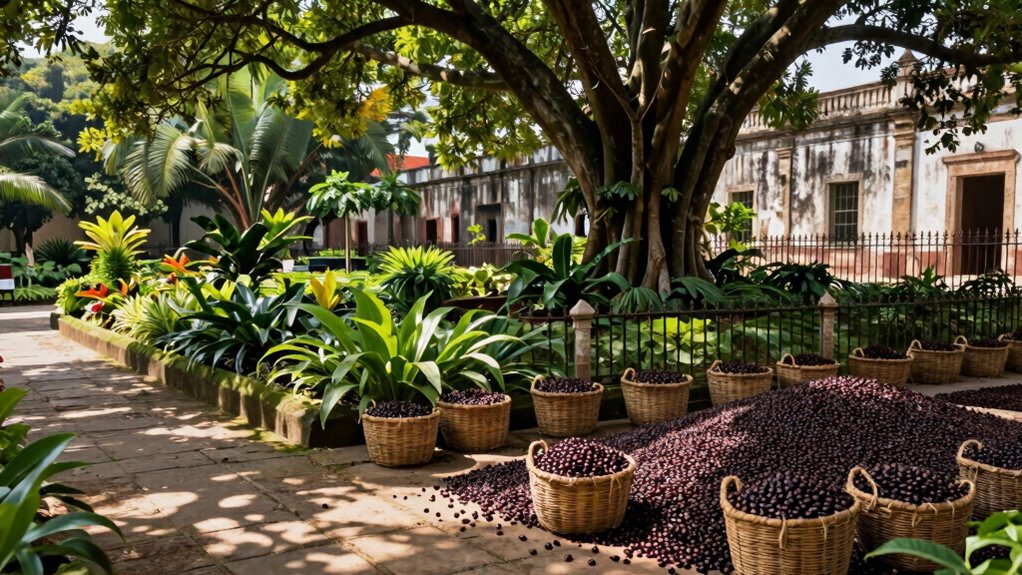

Colonial botanic gardens served as key hubs for the spread of coffee, allowing you to see how plants and power traveled together. These gardens cultivated, studied, and exchanged coffee plants within imperial trade routes, turning them into “living laboratories.” They helped domesticate wild coffee into profitable crops and guaranteed rapid plant transfer across regions. As you explore further, you’ll discover how these gardens shaped landscapes, biodiversity, and the global coffee culture entwined with imperial ambitions.

Get coffee and tea gear delivered free — and shop member deals
- Fast, free delivery on millions of items
- Access to Prime Big Deal Days deals on October 6–7
- Prime Video, Amazon Music and more included
Key Takeaways
- Colonial botanic gardens served as centers for experimenting with and domesticating coffee plants, reflecting imperial ambitions.
- Trade routes facilitated the swift movement of coffee seeds and plants, linking colonies to European markets.
- Plant domestication improved coffee varieties for different environments, supporting global cultivation and economic interests.
- Gardens and trade networks together enabled the rapid spread of coffee from regional origins to worldwide markets.
- The spread of coffee via gardens and trade exemplifies how plant migration was intertwined with colonial power and expansion.
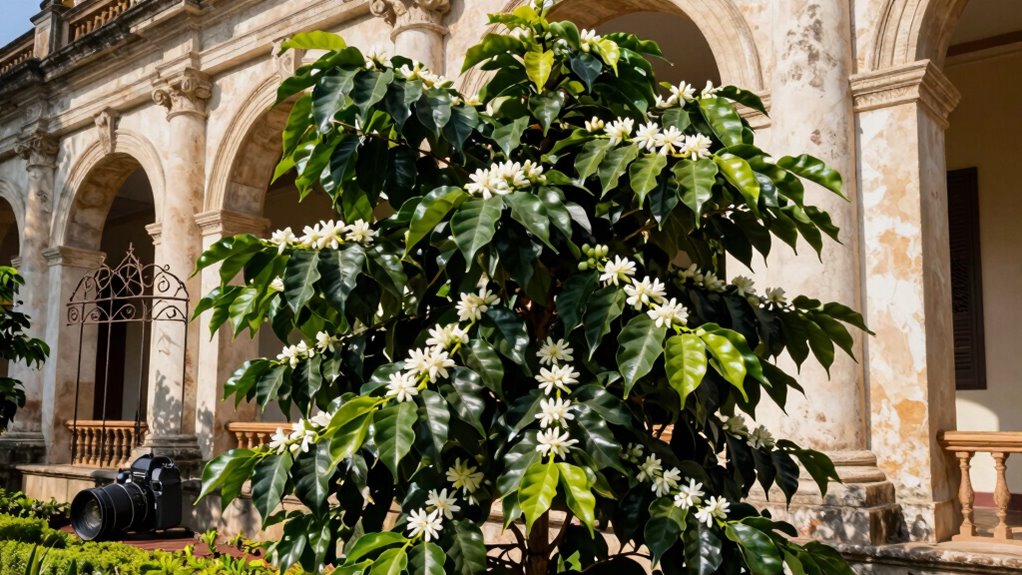
Coffee’s journey from a humble bean to a global commodity is closely intertwined with the history of colonial botanic gardens. As European powers expanded their empires, they relied heavily on trade routes to transport valuable plants across continents. These routes weren’t just pathways for goods; they were corridors of knowledge, power, and plant exchange. Colonial botanic gardens became key sites where plants like coffee were cultivated, studied, and domesticated. These gardens served as living laboratories, allowing colonists and scientists to experiment with plant varieties, understand their growth needs, and develop methods to produce them more efficiently. The movement of coffee plants from their native Ethiopia to other parts of the world was driven by these trade routes, which linked coffee-producing regions to European markets.
Plant domestication played an essential role in this process. Once coffee plants arrived in new territories, colonists set about cultivating them on a larger scale, transforming wild plants into cultivated crops. This domestication process involved selecting the best plants for flavor, yield, and hardiness, which was often done within the controlled environments of colonial gardens. These gardens not only protected plants from pests and harsh weather but also allow for experimentation with different varieties. Over time, this led to the development of coffee strains specially suited to regions like the Caribbean, Central America, and Southeast Asia. The domestication of coffee was a strategic move—an effort to secure a reliable, profitable crop that fueled the growth of imperial economies. Plant domestication played a crucial role in ensuring the success of coffee cultivation across diverse environments.
Throughout this history, trade routes and plant domestication worked hand-in-hand. The routes ensured that coffee seeds and plants moved swiftly across oceans, while domestication efforts optimized the plants for their new environments. The global spread of coffee was facilitated by these interconnected processes, transforming coffee from a regional specialty into a worldwide commodity. Colonial powers established extensive networks to export coffee beans, often using the very gardens where the plants had been first cultivated and experimented with. These gardens became symbols of colonial ambition, showcasing how plants and power traveled together. Additionally, these gardens helped shape local landscapes and economies, influencing biodiversity in many regions. The spread of coffee was also influenced by the colonial exchange of agricultural practices and plant varieties, which contributed to its adaptability and success worldwide. As a result, the history of coffee reflects a broader pattern of plant migration driven by human enterprise and imperial ambitions. Today, the global coffee industry still bears the marks of this complex history—its roots deeply embedded in the trade routes and domestication efforts pioneered during the colonial era.
As an affiliate, we earn on qualifying purchases.
Frequently Asked Questions
How Did Colonial Powers Control Coffee Plant Distribution Globally?
You see, colonial powers controlled coffee plant distribution through plant trafficking during colonial trade. They carefully moved coffee seedlings from regions where it thrived to their colonies, often secretly smuggling plants to prevent local competitors from gaining control. This strategic plant trafficking allowed them to establish coffee plantations worldwide, consolidating their economic and political power. By controlling the initial plant distribution, they guaranteed dominance over coffee production and trade routes globally.
Were Indigenous Peoples Involved in the Colonial Botanic Gardens’ Plant Exchanges?
You might imagine indigenous peoples actively participating in botanical exchanges, sharing their knowledge with colonists. For example, in the case of the Pacific Islands, indigenous communities contributed their understanding of local plants, fostering cultural exchange and aiding colonial scientists. Their Indigenous knowledge helped identify valuable species, like breadfruit, which was later cultivated globally. This involvement highlights how indigenous peoples played a vital role in plant exchanges, shaping the history of botanical gardens and colonial interests.
What Role Did Botanists Play in the Spread of Coffee Cultivation?
Botanists played a vital role in spreading coffee cultivation by experimenting with plant hybridization to improve yields and resilience. They often engaged in botanical espionage, secretly acquiring coffee plants from different regions to expand cultivation. You see, their efforts helped introduce coffee to new colonies, transforming local economies. Their work in plant hybridization and covert exchanges accelerated coffee’s global spread, making it a essential commodity in colonial powers’ economic strategies.
How Did Colonial Gardens Influence Local Ecosystems and Native Plants?
Colonial gardens often introduced non-native plants, which can disrupt local ecosystems and hinder native plant adaptation. You might notice that invasive species from these gardens outcompete native flora, altering habitats and impacting biodiversity. This ecological impact can lead to reduced resilience of native ecosystems, making it harder for indigenous plants to thrive. By understanding this, you realize how colonial influence shaped local environments, often with lasting effects on native plant communities.
Were There Any Conflicts Over Coffee Plant Ownership Among Colonies?
You’ll find that plant ownership disputes, especially over coffee, sparked colonial trade conflicts. In the 18th century, Britain and France fought over control of coffee plants in their colonies, leading to fierce disagreements. These conflicts weren’t just about plants—they reflected broader power struggles. Coffee’s value, estimated at over 4 billion dollars today, made it a prime target in colonial rivalries, fueling disputes that shaped global trade.
Conclusion
As you ponder the powerful pairing of plants and politics, remember how coffee’s cultivation and colonial gardens crafted a complex, connected world. From fertile fields to flourishing forests, these botanical bonds bound nations with threads of trade, tradition, and transformation. Recognize how these lush landscapes, layered with history, continue to shape societies today. Embrace this entwined existence, where plants and power pulse together, painting a perpetual portrait of progress, passion, and colonization’s enduring imprint.
Fall Picks
fall essentials
As an affiliate, we earn on qualifying purchases.