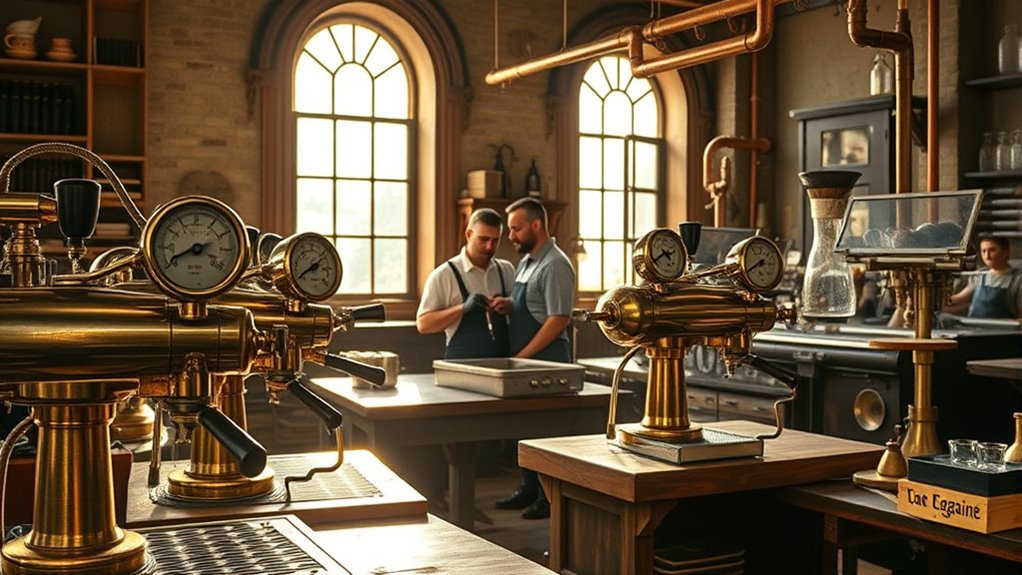

In Milan and Turin during the late 1800s, innovative inventors created early espresso machines that revolutionized coffee brewing. They focused on using high pressure to extract richer, stronger flavors quickly, moving beyond simple boiling methods. These machines often used steam pressure and piston mechanisms, though they were bulky and inconsistent. Their development laid the foundation for modern espresso technology, shaping the global coffee culture. Discover how these pioneering efforts changed coffee forever and set the stage for today’s advanced espresso brewing techniques.
Key Takeaways
- Early espresso machines originated in Milan and Turin during the late 19th century to produce rich, intense coffee quickly.
- Italian inventors focused on high-pressure extraction to develop machines that could produce thicker espresso shots.
- Initial machines used piston mechanisms and boiling elements, often bulky and inconsistent in performance.
- The innovations in Milan and Turin laid the foundation for modern espresso brewing technology.
- These early machines transformed coffee culture, making espresso a globally recognized and appreciated method of preparation.
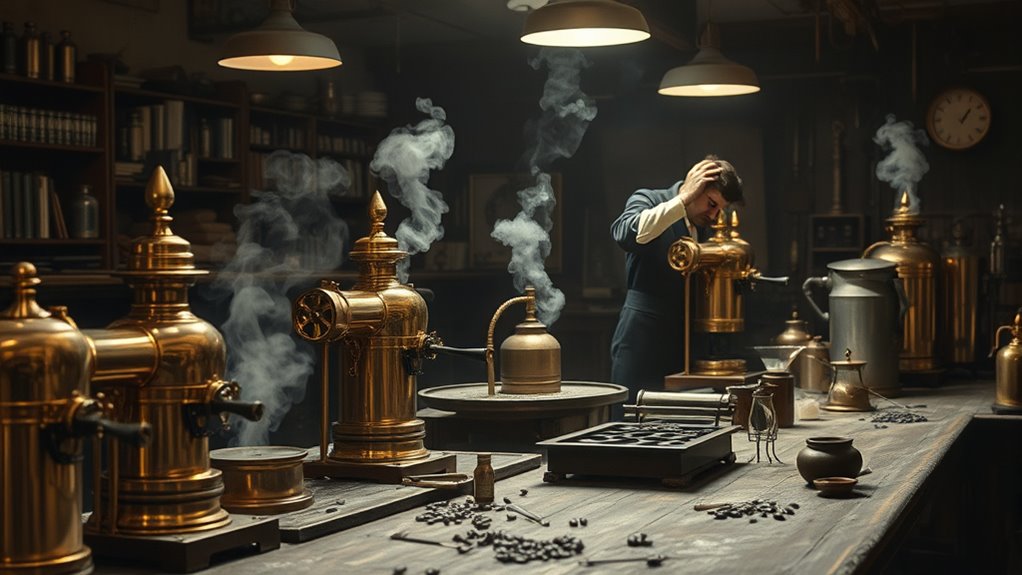
The birth of espresso revolutionized the way we enjoy coffee, transforming a simple beverage into an art form. To truly appreciate this innovation, you need to understand the history of coffee and how its brewing methods evolved over time. Coffee’s journey begins centuries ago in Ethiopia, where legend says a goat herder discovered its energizing effects. From those humble origins, coffee spread across the Arab world, where it was brewed using primitive methods like boiling grounds in water. For centuries, the traditional drip brewing and percolators remained dominant, but as demand grew, so did the desire for faster, more concentrated coffee.
In the 19th century, the evolution of brewing technology took significant strides. In Italy, particularly in Milan and Turin, inventors sought to develop a method that could produce a rich, intense espresso quickly. They experimented with various machines, aiming to extract flavors under high pressure—something that earlier brewing techniques couldn’t achieve efficiently. The earliest espresso machines used steam pressure to force hot water through tightly packed coffee grounds, resulting in a thicker, more robust shot. These innovations marked a turning point, leading to a new way to experience coffee’s depth and complexity.
As you explore the early machines, you’ll notice how they reflected the technological limitations and ingenuity of the time. The first commercial espresso machines appeared in the late 1800s, featuring piston mechanisms and boiling elements that could produce a concentrated shot in seconds. These machines weren’t perfect—some produced inconsistent results, and their design was often bulky and fragile. Yet, they laid the foundation for future developments. The drive to refine espresso brewing continued, with improvements like the introduction of better pressure regulation and more reliable heating systems. Italian inventors and entrepreneurs played a pivotal role during this period, pushing the boundaries of what coffee could be. Additionally, the pursuit of improved machine efficiency spurred further innovations, making espresso more accessible worldwide.
Frequently Asked Questions
How Did Espresso Influence Global Coffee Culture?
Espresso revolutionized your coffee rituals by making quick, rich, and intense brews a daily habit. Its popularity sparked global expansion, transforming coffee culture worldwide. You now enjoy espresso-based drinks like cappuccinos and lattes, shaping social interactions and café lifestyles everywhere. This small, powerful shot of coffee became a symbol of sophistication and efficiency, influencing how you start your day and connect with others across the globe.
Who Were the Key Inventors Behind Early Espresso Machines?
You should know that inventors like Angelo Moriondo, Luigi Bezzera, and Desiderio Pavoni played key roles in creating early espresso machines. These pioneers improved barista techniques and helped popularize coffee bean varieties suited for espresso, transforming coffee culture worldwide. Their innovations made it possible to brew rich, quick shots, inspiring baristas everywhere to perfect their craft and explore new flavors, shaping modern espresso experience.
What Were the Initial Challenges in Developing Espresso Technology?
You face challenges in developing espresso technology, mainly ensuring proper brewing pressure and machine durability. Achieving the right pressure needed for a rich, flavorful shot was tricky, often causing inconsistent results. Additionally, early machines struggled with durability, as they frequently broke down under high-pressure use. Overcoming these issues required innovations in design and materials, ultimately leading to the reliable, high-quality espresso machines we enjoy today.
How Did Milan and Turin Differ in Espresso Machine Innovation?
Imagine two chefs trying to perfect the same recipe; that’s how Milan and Turin approached espresso machine innovation. Milan focused on regional brewing styles, refining steam and pour mechanisms, while Turin pioneered mechanical innovations, creating compact, efficient machines. Turin’s designs, like the Rinaldo, revolutionized portability, whereas Milan prioritized flavor clarity. These regional differences shaped early espresso technology, making each city a unique chapter in coffee history.
What Materials Were Used in the First Espresso Machines?
You’ll find that the first espresso machines used materials like brass, copper, and steel, which provided durability and heat conductivity. Materials innovation focused on improving brewing precision, ensuring consistent pressure and temperature. These metals allowed for better control over extraction, resulting in richer flavors. As technology advanced, new materials emerged to enhance performance, but the core goal remained: achieving perfect espresso through precise material choices.
Conclusion
Just like a delicate seed grows into a vibrant flower, espresso’s journey from Milan and Turin to your cup is a story of innovation and passion. You’re now part of this rich tradition, savoring a brew that’s been carefully crafted through history’s twists and turns. Remember, every sip connects you to the pioneers who sparked this aromatic revolution. So, embrace the magic in your mug—it’s a small world, brewed perfectly for you.