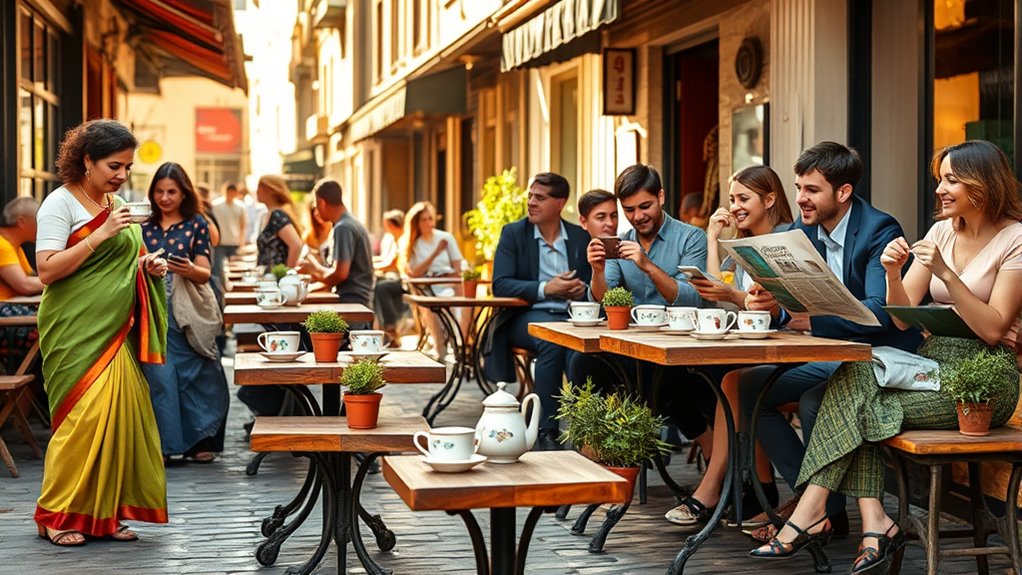

When visiting cafés worldwide, adapt to local customs like ordering at the counter in Italy, waiting for a server in France, or using precise gestures in Japan. Tipping varies—from 15-20% in the U.S. to no tips in Japan—so respect local traditions. Observe how locals interact, whether making eye contact or bowing, and follow their lead. If you’re curious about more ways to navigate these customs smoothly, keep exploring these cultural highlights.
Key Takeaways
- Adapt ordering methods to local customs, such as counter service in Italy or table service in France.
- Follow specific tipping practices, like 15-20% in the USA or no tip expected in Japan.
- Respect cultural norms, including eye contact, bowing, or language use, to show politeness.
- Observe local cues on whether service charges are included or tips are customary.
- Understanding and respecting local café etiquette fosters genuine connections and enhances the experience.
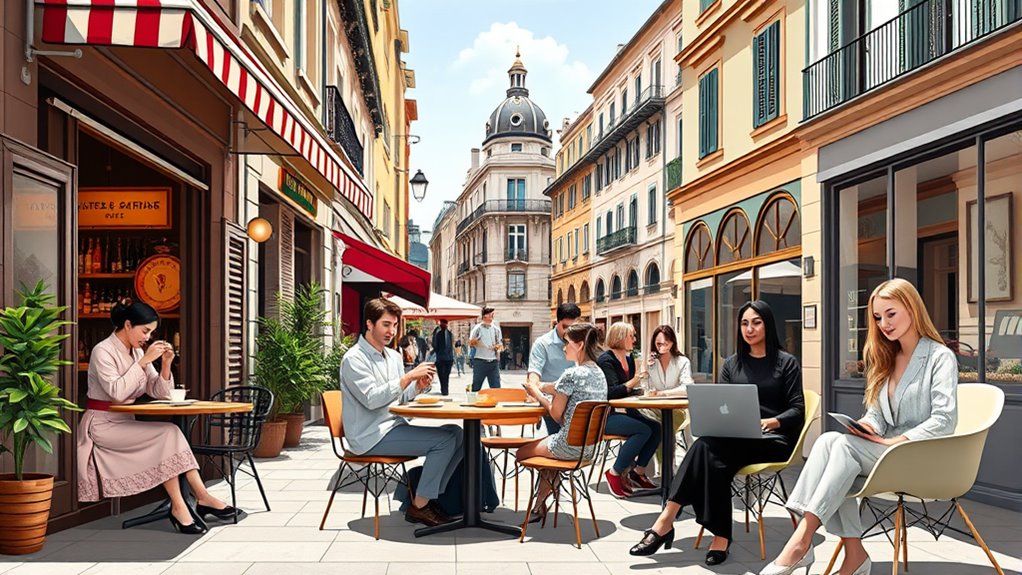
Cafés are more than just places to grab a drink—they’re cultural hubs where social norms and traditions vary widely around the world. When you step into a café abroad, you’ll quickly realize that how you order your coffee and handle tipping can differ considerably from what you’re used to. Understanding these customs helps you show respect and enjoy the local experience fully.
Cafés are cultural hubs where social norms and traditions vary worldwide, making understanding customs essential for respectful enjoyment.
In many countries, ordering customs are straightforward but vary in formality and style. For instance, in Italy, you’re expected to approach the counter and place your order directly, often with a simple “Un caffè, per favore.” It’s common to specify whether you want a espresso or a larger coffee, and sometimes, you’re expected to pay immediately afterward. Conversely, in places like France, you might sit at a table and wait for a server to come to take your order, which is considered more polite and relaxed. In Japan, ordering can be more precise; menus are often in Japanese, and you may need to use specific phrases or gestures. Whether you order at a counter or table, it’s essential to follow local etiquette, such as making eye contact or bowing slightly, to show politeness.
Tipping practices also differ widely around the world and can be a source of confusion for travelers. In the United States, tipping is almost mandatory, with 15-20% added to your bill for good service. In contrast, in Japan, tipping is uncommon and sometimes even considered rude, as excellent service is viewed as part of the job. In many European countries like France and Germany, rounding up the bill or leaving a few euros is customary, but it’s not obligatory. In Scandinavian countries, service charges are often included in the bill, so additional tips aren’t expected. Knowing these practices guarantees you don’t offend staff or appear ignorant of local customs.
Being aware of local ordering customs and tipping practices allows you to navigate café visits smoothly and respectfully. It shows cultural sensitivity and enriches your experience, helping you connect more genuinely with locals. Whether you’re ordering a quick espresso in Italy or enjoying a leisurely café visit in France, understanding these nuances makes your interactions more authentic and enjoyable. So, next time you sit down at a café abroad, take a moment to observe how others order and tip—these small gestures reveal a lot about the local culture and ensure your visit is both respectful and memorable. Additionally, being aware of cultural norms regarding service can help prevent misunderstandings and enhance your overall experience.
Frequently Asked Questions
How Do Tipping Customs Vary in Different Countries?
Tipping customs vary greatly depending on the country you’re in. In the US, tipping etiquette usually involves leaving 15-20%, while in Japan, tips are often not expected and can even be considered rude. In European countries like France, a service charge is often included, but small tips are appreciated. Always check country-specific customs to make certain you follow local tipping etiquette and avoid misunderstandings.
What Are the Typical Dress Codes for Cafés Worldwide?
You usually don’t need formal attire at cafés worldwide; most prefer casual attire, making it easy for you to relax and enjoy your time. In some places, cultural dress is appreciated, especially in traditional settings or local spots. Always check the café’s vibe first, but generally, you can wear comfortable, casual clothes. Just avoid overly revealing or inappropriate outfits to make certain of respectful and smooth interactions.
Are There Specific Greetings or Gestures to Use When Entering a Café?
When entering a café, you should follow cultural greetings and gesture etiquette. In many places, a simple nod or smile suffices, while in others, a handshake or a cheek kiss might be customary. Observe locals first, then mirror their gestures to show respect. Avoid overly formal gestures unless the culture demands it. Being attentive to these subtle cues helps you make a positive impression and shows your appreciation for local customs.
How Do Café Etiquette Rules Differ Between Urban and Rural Areas?
Remember, “When in Rome, do as the Romans do.” In urban areas, you’ll notice more formal local customs and organized seating arrangements, often with designated spots. In rural settings, people are more relaxed; seating is usually informal, and customs are simpler. You adapt by observing and following local cues. Respecting these differences shows you value the community’s traditions, making your café experience more genuine and respectful.
What Are the Unspoken Rules for Sharing Tables in Busy Cafés?
When sharing tables in busy cafés, you should follow unspoken seating etiquette by making eye contact and offering a friendly smile before sitting down. If the table is already occupied, ask politely if you can join or wait for a space. Respect the other person’s personal space, keep conversations considerate, and avoid occupying the entire table. These unspoken rules promote comfortable table sharing and courteous interactions.
Conclusion
No matter where you find yourself sipping coffee, embracing local café etiquette lets you enjoy the experience even more. A little nod to customs shows respect and opens doors to friendly conversations. Remember, every culture has its unique charm—so relax, be curious, and let the shared love of coffee bring you closer. After all, these small gestures turn a simple drink into a delightful cultural adventure you’ll cherish.