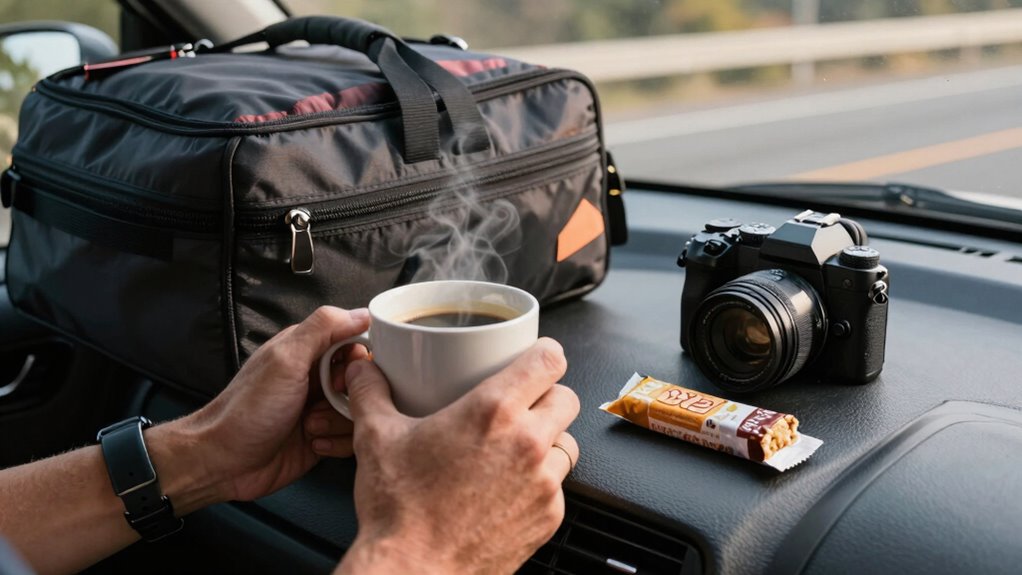

To manage caffeine on long travel days without crashing, limit your intake to mornings or early afternoons so your body can process it before bedtime. Balance caffeine with good hydration using water, herbal teas, or electrolyte drinks to stay alert naturally. Prioritize rest, take short naps, and create a sleep-friendly environment to avoid fatigue. Adjust your habits based on how your body reacts, and you’ll maintain energy with fewer crashes. Keep exploring for more tips on staying energized throughout your journey.

Get coffee and tea gear delivered free with Prime
- Fast, free delivery on millions of items
- Prime Video, Amazon Music and more included
- Member-only deals all year
Key Takeaways
- Limit caffeine intake to morning or early afternoon to prevent sleep disruption and energy crashes later.
- Stay well-hydrated with water or herbal teas to maintain energy without relying solely on caffeine.
- Incorporate short naps or rest periods to replenish energy and reduce dependence on stimulants.
- Adjust caffeine consumption based on personal response and avoid caffeine close to rest periods.
- Prioritize good sleep hygiene and create a relaxing environment to support rest and overall well-being.
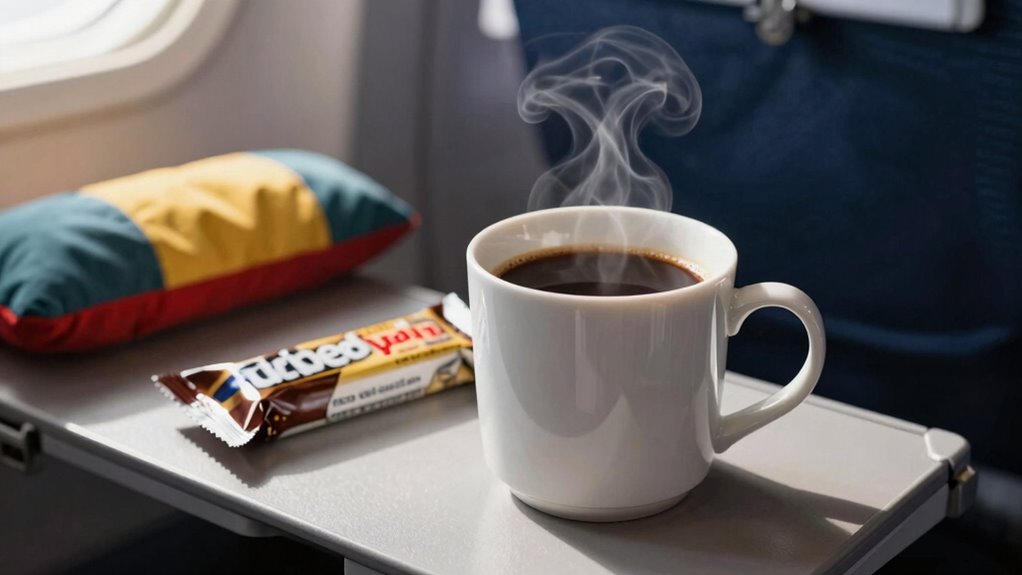
Long travel days can be exhausting, and many travelers rely on caffeine to stay alert and focused. While a cup of coffee or an energy drink might seem like the perfect solution to beat fatigue, overdoing it can backfire, leaving you feeling jittery or crashing just when you need to stay sharp. To manage caffeine effectively, you need to pay attention to how it impacts not only your immediate alertness but also your sleep quality afterward. Caffeine can interfere with your ability to fall asleep or stay asleep, especially if you consume it later in the day. To avoid this, try to limit your caffeine intake to the morning hours or early afternoon, giving your body enough time to process it before bedtime.
Limit caffeine to mornings to improve sleep and stay alert during long travel days.
In addition to mindful caffeine consumption, focusing on hydration strategies can make a big difference in maintaining your energy levels. Long travel days often mean dehydration, which leads to fatigue and sluggishness. Drinking plenty of water throughout your journey helps keep your body functioning best and can even reduce the need for excessive caffeine. If you’re feeling sluggish, sometimes a glass of water can boost your alertness more healthily than another cup of coffee. You might also consider herbal teas or electrolyte-infused drinks, which can keep you hydrated without adding unnecessary caffeine or sugar.
Balancing caffeine with good sleep quality is vital. When you’re on the move, it’s tempting to push through the day, but neglecting rest will only increase your reliance on caffeine and diminish your overall energy. Try to create a sleep-friendly environment, even if it’s just for a short nap or a few hours of rest in a comfortable setting. Avoid consuming caffeine right before these rest periods, as it can interfere with your ability to relax. Instead, prioritize good sleep hygiene by keeping your surroundings quiet and dark, which will help your body recover and prepare you for the next leg of your journey. Additionally, understanding how caffeine metabolism varies from person to person can help you tailor your intake more effectively.
Ultimately, managing caffeine on long travel days isn’t just about avoiding crashes; it’s about supporting your overall well-being. Combining moderate caffeine intake with proper hydration and quality sleep can help you stay alert without sacrificing your health or comfort. By paying attention to how your body responds and adjusting your habits accordingly, you’ll travel smarter, feel better, and arrive at your destination ready to enjoy your trip.
As an affiliate, we earn on qualifying purchases.
Frequently Asked Questions
How Does Caffeine Affect Sleep Quality During Travel?
Caffeine can interfere with your sleep quality during travel by causing sleep disruption, making it harder to fall asleep or stay asleep. It may also increase anxiety, which can further hinder restful sleep. If you consume caffeine too late in the day, you might wake up feeling groggy or unrested. To minimize these effects, try limiting caffeine intake before bedtime and opt for decaffeinated drinks when possible.
Are There Any Natural Alternatives to Caffeine for Alertness?
Ever feel like you’re chasing a spark? Herbal teas and adaptogenic herbs can help boost your alertness naturally. Green or ginseng tea offers gentle caffeine-like energy without the crash, while adaptogenic herbs like ashwagandha and rhodiola reduce fatigue and support focus. These alternatives work with your body to enhance alertness, making your travel smoother without the jitters or crash associated with caffeine.
What’s the Ideal Amount of Caffeine for Long Travel Days?
For long travel days, aim for about 200-300 mg of caffeine, roughly two to three cups of coffee, to boost alertness without disrupting sleep regulation later. You should also consider your caffeine tolerance; if you’re sensitive, stick to the lower end. Spread your intake throughout the day to maintain focus and avoid crashes, and listen to your body’s signals to prevent overdoing it.
Can Timing Caffeine Intake Reduce Travel Fatigue?
Timing your caffeine intake can indeed reduce travel fatigue. You should consume caffeine strategically to stay alert without causing sleep disruption later. For example, have caffeine early in the day or before a key activity, but avoid it too late, which can lead to sleep issues and increase caffeine dependence. Proper timing helps you maintain energy levels while minimizing the risk of crashing or disrupting your sleep, making your travel more comfortable.
How Does Hydration Influence Caffeine’s Effects on Alertness?
Hydration balance greatly influences caffeine’s effects on alertness. When you’re well-hydrated, caffeine absorption is more efficient, helping you stay alert longer. Dehydration, however, can diminish caffeine’s effectiveness and cause fatigue or headaches. To maximize alertness, drink plenty of water alongside caffeine, especially during long travel days. This approach guarantees your body absorbs caffeine properly, maintains hydration, and keeps you alert without the crash or dehydration symptoms.
Conclusion
Remember, moderation is key—too much caffeine can leave you crashing just when you need your energy the most. By pacing your intake, staying hydrated, and taking breaks, you can keep your energy steady and enjoy your journey. As the saying goes, “A little goes a long way.” Stay mindful of your limits, and you’ll arrive refreshed, not drained, ready to make the most of your travel adventures.
Halloween Picks
halloween
As an affiliate, we earn on qualifying purchases.