The caffeine nap works because you drink coffee about 20 minutes before lying down for a quick, 20-minute rest, allowing caffeine to enter your bloodstream just as you wake up in light sleep. This combined approach boosts alertness faster and more effectively than either method alone, especially during mid-afternoon slumps or long work sessions. To discover how to get the most out of this energizing trick, you’ll want to learn more about its techniques and benefits.
Key Takeaways
- Consuming caffeine about 20 minutes before a short nap allows it to activate as you wake up, boosting alertness.
- The 20-minute nap period aligns with light sleep stages, preventing sleep inertia and optimizing refreshment.
- The combination of caffeine and a brief nap creates a synergistic effect, more effectively increasing alertness than either alone.
- Timing is crucial: caffeine should be taken before lying down, and naps should be brief to avoid disrupting nighttime sleep.
- This strategy helps combat fatigue quickly during mid-afternoon slumps or demanding tasks, enhancing focus and productivity.
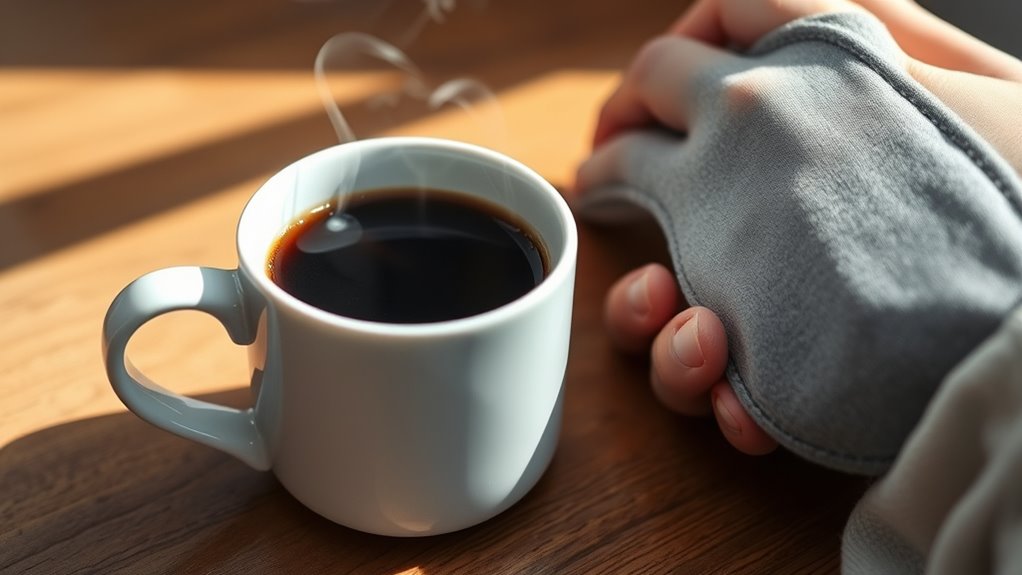
A caffeine nap is a quick and effective way to boost your alertness by combining two simple strategies: consuming caffeine and then taking a short nap. This approach taps into proven sleep strategies and energy management techniques to help you fight off fatigue and stay sharp. When your energy dips during the day, instead of reaching for sugar or energy drinks, a caffeine nap offers a smarter, more sustainable solution. It’s especially useful when you need a rapid mental reset, whether you’re working on a tight deadline or trying to stay focused during long hours.
The magic of a caffeine nap lies in timing. You want to drink your caffeinated beverage—typically coffee or tea—about 20 minutes before lying down. This window is vital because caffeine takes roughly that long to reach your bloodstream and start exerting its effects. Once you’ve consumed caffeine, you settle in for a quick, 20-minute nap. During this brief rest, your body enters a light sleep stage, which helps refresh your mind and muscles without leaving you groggy. When you wake up, the caffeine’s effects kick in, amplifying your alertness and energy levels. This synergy creates a powerful boost that’s often more effective than either strategy alone.
Drink caffeine 20 minutes before a quick 20-minute nap for an effective energy boost.
In terms of energy management, a caffeine nap is a strategic move. It helps you conserve mental and physical resources by maximizing sleep efficiency in a very short period. Instead of risking sleep inertia—that sluggish, disoriented feeling that can follow longer naps—you keep your rest brief and targeted. The caffeine ensures that as your body exits a light sleep stage, your brain is already getting a jolt of stimulant power. This combination allows you to manage your energy more effectively throughout the day, especially during those inevitable mid-afternoon slumps or before demanding tasks. Additionally, understanding the contrast ratio of your environment and equipment can further optimize your alertness during these short rests and subsequent work sessions.
Using this technique also aligns with better sleep strategies. It encourages short, controlled naps that prevent your sleep cycle from being disrupted later. Plus, it’s a practical way to incorporate rest into your day without sacrificing too much time or quality of sleep at night. By managing your energy with a caffeine nap, you’re actively taking control of fatigue rather than passively succumbing to it. It’s a simple but powerful tool to maintain productivity, focus, and overall alertness, especially when you’re pressed for time or need an immediate mental boost. Just remember, the key is to keep the nap brief and the caffeine timing precise, and you’ll harness the full potential of this effective energy management technique.
Frequently Asked Questions
Can the Caffeine Nap Improve Athletic Performance?
Yes, the caffeine nap can improve your athletic performance by boosting alertness and reducing fatigue. It works best if your caffeine tolerance isn’t high, so you get a quick energy lift without diminishing effects. However, it might affect your sleep quality if done too late or too often, which could hinder recovery. Use this technique wisely to enhance your workouts without compromising your rest.
How Long Does the Alertness From a Caffeine Nap Last?
Imagine you’re riding a horse through a modern city—your alertness duration from a caffeine nap typically lasts about 1 to 3 hours. The effects are usually quick to kick in within 20 minutes, but the duration effects vary based on your metabolism and caffeine intake. For ideal alertness duration, keep your nap around 20 minutes, as longer naps might cause grogginess and reduce overall alertness.
Are There Any Side Effects of Regular Caffeine Naps?
If you regularly do caffeine naps, you might develop caffeine dependency, making it harder to stay alert without caffeine. Additionally, frequent naps combined with caffeine can disrupt your sleep patterns, leading to sleep disruption and reduced sleep quality. Over time, this can cause fatigue and decreased overall health. To avoid these side effects, it’s best to use caffeine naps occasionally and maintain a consistent sleep schedule.
Is the Caffeine Nap Suitable for Everyone, Including Sensitive Individuals?
Sure, caffeine naps aren’t for everyone, especially if you’re sensitive to caffeine or have unique reactions. You might think they’re a miracle, but for some, caffeine sensitivity causes jitters or trouble sleeping. Individual differences mean it’s worth testing carefully—start with small doses and short naps. If you notice adverse effects, skip the caffeine nap altogether. It’s all about knowing your body and listening to what it tells you.
How Does the Timing of the Nap Affect Its Effectiveness?
You’ll find that ideal timing and nap duration are key to making your caffeine nap effective. Aim to nap about 20 minutes after drinking caffeine, when the stimulant peaks in your bloodstream. Keep your nap short—around 20 minutes—to avoid grogginess and maximize alertness. If you nap too long, you risk deep sleep, which can leave you feeling worse. Timing and duration together boost your energy efficiently.
Conclusion
So, next time you’re feeling a bit sluggish, consider the gentle magic of a caffeine nap. It’s like giving your tired self a little wink and a cozy hug, blending alertness with rest. Just remember, a quick recharge can turn your day around without any fuss. Embrace this simple trick, and let it whisper softly that feeling good is just a short pause away. Sometimes, the best solutions are the sweetest little secrets you carry close.