To make a strong, balanced Vietnamese phin coffee, use medium-coarse grounds and adjust the tamping pressure to control water flow. Brew slowly to extract rich flavors and aroma, allowing full-bodied notes of chocolate, caramel, and roasted nuts to develop. Add more grounds or extend the brewing time for a bolder cup, or reduce them for a lighter experience. Mastering these techniques helps you craft the perfect cup, and discovering each step reveals even greater depth.

Get coffee and tea gear delivered free with Prime
- Fast, free delivery on millions of items
- Prime Video, Amazon Music and more included
- Member-only deals all year
Key Takeaways
- Use medium to coarse grind size and proper tamping to ensure optimal extraction for a strong, balanced flavor.
- Adjust brew time and coffee-to-water ratio to achieve the desired intensity and maintain flavor harmony.
- Steep slowly with consistent water flow to highlight coffee oils and complex notes such as chocolate and caramel.
- Incorporate controlled brewing techniques to balance boldness with subtle sweetness and minimal bitterness.
- Master proper technique and attention to detail to craft a rich, nuanced cup that embodies Vietnamese coffee craftsmanship.
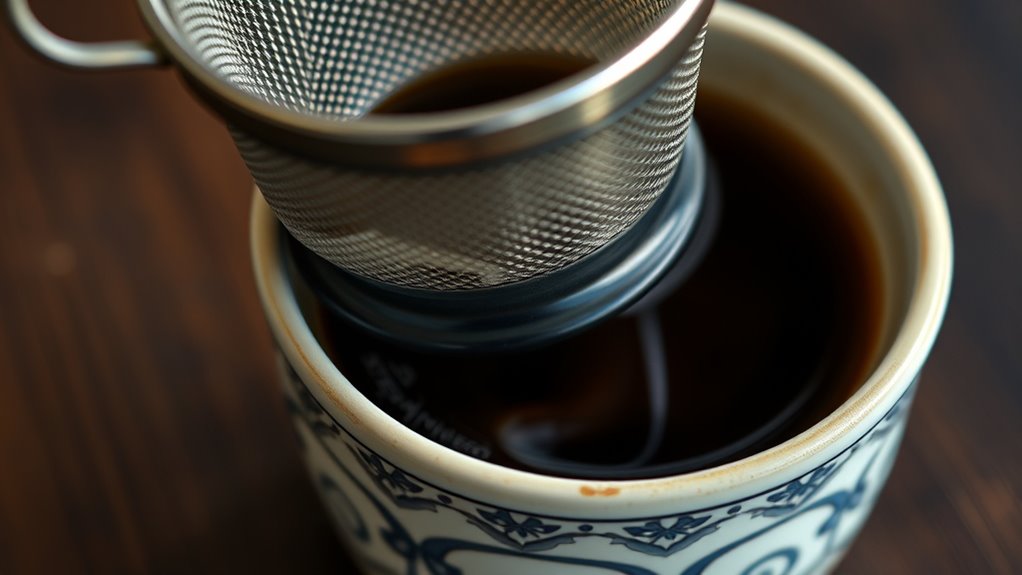
Have you ever wondered what makes Vietnamese coffee so uniquely rich and flavorful? It all comes down to the brewing techniques used and the way they shape the flavor profiles. When you brew with a Vietnamese phin, you’re engaging in a method that emphasizes slow extraction, allowing the coffee’s natural oils and nuances to shine. Unlike quick brewing methods, the phin drips steadily, giving you time to experience a concentrated, robust cup. This technique results in a full-bodied flavor profile, characterized by bold, intense notes balanced with subtle sweetness and often a hint of bitterness. The process is simple but deliberate, and it’s this careful extraction that defines the distinctiveness of Vietnamese coffee.
Using a phin filter, you place a generous spoonful of dark roasted Vietnamese coffee into the chamber. As hot water slowly filters through the grounds, it releases a rich aroma and deep flavor, which then drips into your cup. The brewing technique emphasizes a slow, controlled process that accentuates the coffee’s inherent qualities. This method produces a concentrated brew that can be enjoyed as-is or combined with sweetened condensed milk for a luscious, creamy experience. The flavor profiles achieved through this process are complex—notes of chocolate, caramel, and roasted nuts often emerge, giving each cup a layered depth that’s hard to find with other brewing methods.
Because of the traditional design of the phin, you get a chance to control the strength of your brew. If you prefer a more intense flavor, you can add more coffee grounds or let it steep longer. For a lighter cup, use fewer grounds or shorten the brewing time. This flexibility allows you to tailor each cup to your taste, ensuring you get a personalized experience every time. The slow drip also allows the coffee to develop a richer aroma, making each sip more satisfying.
Mastering the brewing techniques with a Vietnamese phin is about understanding how each step influences the flavor profiles. From the grind size—usually a medium to coarse grind—to the tamping pressure, every detail impacts the final taste. When done right, you’ll enjoy a balanced, strong cup that embodies the essence of Vietnamese coffee craftsmanship. The process may be simple, but the results are anything but ordinary. With patience and attention to detail, you can craft a coffee experience that’s as rich and nuanced as the culture it comes from. Recognizing the importance of proper extraction can elevate your brewing to new levels of flavor.
As an affiliate, we earn on qualifying purchases.
Frequently Asked Questions
How Do I Choose the Right Coffee Beans for My Phin?
To choose the right coffee beans for your phin, start by exploring different coffee bean varieties like robusta and arabica to find your preferred flavor profile. Consider the roasting levels—darker roasts give a stronger, bolder taste, while lighter roasts offer brighter, more nuanced flavors. Experiment with these options to discover which combination delivers the balanced, strong cup you enjoy most. Always opt for fresh beans for the best brewing results.
What Is the Ideal Water Temperature for Brewing Vietnamese Coffee?
You should aim for a water temperature of about 195-205°F (90-96°C) for brewing Vietnamese coffee. This range ensures maximum extraction, giving you a strong, balanced cup with consistent flavor. Using water that’s too hot can make the coffee bitter, while too cool can result in weak extraction. Maintaining this ideal temperature helps you achieve brewing consistency, so every cup delivers that rich, satisfying taste you crave.
Can I Make Iced Vietnamese Coffee With a Phin?
You can absolutely make iced Vietnamese coffee with a phin. Imagine pouring rich, hot coffee over a glass filled with ice, instantly transforming the intense coffee flavor into a cool, invigorating sip. This brewing technique preserves the boldness while delivering a chilled experience. As you brew, the slow drip extracts the perfect balance of flavors, making your iced coffee both satisfying and uniquely Vietnamese. It’s a simple, delicious twist on traditional methods.
How Do I Clean and Maintain My Phin Filter?
To keep your phin filter in top shape, regularly perform filter maintenance by rinsing it after each use. Use warm water and a soft brush to remove coffee oils and residue, avoiding soap to prevent flavor contamination. Cleaning tips include soaking the filter occasionally in vinegar or a descaling solution to remove mineral buildup. Dry it thoroughly before storing to prevent rust and make sure your coffee always tastes fresh and balanced.
Are There Traditional Vietnamese Coffee Recipes I Should Try?
Did you know that Vietnamese iced coffee, made with traditional brewing techniques, has become popular worldwide? You should definitely try recipes like cà phê sữa đá, which combines strong coffee flavor profiles with sweetened condensed milk. Another favorite is egg coffee, blending rich, creamy textures with robust coffee. These recipes showcase authentic Vietnamese brewing methods, offering you a delightful taste experience right at home. Give them a shot for an authentic flavor adventure!
Conclusion
Explore the delightful dance of drip and flavor with your Vietnamese Phin. By mastering the method, you’ll make marvelously balanced brews that boast boldness and brightness. With patience and precision, you’ll produce perfect cups that please your palate and impress your friends. Remember, practice paves the path to perfection. So, savor every sip, stay steady, and enjoy the stunning symphony of strength and serenity in each carefully crafted cup. Cheers to your coffee journey!
Halloween Picks
halloween
As an affiliate, we earn on qualifying purchases.