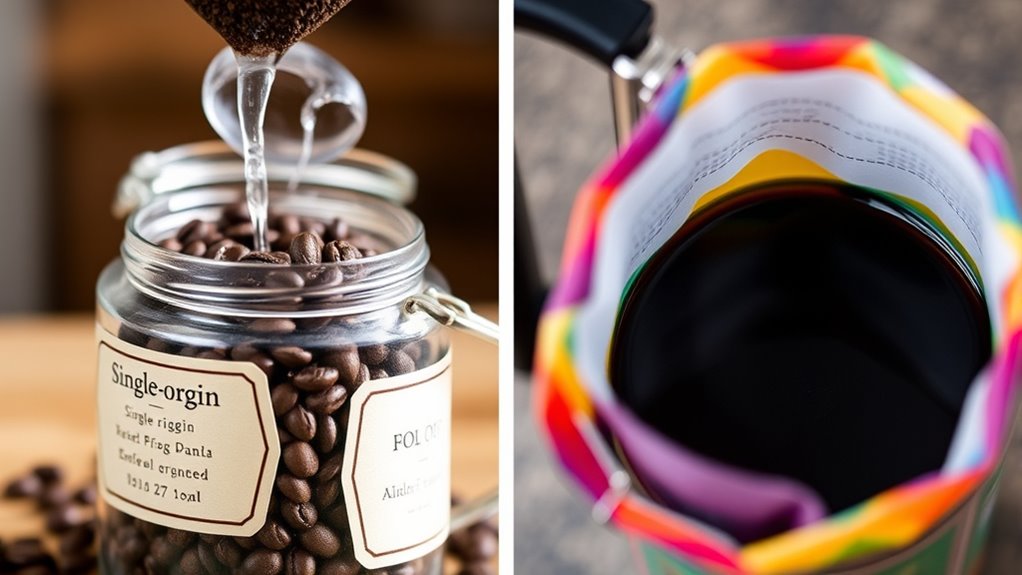

Yes, you generally brew single-origin coffees and blends differently to highlight their unique qualities. For single origins, light roasts and pour-over methods work well to emphasize delicate, bright flavors, while darker roasts may call for different techniques. Blends often benefit from brewing methods that bring out a balanced or layered experience, like French press or espresso. Adjusting grind size, temperature, and extraction time makes a big difference. Keep exploring to discover tailored techniques for each!

Get coffee and tea gear delivered free with Prime
- Fast, free delivery on millions of items
- Prime Video, Amazon Music and more included
- Member-only deals all year
Key Takeaways
- Single-origin coffees often require specific roasting (light or medium) to highlight regional flavors, while blends may tolerate darker roasts.
- Brewing methods like pour-over suit delicate single-origin beans, whereas French press can enhance the body of blends.
- Adjust grind size, extraction time, and temperature based on the origin and roast level for optimal flavor.
- Single-origin coffees benefit from precise brewing to showcase unique regional nuances; blends aim for balanced, layered tastes.
- Experimentation with brewing techniques is key to unlocking each coffee’s full flavor potential, tailored to whether it’s single-origin or a blend.
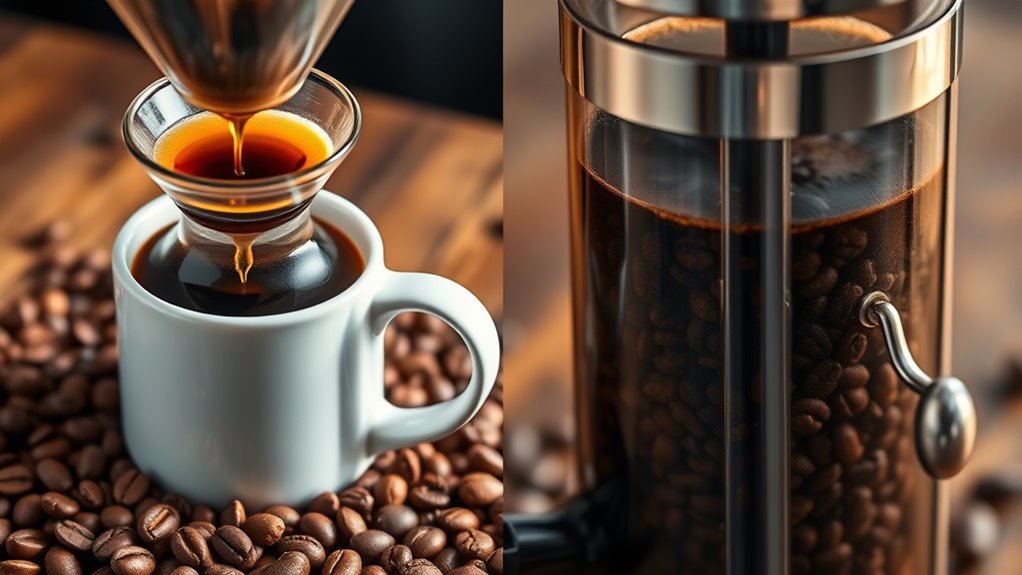
Are you curious about the differences between single-origin and blend brewing? When you’re exploring these options, understanding how they influence flavor and brewing techniques can make a big difference in your coffee experience. Single-origin coffees come from a specific region, farm, or country, which often results in a unique flavor profile that reflects the local terroir. In contrast, blends combine beans from multiple origins to create a harmonious or complex flavor profile. This distinction is important because it affects how you approach brewing and what you can expect in your cup.
Flavor complexity is one of the key differences between single-origin and blend coffees. Single-origin beans tend to have a more pronounced and distinct flavor profile because they’re harvested from a specific environment. You might notice bright citrus notes from a Ethiopian Yirgacheffe or rich, chocolatey tones from a Colombian bean. These coffees allow you to savor the unique characteristics of that particular region. Blends, on the other hand, are crafted to achieve a balanced or layered flavor by combining beans with complementary profiles. They can offer a more rounded or nuanced taste, often designed to appeal to a broader palate. When brewing single-origin coffee, you might want to pay close attention to how the roasting profiles highlight its unique qualities, as different roasts can emphasize or mute certain flavor notes.
Single-origin coffees showcase unique regional flavors, while blends offer balanced, layered taste profiles for a diverse coffee experience.
Roasting profiles are equally essential when brewing either type of coffee. Single-origin beans often require specific roast levels to showcase their best attributes. Light roasts tend to preserve the delicate, bright flavors inherent in the beans, making them ideal for highlighting the terroir. Medium roasts can bring out more body and sweetness, while darker roasts might enhance richness but risk overshadowing the subtle nuances. Blends may offer more flexibility, as roasters often tailor the roasting profiles to balance the different beans’ characteristics. When you brew a blend, you might choose a roast that harmonizes all components, ensuring no single flavor overwhelms the others.
In terms of brewing, you don’t necessarily need to change your method drastically for either type. However, paying attention to the roast level and origin can guide your choices—perhaps a pour-over for a delicate single-origin, or a French press for a fuller-bodied blend. The key is understanding that each type responds differently to variations in grind size, extraction time, and temperature. Ultimately, whether you’re brewing single-origin or a blend, experimenting with roasting profiles and brewing techniques allows you to discover the full potential of your coffee, delivering richer flavors and a more satisfying cup.
pour-over coffee maker for single-origin beans
As an affiliate, we earn on qualifying purchases.
As an affiliate, we earn on qualifying purchases.
Frequently Asked Questions
Can Single-Origin Beans Be Used in Blends?
Yes, you can use single-origin beans in blends, but it’s essential to take into account their single origin purity and how they contribute to blending complexity. Single-origin beans offer unique flavors, which can enhance your blend’s profile. When blending, you might combine them with other beans to balance acidity, body, or aroma, creating a more nuanced coffee. Just keep in mind the distinct characteristics of each bean to craft a harmonious, flavorful brew.
How Does Climate Affect Single-Origin Coffee Flavor?
Climate impacts the flavor of single-origin coffee through microclimate impacts and altitude effects. You’ll notice that microclimates – like temperature and rainfall – influence bean development, shaping unique flavor profiles. Higher altitudes tend to produce beans with brighter acidity and complex aromas, while lower altitudes might yield richer, fuller-bodied coffees. By understanding these climate influences, you can better appreciate how the environment shapes your coffee’s distinctive taste.
Are There Specific Brewing Methods for Blends?
Imagine opening a symphony of flavors with each sip, and that’s where your brewing methods come into play. For blends, you might tweak your grinding techniques to balance complex flavor profiles, ensuring each component shines through. While there’s no strict rule, experimenting with brewing parameters like extraction time and temperature helps highlight the unique interplay of beans, letting you craft a harmonious cup that captures the essence of your blend.
Do Single-Origin Coffees Age Differently Than Blends?
You might notice that single-origin coffees tend to age differently than blends because of their unique flavor profiles. Single origin freshness can decline more quickly, so you’ll want to enjoy them sooner to savor their vibrant notes. Blends, with their mix of beans, often have a more complex flavor that holds up longer over time. Understanding these differences helps you decide when to brew each for the best tasting experience.
How Do Cost Differences Impact Brewing Choices?
Imagine you’re choosing beans for your café, balancing cost efficiency and ingredient sourcing. Higher-quality single-origin beans often cost more, so you might brew them more carefully or in smaller batches to maximize flavor. With blends, lower costs allow for more consistent brewing and experimentation. Your choices depend on your budget and quality goals, highlighting how cost differences shape your brewing approach, whether prioritizing premium ingredients or optimizing cost efficiency.
Conclusion
Think of single-origin and blend brewing as two different symphonies—you can choose to enjoy the pure, solo notes of a single instrument, or the harmonious blend of many. Both offer unique experiences, but your choice depends on what mood you’re in or the story you want your coffee to tell. Whether you prefer the clarity of a single origin or the complex layers of a blend, each brew invites you on a delicious journey—your palate’s personal concert awaits.
Halloween Picks
halloween
As an affiliate, we earn on qualifying purchases.