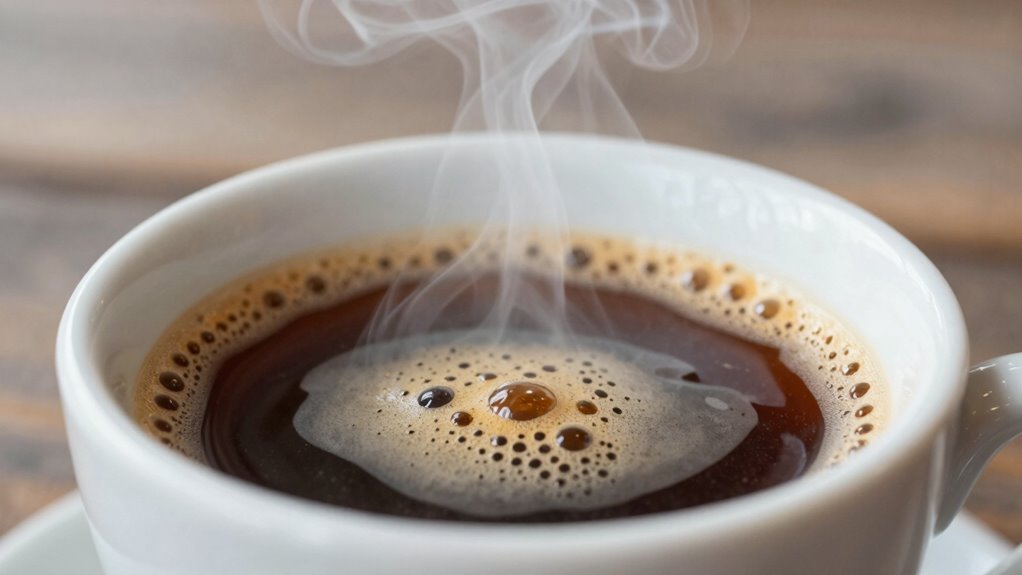

You might notice some coffees taste almost like tea because of their light, delicate flavor profiles with floral, fruity, or herbal notes. Coffees from regions like Ethiopia, Kenya, or Central America often have these bright, aromatic qualities. Processing methods such as washed or honey processing enhance clarity and subtlety, while brewing techniques like pour-over or AeroPress preserve these delicate flavors. Choosing lighter roasts and specific origins can reveal more of these tea-like qualities—keep exploring to discover how to maximize this experience.

Get coffee and tea gear delivered free — and shop member deals
- Fast, free delivery on millions of items
- Access to Prime Big Deal Days deals on October 6–7
- Prime Video, Amazon Music and more included
Key Takeaways
- Light, delicate flavor profiles, such as floral and fruity notes, resemble tea more than traditional roasted coffee.
- Processing methods like washed or honey processing enhance brightness and clarity, contributing to tea-like qualities.
- Brewing techniques like pour-over and AeroPress preserve subtle, aromatic flavors similar to tea.
- Lower water temperatures during brewing extract delicate, nuanced flavors that mimic tea’s profile.
- Lighter roasts and certain regional beans retain natural brightness, emphasizing tea-like taste characteristics.

Have you ever noticed that some coffees taste surprisingly similar to tea? It’s a curious experience, and it often surprises people who expect coffee to always deliver a bold, roasted flavor. The reason behind this similarity lies in the specific flavor profiles that certain coffees develop, influenced heavily by how they’re grown, processed, and brewed. When you encounter a coffee with a lighter, more delicate taste—think floral, fruity, or herbal notes—it can resemble the subtle qualities of tea. These flavor profiles tend to highlight the coffee’s natural characteristics rather than the roasted, bitter notes typical of darker brews. Additionally, the processing methods used can significantly impact the final flavor, often making the coffee taste more like tea. Processing techniques such as washed or honey processing are known to emphasize clarity and brightness, which contribute to that tea-like quality. Brewing methods play a vital role in emphasizing these delicate flavors. For example, pour-over, Chemex, or AeroPress techniques usually involve gentler extraction, which preserves the coffee’s nuanced qualities. When you use a slow, controlled pour-over method, you allow the water to interact with the coffee grounds carefully, extracting those lighter, tea-like flavors. Conversely, brewing with a French press or espresso machine, which often emphasizes boldness and intensity, might mask these subtle notes. So, if you’re aiming for a tea-like experience, opting for brewing methods that favor gentle extraction can make all the difference. The water temperature used during brewing is also crucial, as lower temperatures tend to extract more delicate flavors, enhancing the tea-like qualities. Using specific brewing techniques can further enhance these subtle nuances, making the experience even more refined. Certain coffee beans are naturally predisposed to taste more like tea because of their origin and processing. Coffees from regions such as Ethiopia, Kenya, or parts of Central America often possess bright, floral, and fruity notes that resemble the taste of some teas. These coffees are usually processed using washed or honey methods, which emphasize clarity and brightness, further enhancing that tea-like quality. When you choose these beans and prepare them with a light hand, you access a spectrum of flavors that remind you of herbal infusions or delicate green teas. origin and processing play critical roles in shaping these unique flavor profiles, making them more suitable for those seeking a tea-like experience. The roast level also influences how pronounced these delicate flavors will be, with lighter roasts generally preserving more of the beans’ natural brightness. The key to experiencing this tea-like quality is understanding how to highlight these unique flavor profiles through your brewing choices. If you want a coffee that leans toward the tea spectrum, focus on lighter roasts and gentle brewing techniques. Play with water temperature, grind size, and extraction time—small adjustments can bring out subtle, aromatic layers that mimic tea. It’s a matter of balancing the variables until you reveal those delicate, nuanced notes that make some coffees taste almost like tea. Once you get the hang of it, you’ll start noticing how different brewing methods reveal a whole new world of flavors, blurring the line between coffee and tea in the most delightful way.
As an affiliate, we earn on qualifying purchases.
Frequently Asked Questions
Does the Type of Coffee Bean Affect Its Tea-Like Flavor?
Yes, the type of coffee bean impacts its tea-like flavor. You’ll notice that beans from different origins, like Ethiopian or Kenyan, often have brighter, more tea-like qualities. Additionally, the roasting level plays a role; lighter roasts tend to preserve delicate, fruity, and floral notes that resemble tea. By choosing beans from specific regions and opting for lighter roasts, you can enhance that tea-like taste in your coffee.
Can Brewing Methods Influence Coffee’s Tea-Like Taste?
Yes, brewing methods considerably influence coffee’s tea-like flavor. Different techniques impact flavor extraction, with gentle methods like pour-over or cold brew extracting subtler, tea-like notes. Longer extraction times and lower temperatures emphasize delicate flavors, making coffee taste more like tea. By adjusting your brewing techniques—such as water temperature, grind size, or brew time—you can enhance or mellow out those tea-like characteristics in your coffee.
How Does Water Temperature Impact Coffee Flavor Profiles?
Water temperature markedly influences your coffee’s flavor profile through flavor extraction and temperature regulation. Using water that’s too hot can over-extract, making your coffee taste bitter or astringent, while too cool water might under-extract, resulting in a weak or sour flavor. By maintaining ideal temperature control, you guarantee balanced flavor extraction, allowing the nuanced notes of your coffee to shine without veering into tea-like or unpleasant tastes.
Are There Specific Coffee Varieties Known for Tea-Like Qualities?
You might find certain Ethiopian Yirgacheffe coffees that have tea-like qualities, thanks to their delicate, floral, and fruity aromatic profiles. For instance, a barista pairing this coffee with herbal teas highlights its subtle, tea-like flavor notes, creating a harmonious experience. These coffees often feature lighter roasts and unique flavor pairing options, emphasizing their gentle, aromatic profiles that resemble tea’s smooth, nuanced taste.
Does Aging or Storage Change a Coffee’s Flavor to Resemble Tea?
Aging and storage conditions can change a coffee’s flavor, sometimes making it taste more like tea. Poor storage, especially in humid or warm environments, can break down beans and alter their flavor profile, reducing freshness and preserving delicate, tea-like notes. Proper flavor preservation involves storing coffee in airtight containers away from light and heat. Over time, these changes can amplify subtle, tea-inspired flavors, giving your coffee a more nuanced, mellow taste.
Conclusion
Next time your coffee surprises you with a tea-like note, remember it’s not a mistake, but a dance of flavors. Coffee’s boldness contrasts with tea’s gentle hints, yet both share a common root. Embrace these unexpected moments; they remind you that even in familiar routines, surprises await. Just as tea offers calm, coffee delivers energy—each a different face of the same coin, inviting you to explore beyond the usual.
Evergreen bestsellers Picks
bestsellers
As an affiliate, we earn on qualifying purchases.