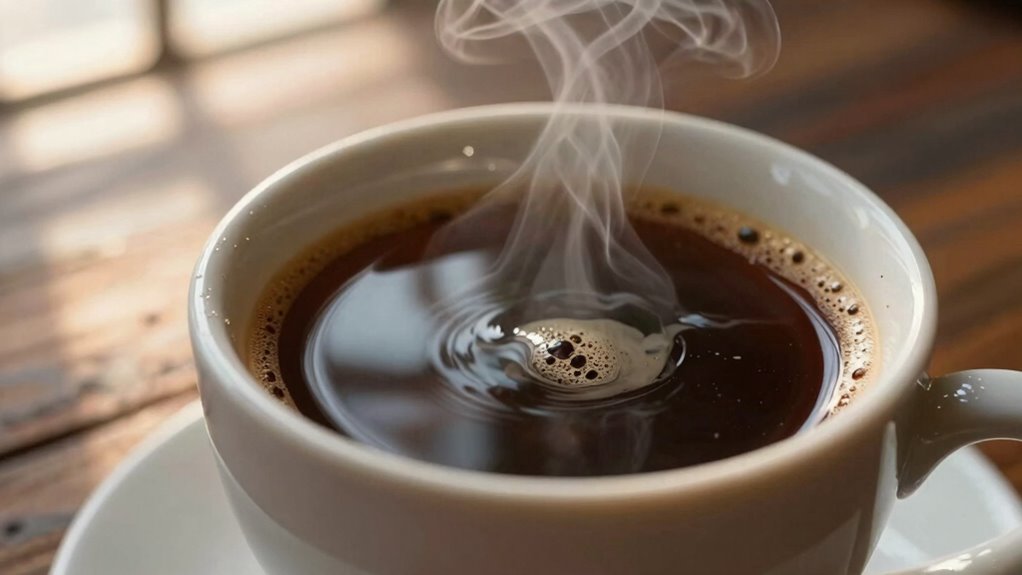

As your coffee cools, it releases more subtle flavors, making it taste sweeter. Hot coffee emphasizes bitterness and acidity, which can overpower sweetness. When it cools, these sharp flavors fade, and richer notes like caramel, honey, or fruity undertones become more noticeable. The change in aroma also enhances the perception of sweetness. If you keep exploring, you’ll discover how temperature influences flavor chemistry and sensory perception in surprising ways.

Get coffee and tea gear delivered free with Prime
- Fast, free delivery on millions of items
- Prime Video, Amazon Music and more included
- Member-only deals all year
Key Takeaways
- Cooling reduces the perception of bitterness and acidity, allowing sweeter flavors to become more prominent.
- As coffee cools, subtle sweet notes like honey and caramel become more detectable.
- Lower temperatures stabilize complex molecules, revealing richer, sweeter flavors.
- Aroma shifts during cooling enhance the perception of sweetness.
- Sensory adaptation at cooler temperatures emphasizes pleasant, sugary taste components.

Have you ever noticed that your coffee seems to taste sweeter as it cools? This isn’t just your imagination. The change in flavor profile as your coffee cools is rooted in the way flavor development interacts with temperature influence. When you take your first sip, the hot liquid releases a burst of aromatic compounds that highlight bitterness and acidity. But as the coffee cools, the flavor experience shifts, revealing sweeter and more balanced notes that often go unnoticed when the beverage is at its hottest.
Temperature plays a crucial role in how you perceive the flavors in your coffee. When hot, the intense heat stimulates your taste buds to pick up certain flavors more strongly — especially the bitter and sour components. As the temperature drops, these sharp elements fade into the background, and the more subtle, sweeter notes become prominent. This is because some flavor compounds are more volatile at higher temperatures, meaning they evaporate or change form when heated, causing certain tastes to dominate. When cooled, these compounds settle, allowing the sweeter, more complex flavors to come forward. Additionally, flavor chemistry explains how these chemical interactions evolve with temperature, deepening your understanding of the flavor changes.
Flavor development is also influenced by chemical changes that happen as your coffee cools. During brewing, complex molecules called polyphenols and sugars interact, creating a layered flavor profile that evolves with temperature. When hot, the heat masks some of these nuances, making the coffee seem more bitter or sour. As it cools, these molecules stabilize, letting the sweeter, fruitier, or caramel-like notes shine through. You might notice hints of chocolate, honey, or ripe fruit that weren’t as evident when the coffee was steaming. These subtler flavors become more perceptible because your taste buds are less overwhelmed by the initial heat and acidity. Additionally, the chemical reactions occurring during cooling contribute to the development of these more desirable flavors. Interestingly, as the temperature continues to change, the aroma profile also shifts, further influencing how you perceive sweetness. Recognizing how flavor chemistry interacts with temperature can deepen your appreciation for the complexity of your brew. Moreover, understanding the sensory perception shifts offers insight into how our senses adapt to temperature changes, enriching the overall tasting experience.
As an affiliate, we earn on qualifying purchases.
Frequently Asked Questions
Does Adding Milk or Sugar Affect the Cooling Process?
Adding milk or sugar does influence the cooling process by affecting flavor evolution and temperature dynamics. When you add milk or sugar, they act as heat sinks, slightly slowing down the cooling rate. This change in temperature dynamics can alter how quickly the coffee cools, and it also impacts flavor evolution, making the taste experience different as the beverage cools. So, your additions can subtly change both cooling and flavor.
How Does the Type of Coffee Bean Influence Sweetness Perception?
You’ll notice that the type of coffee bean considerably influences how sweet you perceive the flavor. For example, Arabica beans contain more natural sugars, making the coffee taste sweeter, especially as it cools. Flavor compounds in different bean varieties develop uniquely over time, affecting sweetness perception. Studies show that bean variety can alter sensory experiences by up to 30%, so choosing the right beans enhances your coffee’s natural sweetness as it cools.
Can Temperature Changes Alter Caffeine’s Taste Profile?
Temperature changes can alter caffeine’s taste profile by influencing flavor aroma and chemical reactions. As your coffee cools, the flavor aroma becomes more noticeable, highlighting subtle sweetness and reducing bitterness. Chemical reactions happen more slowly at lower temperatures, which can mellow the overall taste. You’ll notice caffeine’s bitterness diminishes, and the coffee’s flavor profile shifts, making it seem smoother and sweeter as it cools.
Is There an Optimal Cooling Time for Sweeter Flavor?
Think of your coffee as a symphony that needs the perfect moment to shine. The ideal cooling time for sweeter flavor varies, but generally, waiting 2-4 minutes allows flavor development to reach its peak without losing warmth. During this window, temperature dynamics promote more balanced sweetness and aroma, letting the subtle notes emerge fully. Trust your palate; it’s the best guide to finding your perfect coffee cooling point.
Do Different Brewing Methods Impact How Coffee’s Sweetness Develops?
Yes, different brewing methods influence how coffee’s sweetness develops through flavor chemistry and sensory perception. For example, pour-over techniques highlight bright, fruity notes, making sweetness more noticeable early on. French press brews tend to extract more solubles, enhancing overall sweetness as the coffee cools. Your sensory perception shifts with temperature, revealing different flavor compounds, so experimenting with brewing methods can help you enjoy varied sweetness profiles.
Conclusion
So, next time your coffee cools, savor its sweeter notes—not just because of temperature, but because each sip whispers a secret of chemistry and perception. As the heat fades, the flavors bloom, revealing a hidden depth that transforms your morning ritual into a sensory symphony. Remember, in this fleeting moment of cooling, you’re witnessing a quiet miracle—the magic of taste’s evolution, reminding you that beauty often lies in the subtle, unnoticed shifts around us.
Fall Picks
fall essentials
As an affiliate, we earn on qualifying purchases.