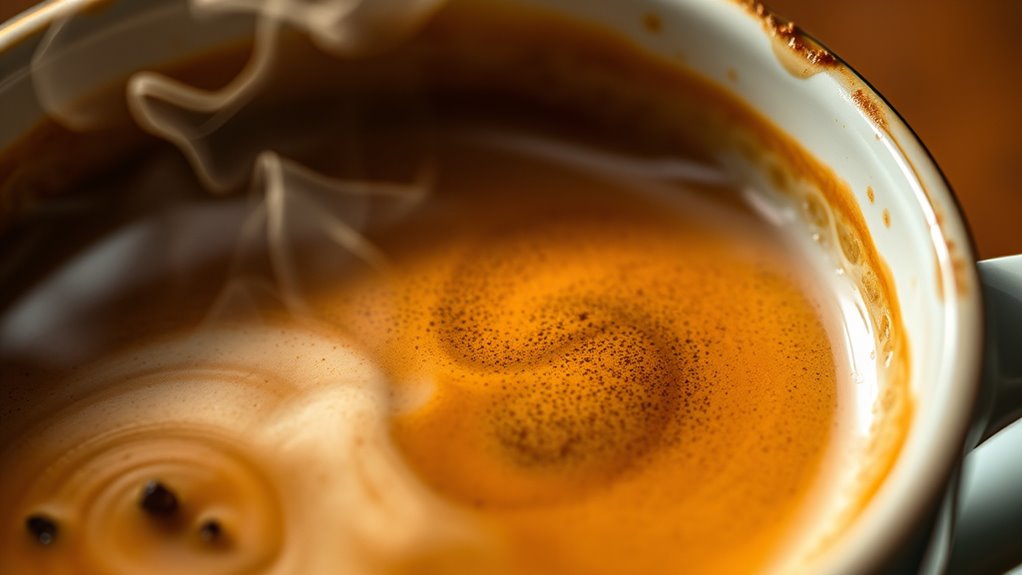

The aromas in coffee—like floral, fruity, and spicy notes—result from the roasting process, which carefully develops and preserves these delicate scents. Lighter roasts highlight bright floral and fruity qualities, while medium and dark roasts tend to bring out warm, spicy, and smoky notes. Proper roasting techniques guarantee these aromas remain vibrant and true to their origin. Keep exploring to uncover how different roasts influence these complex aromas in your coffee.

Get coffee and tea gear delivered free with Prime
- Fast, free delivery on millions of items
- Prime Video, Amazon Music and more included
- Member-only deals all year
Key Takeaways
- Coffee aromas originate from specific compounds preserved during precise roasting, including floral, fruity, and spicy notes.
- Light roasts emphasize delicate floral and fruity scents, while darker roasts highlight spicy and warm aromas.
- Proper roasting techniques balance heat to preserve aromatic compounds and prevent burning, ensuring vibrant floral and fruity notes.
- Spicy aromas like cinnamon and clove develop through Maillard reactions in medium to dark roasts, adding depth to the flavor profile.
- The aroma profile influences initial perception, with delicate floral and fruity scents offering brightness and spicy notes adding complexity.

The rich aromas in coffee are what truly awaken your senses before you even take a sip. That captivating scent is shaped during the coffee roasting process, where beans are heated to release their aromatic potential. During roasting, careful temperature control guarantees aroma preservation, which is essential because it retains those delicate floral, fruity, and spicy notes that define a coffee’s character. If the roast is too aggressive or rushed, many of these subtle aromas can be lost, leaving a flat profile. That’s why skilled roasters pay close attention to the process, aiming to balance heat and timing to maximize aroma preservation. When you smell freshly roasted coffee, you’re experiencing the culmination of this careful craft, which directly influences the aroma complexity you’ll enjoy in each cup.
As you bring the mug closer, the floral scents often dominate first, reminiscent of jasmine or lavender. These fragrances are light, sweet, and uplifting, evoking a sense of freshness. They originate from specific aromatic compounds preserved during roasting, which are sensitive to high heat but can be maintained with precise control. Fruity aromas follow, offering hints of berries, citrus, or apple. These notes are often associated with the coffee’s origin and varietal, but their prominence depends heavily on how well aroma preservation was managed during roasting. When done correctly, these fruity scents stay vibrant, adding a lively brightness to your coffee experience. The key to capturing these nuances lies in the roasting technique; a lighter roast tends to emphasize floral and fruity characteristics because the beans retain more of their original aromatic compounds. Conversely, darker roasts may mute these nuances, emphasizing spicy or smoky qualities instead.
Spicy notes—think cinnamon, clove, or pepper—often emerge in medium to dark roasts, created through Maillard reactions and caramelization processes during roasting. These complex aromas add depth and warmth, enriching the sensory profile. Properly executed coffee roasting guarantees these spicy aromas are not overshadowed or burnt away, which would happen if the beans are over-roasted or roasted unevenly. That’s why many enthusiasts appreciate roasters who skillfully manage the heat application throughout the process, maintaining aroma preservation. When you sip your coffee, you’re tasting the result of this careful balancing act—an intricate blend of floral, fruity, and spicy notes that make each cup unique. The best coffees are those where the aromas remain vibrant and true to their origin, inviting you to explore their layers and nuances with every sip. Ultimately, understanding how coffee roasting influences aroma preservation helps you appreciate the artistry behind each brew and the complex symphony of scents that awaken your senses even before your first taste.
As an affiliate, we earn on qualifying purchases.
Frequently Asked Questions
How Do Environmental Factors Influence Coffee Aroma Development?
Environmental factors like soil composition and altitude effects profoundly influence your coffee’s aroma development. Rich, well-drained soils boost nutrient absorption, enhancing floral and fruity notes. Higher altitudes slow bean maturation, intensifying spicy and complex aromas. You’ll notice that coffees grown in these conditions often have brighter, more vibrant scents. By understanding these factors, you can better appreciate how the environment shapes the unique aromas in your cup.
Can Roasting Techniques Alter the Floral, Fruity, or Spicy Notes?
Yes, roasting techniques can substantially alter floral, fruity, or spicy notes. You can achieve this by adjusting roasting temperature and time; higher temperatures often enhance spicy and roasted flavors, while lower temperatures preserve delicate floral and fruity aromas. Additionally, the bean origin influences how these notes develop during roasting, so understanding your beans helps you tailor the process to highlight specific aromas. Experimenting allows you to craft a profile that emphasizes your preferred notes.
Are There Specific Coffee Varieties Known for Unique Aroma Profiles?
Yes, you’ll find that single origin beans often have unique aroma profiles due to varietal differences. For example, Ethiopian beans can offer floral and citrus notes, while Colombian beans might highlight fruity and nutty aromas. These differences come from the specific region and the plant’s genetics, making each variety distinct. By exploring different single origin options, you can discover a wide range of aromatic experiences tailored to your preferences.
How Should I Store Coffee to Preserve Its Aromatic Qualities?
To maintain coffee’s aromatic qualities, store it properly by using an airtight container in a cool, dark place away from sunlight, heat, and moisture. Avoid refrigerating or freezing it, as temperature fluctuations can harm aroma preservation. Keep coffee away from strong odors, which can taint its flavor. By following these coffee storage tips, you ensure that the floral, fruity, and spicy aromas stay fresh and vibrant longer.
What Role Does Brewing Method Play in Aroma Perception?
Brewing method is like a conductor guiding an orchestra, shaping aroma perception precisely. Your brew time and grind size are essential; a longer brew accentuates fruity and spicy notes, while a shorter one highlights floral scents. A finer grind increases extraction, intensifying aroma, whereas a coarser grind offers a lighter smell. Experimenting with these variables helps you access and enjoy the full spectrum of coffee’s aromatic qualities.
Conclusion
Now that you’ve explored the floral, fruity, and spicy aromas in coffee, you can better appreciate each sip and aroma. You notice the delicate floral notes, the bright fruity accents, and the warm spicy undertones. You savor the complexity, the diversity, and the richness in every cup. You awaken your senses, deepen your appreciation, and enhance your experience. Embrace the aromas, enjoy the flavors, and elevate your coffee journey with every aroma you encounter.
Halloween Picks
halloween
As an affiliate, we earn on qualifying purchases.