
You’ll notice flavor differences because drum and air roasters heat beans differently, even at the same roast level. Drum roasters use gentle, even contact heat, promoting nuanced flavors like caramel and chocolate. Air roasters rely on rapid, circulating hot air that enhances brightness and clarity. These distinct heat transfer methods shape the final taste, so your preferred flavor profile depends on which roasting style suits you best. Keep exploring to uncover more about how these methods influence your coffee.
Key Takeaways
- Drum roasting provides gentle, contact-based heat transfer, promoting complex flavor development, while air roasting uses rapid, even hot air for brightness.
- Different heat transfer methods influence how quickly beans roast, affecting flavor nuances even at the same roast “level.”
- Drum roasters’ slow, controlled heat allows for more nuanced, layered flavors; air roasters’ rapid heat emphasizes clarity and brightness.
- Consistency varies: drum roasters offer more uniform results, impacting flavor profiles at similar roast levels.
- The roasting environment and heat application method inherently alter flavor outcomes, even if the visual or time-based “level” matches.

When choosing a coffee roaster, understanding the key differences between drum and air roasters can help you make an informed decision. Both types of roasters have distinct mechanisms that influence the final flavor profiles and roasting consistency of your coffee. Knowing how each method works allows you to select the one that best aligns with your taste preferences and roasting goals.
Choosing between drum and air coffee roasters depends on your flavor preferences and roasting consistency goals.
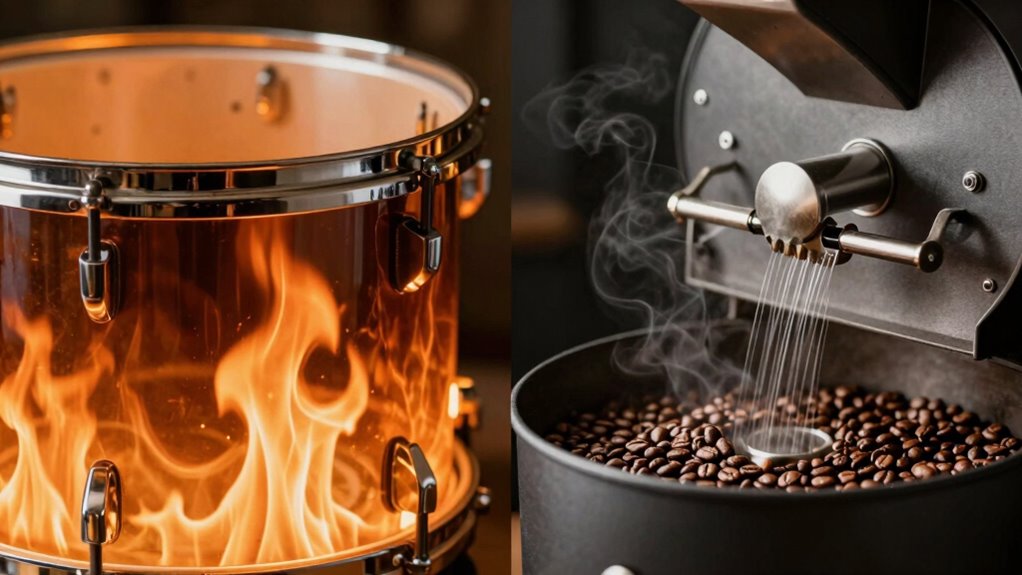
Drum roasters operate by tumbling beans inside a heated drum, similar to a popcorn popper. This method provides a gentle, even heat transfer, which promotes uniform roasting and enhances the development of complex flavor profiles. Because the beans are constantly in contact with the hot surface of the drum, they tend to roast more evenly, reducing the risk of uneven cracks or underdeveloped beans. As a result, drum roasting often yields consistent results batch after batch, making it popular among serious coffee enthusiasts who prioritize flavor consistency. The slow, controlled heat application allows for greater control over the roast curve, giving you the ability to craft nuanced profiles that highlight specific flavor notes like caramel, chocolate, or fruit.
In contrast, air roasters use a hot air system that circulates rapidly around the beans, often causing them to move freely within a chamber. This rapid airflow leads to a different roasting dynamic, where heat penetrates the beans quickly and evenly from all directions. The result is a faster roast, which can accentuate brightness and clarity in the flavors, often resulting in a cleaner, more vivid cup. However, because of the rapid and less controlled heat transfer, achieving the same level of roasting consistency as drum roasters can be more challenging. Small fluctuations in temperature or airflow can cause variations from batch to batch, making it harder to replicate precise flavor profiles consistently. That said, air roasters are excellent for lighter roasts that emphasize fruity or floral notes, thanks to their ability to preserve delicate flavors. Additionally, modern air roasters often incorporate advanced temperature control features, making them increasingly precise and reliable.
Ultimately, your choice hinges on what you value most: if you seek more control over flavor development and consistent results, a drum roaster might be the better option. If you prefer a brighter, more vibrant profile with quicker turnarounds, an air roaster could suit your needs. Both methods have their strengths, but understanding how each impacts flavor profiles and roasting consistency will enable you to choose the right tool for your coffee journey.
Frequently Asked Questions
How Does Roast Chamber Size Affect Flavor Differences?
You’ll notice that roast chamber size impacts flavor because it influences temperature control and heat distribution. A larger chamber allows for more even heat, reducing hot spots, while smaller chambers heat up faster and can be harder to control precisely. This difference affects how evenly coffee develops, resulting in distinct flavor profiles, even at the same roast level. Proper temperature control and consistent heat distribution are key to achieving your desired taste.
Can Different Bean Types Alter Taste More Than Roasting Method?
Yes, different bean types can alter taste more than roasting method. You’ll notice that bean origin and processing method have a profound impact on flavor, often overshadowing the roasting style. For example, beans from Ethiopia or Colombia bring unique fruity and floral notes, while washed versus natural processing affects sweetness and body. So, choosing the right bean and processing method can truly define your coffee’s profile, sometimes more than how it’s roasted.
Do Maintenance Routines Impact the Flavor Consistency of Roasters?
Imagine a well-oiled machine humming smoothly, its parts gleaming with regular cleaning routines. Maintenance routines directly impact the flavor consistency of your roaster, ensuring *ideal* performance. When you stick to consistent maintenance, like cleaning and calibrating, you prevent buildup and uneven heat. This keeps your roaster running reliably, producing consistent, flavorful coffee every time. Neglecting maintenance can cause fluctuations, making each brew taste different despite the same roast level.
How Does Roast Profile Customization Influence Flavor Outcomes?
You can shape flavor nuances by customizing your roast profile, which allows you to control temperature and time precisely. This profile precision influences how beans develop, highlighting specific flavor notes and complexity. By fine-tuning your roast profile, you achieve consistent, targeted flavor outcomes that reflect your desired profile, making each batch uniquely suited to your taste preferences. It’s all about harnessing profile precision for ideal flavor nuances.
Are There Health Differences Between Drum and Air Roasted Coffee?
You might wonder if drum or air roasting affects health safety. Generally, both methods are safe when used properly, but air roasting tends to produce fewer toxins and less charring, which reduces harmful toxin formation. Drum roasting can sometimes create more acrylamide if beans are overcooked. To minimize health risks, choose a method that avoids excessive charring and follow safety guidelines during roasting.
Conclusion
So, whether you choose a drum or air roaster, remember they’re like two artists painting the same scene with different brushes. Each method brings its unique flavor to your coffee, proving that even at the same “level,” the journey shapes the taste. Embrace the differences and enjoy exploring how each roast tells its own story—because in coffee, as in life, it’s the nuances that make all the difference.