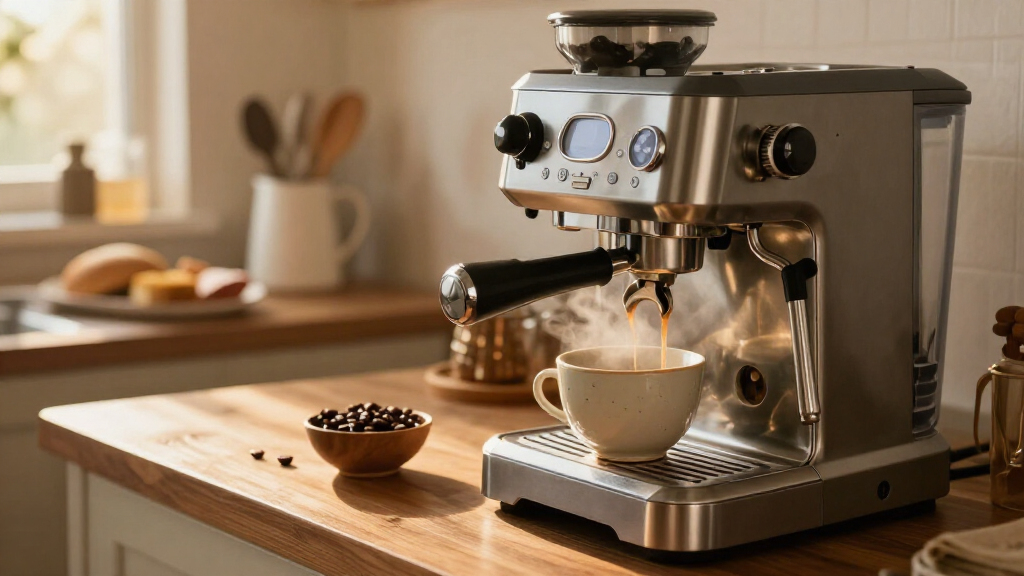
The best prosumer espresso machines balance hands-on control with a workflow that suits everyday home use. I’d put the Breville Barista Pro first for its blend of integrated grinding, quick operation, and room to refine shots; the Rancilio Silvia with PID is a stronger fit for buyers who value manual control, while the Breville Barista Touch favors guided, approachable drink making. The main tradeoff is between convenience and control: built-in grinders and guided settings simplify the routine, while more manual machines ask for practice and separate attention to grinding and extraction. Machine size, milk-steaming habits, and maintenance also shape the right choice. Read on for the full breakdown of all 13 options and the buyer each one suits.

Get coffee and tea gear delivered free with Prime
- Fast, free delivery on millions of items
- Prime Video, Amazon Music and more included
- Member-only deals all year
Complete the kit

Key Takeaways
- The Breville Barista Pro is the most balanced pick in this lineup: it combines an integrated grinder and hands-on workflow without leaning as heavily on touchscreen guidance as the Barista Touch.
- The Rancilio Silvia with PID and Gaggia Classic E24 models favor manual brewing: they suit buyers who want direct control and are willing to build skill rather than rely on guided drink programs.
- The Breville Barista Touch prioritizes ease of use: its guided interface makes it a better match for households that want a more approachable route to espresso and milk drinks.
- Several De’Longhi options add workflow variety: the La Specialista Opera and La Specialista Touch pair integrated grinding with assisted features, while the Classic models keep the setup simpler.
- Two Gaggia E24 listings offer the same core model in different finishes: choosing between brushed stainless steel and cherry red is a finish decision, not a reason to expect a different brewing role.
| Breville BES880BSS Barista Touch Espresso Machine, Brushed Stainless Steel |  | Best for Guided, Customizable Drinks | Grinder: Integrated precision conical burr grinder | Heating system: ThermoJet; stated heat-up time of 3 seconds | Temperature control: Digital PID | VIEW LATEST PRICE | See Our Full Breakdown |
| De’Longhi Classic Matte Black Espresso Machine with Milk Frother |  | Best Compact Ground-Coffee Pick | Model: EM350BK | Pump pressure: 9 bar | Coffee input: Ground coffee | VIEW LATEST PRICE | See Our Full Breakdown |
| Rancilio Silvia Espresso Machine with PID Controller |  | Best for Manual Shot Control | Boiler: Solid brass | Temperature control: Installed PID controller | Capacity: 67 oz | VIEW LATEST PRICE | See Our Full Breakdown |
| De’Longhi Classic Signature Espresso Machine with Adjustable Milk Frother |  | Best for Simple Preset Brewing | Pump pressure: 15 bar | Heating: Thermoblock | Coffee input: Ground coffee | VIEW LATEST PRICE | See Our Full Breakdown |
| Gaggia Classic E24 Espresso Machine, Brushed Stainless Steel | 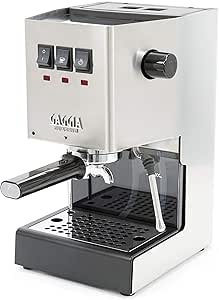 | Best for a Commercial-Style 58 mm Setup | Portafilter size: 58 mm | Pump pressure: 9 bar | Water capacity: 2.1 L | VIEW LATEST PRICE | See Our Full Breakdown |
| Breville Barista Express Espresso Machine, Black Sesame |  | Best All-in-One Starting Point | Model: BES870BSXL | Machine type: Semi-automatic espresso machine | Grinder: Integrated conical burr grinder | VIEW LATEST PRICE | See Our Full Breakdown |
| De’Longhi La Specialista Opera Espresso Machine with Built-in Grinder |  | Best for Guided Variety | Model: La Specialista Opera | Type: Semi-automatic espresso machine | Pump pressure: 19 bar | VIEW LATEST PRICE | See Our Full Breakdown |
| Gemilai G3028A Espresso Machine |  | Best for Assisted Milk Frothing | Model: G3028A | Type: Semi-automatic espresso machine | Boiler capacity: 550 ml | VIEW LATEST PRICE | See Our Full Breakdown |
| Gaggia Classic E24 Semi-Automatic Espresso Machine, Cherry Red |  | Best for Traditional 58 mm Brewing | Model: RI9380/47 | Type: Semi-automatic espresso machine | Color: Cherry Red | VIEW LATEST PRICE | See Our Full Breakdown |
| AMZCHEF Espresso Machine with Built-In Grinder |  | Best for Grind and Temperature Adjustments | Model: CM1626 | Type: Semi-automatic espresso machine | Grind settings: 44 | VIEW LATEST PRICE | See Our Full Breakdown |
| De’Longhi La Specialista Touch Espresso Machine with Coffee Grinder |  | Best for Guided Customization | Type: Semi-automatic espresso machine | Grinder: Italian-made conical burr grinder with 15 settings | Display: 3.5-inch high-resolution touch display | VIEW LATEST PRICE | See Our Full Breakdown |
| Breville Barista Pro Espresso Machine (BES878BSS) |  | Best for Fast Daily Workflow | Model: BES878BSS | Heating system: ThermoJet | Heat-up time: About 3 seconds | VIEW LATEST PRICE | See Our Full Breakdown |
| Fellow Espresso Series 1 Espresso Machine |  | Best for Shot Feedback and Pressure Control | Type: Semi-automatic espresso machine | Capacity: 2 liters | Portafilter size: 58 mm | VIEW LATEST PRICE | See Our Full Breakdown |
| prosumer espresso machine | Dimensions | Model |
|---|---|---|
| Breville BES880BSS Barista Tou | 12.7 x 15.5 x 16 in (D x W x H) | — |
| De’Longhi Classic Matte Black | 11.22 x 13.98 x 15.94 in (D x W x H) | EM350BK |
| Rancilio Silvia Espresso Machi | 11 x 9.5 x 13.5 in (D x W x H) | — |
| De’Longhi Classic Signature Es | 11.22 x 13.98 x 15.94 in (D x W x H) | — |
| Gaggia Classic E24 Espresso Ma | 8 x 9.5 x 14.2 in (D x W x H) | — |
| Breville Barista Express Espre | 13.8 × 12.5 × 15.9 in | BES870BSXL |
| De’Longhi La Specialista Opera | 17.72 × 17.83 × 21.38 in | La Specialista Opera |
| Gemilai G3028A Espresso Machin | 10.43 × 14.8 × 13.18 in | G3028A |
| Gaggia Classic E24 Semi-Automa | 8 × 9.5 × 14.2 in | RI9380/47 |
| AMZCHEF Espresso Machine with | 12.5 × 10.82 × 13.38 in | CM1626 |
| De’Longhi La Specialista Touch | — | — |
| Breville Barista Pro Espresso | 13" D x 14" W x 16" H | BES878BSS |
| Fellow Espresso Series 1 Espre | 23.07" D x 14.57" W x 12.6" H | — |
More Details on Our Top Picks
Breville BES880BSS Barista Touch Espresso Machine, Brushed Stainless Steel
The Barista Touch is the most guided option in this group: its touchscreen walks through grinding, brewing, and milk preparation, while saved settings let regular drinks become repeatable routines. The integrated burr grinder and automatic milk texturing also reduce the number of separate skills a new home barista needs to learn. Compared with the Rancilio Silvia with PID or Gaggia Classic E24, it trades hands-on control and commercial-style simplicity for quicker setup and easier milk drinks. PID temperature control and low-pressure pre-infusion still support more deliberate extraction than a basic one-touch machine. The tradeoff is a larger, feature-heavy footprint and less direct involvement in steaming; buyers who want to practice manual technique may find the Silvia or Gaggia more rewarding.
Pros:- Integrated conical burr grinder doses whole beans on demand
- Automatic milk texturing offers adjustable temperature and texture
- Touchscreen supports saved drink settings and guided preparation
- PID temperature control and low-pressure pre-infusion support controlled extraction
Cons:- Wider and more feature-heavy than the compact De’Longhi Classic models
- Automatic steaming offers less direct technique practice than the Rancilio Silvia or Gaggia Classic E24
- The included grinder and touchscreen add complexity compared with simpler manual machines
Best for: Home baristas who want an integrated grinder, guided touchscreen steps, and repeatable milk drinks without mastering manual steaming first
Not ideal for: Espresso hobbyists who want a straightforward machine for hands-on dialing-in, or buyers with very limited counter space
- Grinder:Integrated precision conical burr grinder
- Heating system:ThermoJet; stated heat-up time of 3 seconds
- Temperature control:Digital PID
- Water tank:67 oz
- Bean hopper:0.5 lb
- Milk system:Automatic steam wand with adjustable temperature and texture
- Dimensions:12.7 x 15.5 x 16 in (D x W x H)
- Power:1680 W
Our verdict“Choose the Barista Touch if you want an all-in-one machine that makes personalized espresso and milk drinks approachable, not if manual control is the main attraction.”
De’Longhi Classic Matte Black Espresso Machine with Milk Frother
The De’Longhi Classic suits buyers who want a compact espresso-and-milk setup but already have a grinder or prefer buying ground coffee. Its 9-bar extraction, rapid Thermoblock heating, and single- and double-shot presets keep daily preparation simple, while the adjustable tray accommodates taller glasses. Compared with the Breville Barista Touch, it gives up the integrated grinder, touchscreen recipes, and automatic milk texturing; in return, it is a more straightforward machine with fewer steps and parts to manage. Its frother supports dairy and plant-based alternatives, though this is not the same guided microfoam workflow offered by Breville. Plastic components also make the build feel less substantial than the steel-bodied Gaggia Classic E24. It makes most sense for convenience-minded users, not buyers seeking a full prosumer workflow.
Pros:- Compact dimensions suit tighter countertops
- Thermoblock heating supports quick preparation
- Single- and double-shot presets simplify routine brewing
- Adjustable drip tray accommodates different cup heights
Cons:- Accepts ground coffee rather than whole beans, so a separate grinder is needed for fresh grinding
- Plastic construction feels less substantial than the Gaggia Classic E24’s steel housing
- Frother and presets offer less control over milk texture and brewing than the Breville Barista Touch
Best for: Apartment dwellers who already own a grinder and want preset espresso shots with a compact footprint
Not ideal for: Whole-bean buyers who want an integrated grinder or espresso enthusiasts seeking extensive manual control and a more substantial metal build
- Model:EM350BK
- Pump pressure:9 bar
- Coffee input:Ground coffee
- Heating:Thermoblock
- Power:1350 W
- Dimensions:11.22 x 13.98 x 15.94 in (D x W x H)
- Weight:9.3 lb
- Included baskets:Single-shot and double-shot filters
Our verdict“Pick this De’Longhi if you want compact, preset espresso and already have a grinder; skip it if you want an all-in-one prosumer setup.”
Rancilio Silvia Espresso Machine with PID Controller
The Rancilio Silvia with PID is the hands-on choice for buyers who want to shape extraction rather than follow a touchscreen recipe. Its installed PID, programmable pre-infusion, and shot timers give users tools to repeat a dialed-in shot, while the brass boiler and steel case point toward a more traditional prosumer build. Compared with the Breville Barista Touch, the Silvia lacks an integrated grinder and automatic milk texturing, so it demands more equipment and practice. It also offers a more manual routine than the De’Longhi Classic, whose presets are better suited to low-effort daily drinks. The 3-way solenoid valve makes backflushing practical, but this is still a machine for someone willing to grind, tamp, and manage the workflow. Buyers seeking push-button convenience should look elsewhere.
Pros:- Installed PID provides precise temperature management
- Programmable pre-infusion and shot timers support repeatable extraction
- Brass boiler and steel case offer a durable prosumer-style construction
- Three-way solenoid valve supports easier backflushing
Cons:- No built-in grinder, unlike the Breville Barista Touch
- Manual operation requires practice and attention to dose, tamping, and extraction
- Milk preparation is less automated than on the Barista Touch
Best for: Experienced or developing home baristas who own a capable grinder and want PID temperature control with manual brewing
Not ideal for: Beginners seeking an all-in-one setup, or anyone who wants automatic milk texturing and minimal shot-by-shot involvement
- Boiler:Solid brass
- Temperature control:Installed PID controller
- Capacity:67 oz
- Dimensions:11 x 9.5 x 13.5 in (D x W x H)
- Case material:Steel
- Coffee input:Pre-ground coffee
- Included baskets:9 g single-shot and 17 g double-shot
- Maintenance feature:Three-way solenoid valve
Our verdict“Choose the Silvia if your priority is repeatable, hands-on espresso control and you are prepared to supply a grinder and learn the workflow.”
De’Longhi Classic Signature Espresso Machine with Adjustable Milk Frother
The De’Longhi Classic Signature is built around uncomplicated daily espresso: one-touch single and double shots, Thermoblock heating, and a dual-mode frother cover the basics without the grinder-and-screen setup of the Breville Barista Touch. Its visual pressure gauge adds a useful point of feedback, while the adjustable double-height tray handles different cup sizes. The frother’s support for dairy and plant-based milk makes it more flexible than a bare-bones shot machine, but it does not provide the Barista Touch’s automatic, adjustable microfoam process. Like the other De’Longhi Classic in this group, it requires ground coffee, so whole-bean users need a separate grinder. Its 15-bar pump rating is not, by itself, a reason to expect better shots than the 9-bar Rancilio Silvia or Gaggia Classic E24; the appeal here is convenience, not advanced control.
Pros:- One-touch single and double espresso presets simplify brewing
- Dual-mode frother supports dairy and plant-based milk
- Visual pressure gauge provides feedback during extraction
- Adjustable-height drip tray accommodates different cups
Cons:- Requires ground coffee, unlike the integrated-grinder Breville Barista Touch
- Preset-driven operation offers less hands-on control than the Rancilio Silvia
- The listed 15-bar pump rating does not make it a more capable prosumer choice by itself
Best for: Households or small offices that want preset single and double espresso with a frother for varied milk choices
Not ideal for: Whole-bean drinkers without a separate grinder, or hobbyists who want manual extraction tools and a commercial-style portafilter
- Pump pressure:15 bar
- Heating:Thermoblock
- Coffee input:Ground coffee
- Frother:Dual-mode; supports dairy and plant-based milk
- Power:1350 W
- Voltage:120 V
- Dimensions:11.22 x 13.98 x 15.94 in (D x W x H)
- Operation mode:Fully automatic
Our verdict“Choose the Classic Signature for accessible preset drinks and flexible milk frothing, not for grinder integration or deep shot control.”
Gaggia Classic E24 Espresso Machine, Brushed Stainless Steel
The Gaggia Classic E24 stands out for its 58 mm portafilter and commercial-style steam wand, giving hands-on users a more traditional platform than either De’Longhi Classic model. It can use ground coffee, ESE pods, or pressurized baskets, so newcomers have an easier starting point while experienced users can work with a more demanding setup. Compared with the Rancilio Silvia with PID, the Gaggia offers broader stated input compatibility but does not list an installed PID controller; the Silvia is the clearer pick for precise temperature management. The E24’s steel housing and corrosion-resistant boiler suit buyers looking for durable construction, though its 20 lb weight makes it less convenient to move than the lighter De’Longhi machines. Manual brewing also means the grinder, dose, and milk technique remain the owner’s responsibility.
Pros:- 58 mm portafilter supports a commercial-style workflow
- Commercial steam wand gives users direct control over milk texturing
- Ground coffee, ESE pod, and pressurized-basket compatibility provide flexible starting points
- Steel housing and corrosion-resistant boiler are aimed at durable home use
Cons:- At 20 lb, it is heavier to move than either De’Longhi Classic model
- Semi-automatic operation requires practice and active control
- No installed PID is listed, unlike the Rancilio Silvia with PID
Best for: Home baristas who want a 58 mm portafilter, commercial-style steam wand, and the option to begin with pressurized baskets or ESE pods
Not ideal for: Buyers who need a lightweight machine, automatic milk preparation, or built-in temperature programming like the Rancilio Silvia with PID
- Portafilter size:58 mm
- Pump pressure:9 bar
- Water capacity:2.1 L
- Coffee compatibility:Ground coffee, ESE pods, and pressurized baskets
- Operation mode:Semi-automatic
- Power:1200 W
- Dimensions:8 x 9.5 x 14.2 in (D x W x H)
- Weight:20 lb
- Origin:Made in Italy
Our verdict“Pick the Gaggia Classic E24 if you want a durable, manual 58 mm platform with flexible coffee options and are ready to manage the brewing yourself.”
Breville Barista Express Espresso Machine, Black Sesame
The Barista Express is a strong fit for buyers who want to learn espresso without assembling a separate grinder-and-machine setup. Its integrated conical burr grinder doses directly into the portafilter, while PID temperature control and low-pressure pre-infusion support more consistent extraction. That gives it a more hands-on, skill-building feel than the touch-led Breville Barista Touch, but the Express asks you to manage grinding, tamping, shot timing, and milk texture yourself. Its steam wand can produce microfoam for latte art, though beginners should expect practice rather than one-touch results. The 67-ounce tank and included accessories make it ready for regular home use, but the tank and half-pound hopper still need refilling. Choose it over the Gaggia Classic E24 if you want a grinder built in; choose the Gaggia if a standard 58 mm portafilter matters more.
Pros:- Integrated conical burr grinder doses coffee directly into the portafilter.
- PID temperature control and low-pressure pre-infusion support balanced extraction.
- Steam wand allows manual microfoam preparation and latte art.
- Includes a portafilter, baskets, tamper, milk jug, cleaning tools, and water filter.
Cons:- Manual grinding, shot timing, and milk texturing require practice and active involvement.
- The 67-ounce water tank and half-pound hopper need periodic refilling.
- Its 54 mm portafilter is smaller than the Gaggia Classic E24’s 58 mm commercial-style setup.
Best for: Home espresso learners who want a built-in grinder, manual milk steaming, and room to develop barista skills.
Not ideal for: Buyers who want automatic milk texturing or a separate grinder they can upgrade independently.
- Model:BES870BSXL
- Machine type:Semi-automatic espresso machine
- Grinder:Integrated conical burr grinder
- Water tank capacity:67 oz
- Bean hopper capacity:1/2 lb
- Power:1600 watts
- Dimensions:13.8 × 12.5 × 15.9 in
- Weight:22.1 lb
Our verdict“Choose the Barista Express if you want an approachable all-in-one machine that still leaves room to learn hands-on espresso skills.”
De’Longhi La Specialista Opera Espresso Machine with Built-in Grinder
The La Specialista Opera is for home baristas who want multiple drink paths without giving up a semi-automatic workflow. Its built-in burr grinder, Smart Tamping Technology, and five beverage presets reduce some of the guesswork that comes with the Breville Barista Express, especially at the tamping step. The preset menu also covers cold brew, espresso cool, and hot water, making it more versatile for households that drink beyond straight espresso. A commercial-style steam wand retains a manual skill element for milk drinks, so this is not a fully automated option. Its large, heavy footprint is the clearest compromise: at 28.1 pounds and roughly 18 inches wide and deep, it takes substantially more counter room than the compact Gaggia Classic E24. Pick it for guided flexibility; skip it if kitchen space or easy storage is a priority.
Pros:- Built-in burr grinder offers 15 settings for adjusting grind size.
- Smart Tamping Technology helps make tamping more consistent and less messy.
- Cold Extraction Technology supports cold coffee drinks in under five minutes.
- Commercial-style steam wand supports microfoam and latte art.
Cons:- At 28.1 pounds with a footprint near 18 × 18 inches, it is bulky to place or move.
- Semi-automatic brewing and manual milk texturing still require user involvement.
- Its preset-oriented approach offers less of a compact, simple setup than the Gaggia Classic E24.
Best for: Households that want a built-in grinder, guided tamping, manual milk steaming, and both hot and cold drink options.
Not ideal for: Small-kitchen owners or buyers seeking a lightweight machine with minimal hands-on preparation.
- Model:La Specialista Opera
- Type:Semi-automatic espresso machine
- Pump pressure:19 bar
- Grinder settings:15
- Temperature settings:3
- Beverage presets:Espresso, Americano, Cold Brew, Espresso Cool, Hot Water
- Wattage:1450 watts
- Weight:28.1 lb
- Dimensions:17.72 × 17.83 × 21.38 in
Our verdict“Choose the La Specialista Opera if you want a guided, feature-rich machine for varied hot and cold drinks and have ample counter space.”
Gemilai G3028A Espresso Machine
The Gemilai G3028A stands apart from the lineup by pairing espresso-focused controls with one-touch automatic milk frothing. Its dual PID system lets brew and steam temperatures be controlled independently, and the adjustable OPV range gives users a way to tune pressure for different beans. Those controls make it more adjustable than the preset-driven De’Longhi La Specialista Opera, while automatic frothing removes the pitcher-handling technique required by the Breville Barista Express. The tradeoff is that the machine does not remove every manual step: you still need to grind, tamp, and manage shots. Its 550 ml boiler may also slow a run of back-to-back drinks, and the listed weight is unusually low for a stainless-steel espresso machine, so buyers should not assume a commercial-grade build. It suits people who want temperature and pressure control with easier milk preparation, not a traditional all-manual workflow.
Pros:- Dual PID temperature control independently adjusts brew and steam temperatures.
- Adjustable OPV pressure range of 6–11 bar offers flexibility across roast styles.
- One-touch milk frothing reduces the technique needed to prepare microfoam.
- Automatic pressure release, descaling reminders, and ECO mode support routine upkeep.
Cons:- Grinding, tamping, and shot timing remain hands-on tasks.
- The 550 ml boiler may require pauses between multiple consecutive drinks.
- Its listed construction and very low listed weight may not satisfy buyers seeking commercial-grade durability.
Best for: Home users who want adjustable brew pressure and temperature control but prefer one-touch milk frothing over manual steaming.
Not ideal for: Buyers making many consecutive milk drinks or seeking a proven, fully commercial-grade machine and all-manual milk control.
- Model:G3028A
- Type:Semi-automatic espresso machine
- Boiler capacity:550 ml
- Water tank capacity:57 oz
- Group head size:58 mm
- Adjustable pressure range:6–11 bar
- Display:Double touchscreen
- Wattage:1450 watts
- Dimensions:10.43 × 14.8 × 13.18 in
Our verdict“Choose the G3028A if adjustable extraction controls and easier milk frothing matter more to you than a fully manual barista routine.”
Gaggia Classic E24 Semi-Automatic Espresso Machine, Cherry Red
The Gaggia Classic E24 favors a straightforward, traditional espresso setup over an integrated grinder or guided presets. Its 58 mm commercial-style portafilter and included single- and double-shot baskets give buyers a familiar platform for standard accessories and repeatable manual preparation. Unlike the Breville Barista Express, it does not include a grinder, so the overall setup requires a separate one; in return, you can choose that grinder independently. The commercial steam wand supports milk drinks and latte art, but, unlike the Gemilai G3028A, milk texture depends on your hands rather than one-touch assistance. At 8 × 9.5 inches across, it uses less counter width than the De’Longhi La Specialista Opera, though it still requires the usual learning curve for grinding, tamping, and steaming. The red finish adds character, but this pick is about a classic workflow, not convenience features.
Pros:- 58 mm commercial-style portafilter and single- and double-shot baskets are included.
- Commercial steam wand supports manual milk frothing and latte art.
- Compact 8 × 9.5-inch footprint takes less counter width than the La Specialista Opera.
- Boiler is designed to resist scale buildup and corrosion.
Cons:- No grinder is included, so buyers need a separate grinder for fresh-ground espresso.
- Manual preparation and steaming require practice and active involvement.
- Its traditional controls offer less guidance and drink variety than the La Specialista Opera.
Best for: Espresso enthusiasts who already own or plan to select a grinder and want a compact machine with a standard 58 mm portafilter.
Not ideal for: First-time buyers who want an integrated grinder, assisted milk frothing, or a guided set of drink presets.
- Model:RI9380/47
- Type:Semi-automatic espresso machine
- Color:Cherry Red
- Capacity:1.3 liters
- Pressure:9 bar
- Portafilter:58 mm commercial-style
- Wattage:1200 watts
- Dimensions:8 × 9.5 × 14.2 in
- Origin:Made in Italy
Our verdict“Choose the Gaggia Classic E24 if you want a compact, traditional 58 mm machine and are comfortable sourcing a grinder separately.”
AMZCHEF Espresso Machine with Built-In Grinder
The AMZCHEF CM1626 makes a case for buyers who want unusually broad grind adjustment in a compact built-in-grinder format. Its 44 grind settings and adjustable 190°F–201°F brewing range give more room to adapt recipes than the Breville Barista Express, whose appeal centers on a simpler integrated setup and hands-on learning. A touchscreen adjusts grind, brew time, and temperature, while the cold brew mode adds another drink option without needing a second appliance. The machine still asks you to handle the core semi-automatic steps, including tamping and shot preparation; its stainless-steel wand is manual, unlike the Gemilai G3028A’s one-touch frother. The listed 60-ounce tank is practical for home use, but the product data also lists a 6-ounce capacity without clarifying what it refers to. Buyers should check that detail if serving size is a deciding factor.
Pros:- Built-in grinder provides 44 settings for a wide range of grind adjustments.
- Adjustable brewing temperature from 190°F to 201°F helps tailor extraction.
- Touchscreen provides controls for grind, brew time, and temperature.
- Cold brew mode, removable 60-ounce tank, and descaling function add practical flexibility.
Cons:- Semi-automatic preparation still requires hands-on grinding, tamping, and shot management.
- The stainless-steel steam wand requires manual milk texturing, unlike the Gemilai G3028A’s automatic frother.
- Product data also lists a 6-ounce capacity without clarifying what it measures.
Best for: Home users who want a compact machine with a built-in grinder, many grind settings, adjustable brew temperature, and a touchscreen.
Not ideal for: Buyers who want one-touch milk preparation, a fully automatic workflow, or clearly specified serving capacity before choosing.
- Model:CM1626
- Type:Semi-automatic espresso machine
- Grind settings:44
- Temperature range:190°F–201°F
- Water tank capacity:60 oz
- Steam wand:8 mm stainless steel
- Wattage:1500 watts
- Dimensions:12.5 × 10.82 × 13.38 in
- Weight:13.9 lb
Our verdict“Choose the AMZCHEF if a wide grind range and touchscreen temperature adjustments appeal more than assisted milk frothing or a fully automatic workflow.”
De’Longhi La Specialista Touch Espresso Machine with Coffee Grinder
The La Specialista Touch suits buyers who want more control than a one-touch machine offers, without having to learn every espresso variable unaided. Its Bean Adapt guidance helps users adjust grinding and extraction for different coffees, while six saved profiles make it easier to keep preferred settings on hand. Compared with the Breville Barista Pro, this De’Longhi puts more emphasis on interactive prompts, adjustable automatic milk frothing, and drink variety, including rapid cold brew. The tradeoff is a more involved workflow: users still handle tamping and brewing, and the many settings can take time to learn. Its integrated grinder and steam wand also add cleaning duties. I’d choose it for customization and guided experimentation, not for the fastest, simplest espresso routine.
Pros:- Bean Adapt guidance helps users tune grinding and extraction to different beans
- Integrated conical burr grinder offers 15 settings for fresh, adjustable grounds
- Automatic milk frothing provides five texture levels and four temperature settings
- Cold Extraction Technology prepares cold brew in under five minutes
Cons:- Manual tamping and brewing require more involvement than a fully automatic machine
- The feature-rich interface may take time for beginners to learn
- Integrated grinder and steam wand require regular cleaning and maintenance
Best for: Home espresso drinkers who want guided dialing-in, multiple saved bean profiles, and adjustable milk drinks without giving up semi-automatic control
Not ideal for: Buyers who want one-touch drink preparation or a low-maintenance machine, since tamping, brewing, and routine grinder and wand cleaning remain part of ownership
- Type:Semi-automatic espresso machine
- Grinder:Italian-made conical burr grinder with 15 settings
- Display:3.5-inch high-resolution touch display
- Preset recipes:10
- Milk frothing:Automatic steam wand with 5 froth levels and 4 temperature settings
- Cold brew time:Under 5 minutes
- Saved bean profiles:6
- Included accessories:Precision tamper, portafilter, two single-wall filter baskets, dosing and tamping guide, tamping mat, stainless steel milk jug
Our verdict“Choose the La Specialista Touch if guided customization, flexible milk settings, and quick cold brew matter more to you than a fully hands-off routine.”
Breville Barista Pro Espresso Machine (BES878BSS)
The Barista Pro is a strong fit for buyers who want a grinder-equipped machine but dislike waiting around between drinks. Its ThermoJet system heats in three seconds, making quick starts and switches between espresso and steaming easier than with machines that need a longer warm-up. The integrated conical burr grinder and dose control keep the core workflow in one footprint, while the LCD offers guidance without making the machine feel fully automatic. Compared with the De’Longhi La Specialista Touch, the Pro favors speed and a more direct manual routine over guided bean adaptation, saved profiles, and extensive milk presets. That simplicity still asks the user to manage grinding, extraction, and steaming; it is not push-button café service. Its broad, heavy body also needs a stable, roomy counter spot.
Pros:- ThermoJet heating system reaches extraction temperature in about three seconds
- Integrated conical burr grinder with dose control keeps grinding and brewing together
- PID temperature regulation supports consistent water temperature during extraction
- LCD interface provides workflow guidance for grinding and brewing
Cons:- Manual grinding, extraction, and steaming require practice for consistent drinks
- Its 14-inch width and 19.5-pound weight can limit placement and repositioning
- The integrated grinder gives less flexibility than a separate grinder setup
Best for: Espresso drinkers who make coffee on a busy daily schedule and want an integrated grinder, fast heat-up, and hands-on control
Not ideal for: People with limited counter space or anyone seeking a compact, fully automatic machine that handles the full drink-making process
- Model:BES878BSS
- Heating system:ThermoJet
- Heat-up time:About 3 seconds
- Grinder:Integrated precision conical burr grinder
- Water tank capacity:67 oz (approximately 2 liters)
- Bean hopper capacity:1/2 lb
- Dimensions:13″ D x 14″ W x 16″ H
- Weight:19.5 lbs
- Power and voltage:1680 watts; 120 volts
Our verdict“Pick the Barista Pro for a fast, integrated espresso workflow if you have counter space and are willing to build manual skills.”
Fellow Espresso Series 1 Espresso Machine
The Fellow Espresso Series 1 is the most technique-focused choice here for buyers who want feedback while refining espresso. Pressure profiling, precise temperature control, and on-screen shot suggestions give users tools to adjust extraction rather than rely on a fixed recipe. Its assisted, temperature-sensing milk wand can stop at a set temperature, adding support without removing all hands-on control. Compared with the Breville Barista Pro, it heats in under two minutes rather than three seconds, but offers a more explicit focus on shot feedback and pressure control. It also has no integrated grinder listed, so buyers need a separate grinder and counter space for it. The large listed depth, water-hardness management, and routine backflushing make this a better match for engaged home baristas than for people seeking a compact, low-effort setup.
Pros:- Pressure profiling and precise temperature control support hands-on extraction adjustments
- On-screen shot feedback can guide grind changes while dialing in coffee
- Temperature-sensing assisted milk wand helps prevent overheating milk
- Heats in under two minutes and uses a standard 58 mm portafilter size
Cons:- No integrated grinder is specified, adding a separate purchase and counter-space need
- Semi-automatic brewing still requires dialing in grind size and managing shots
- Requires backflushing, cleaning tablets, and attention to water hardness
Best for: Home baristas who already own or plan to buy a capable grinder and want shot feedback, pressure profiling, and assisted milk steaming
Not ideal for: Buyers seeking an all-in-one grinder machine, a compact countertop footprint, or minimal cleaning and water-quality upkeep
- Type:Semi-automatic espresso machine
- Capacity:2 liters
- Portafilter size:58 mm
- Heating time:Under 2 minutes
- Controls:Pressure profiling and precise temperature control
- Milk system:Assisted steaming with temperature-sensing wand
- Dimensions:23.07″ D x 14.57″ W x 12.6″ H
- Materials:Stainless steel, brass, silicone, food-grade plastic, and wood accents
- Warranty:2-year standard warranty
Our verdict“Choose the Fellow Espresso Series 1 if shot feedback and pressure control matter more to you than an integrated grinder or the Barista Pro’s near-instant heat-up.”
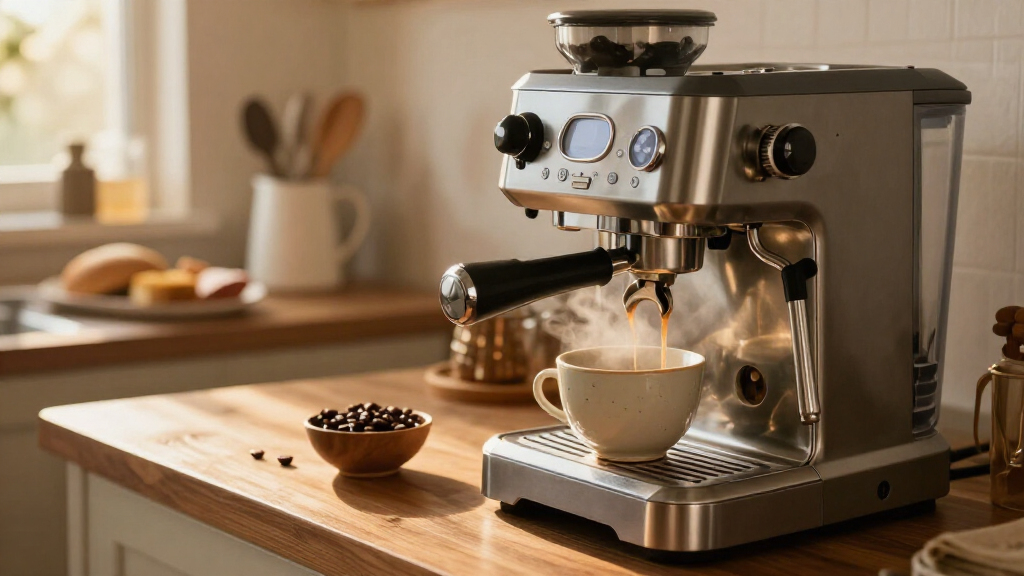
How We Picked
I compared these machines around the decisions that matter to a home barista: how much control the machine gives over brewing, whether grinding is built in, how approachable the controls are, and how well the setup fits espresso-only or milk-drink routines. I also weighed practical ownership factors such as counter footprint, cleaning demands, workflow complexity, and the value of features buyers may use often rather than once in a while.
The ranking favors machines with a strong balance of capability and usability, rather than a long feature list on its own. That puts the Breville Barista Pro ahead as an all-around choice, while the Silvia with PID ranks for control and the Barista Touch for guided convenience. Integrated-grinder models can reduce setup friction, but they are not automatically better for buyers who want to choose a separate grinder or change their workflow later. The two Gaggia E24 finishes are treated as one model family, and the more entry-oriented or less clearly differentiated machines rank lower when the lineup offers a stronger match for the same buyer need.
Factors to Consider When Choosing Best Prosumer Espresso Machines
Before choosing a machine, I’d match its workflow to how you actually make coffee. A prosumer label does not guarantee that every machine offers the same control, convenience, or room to grow. These broader factors can help prevent paying for features that do not fit your routine—or buying a setup that feels limiting once you start dialing in shots.
Choose Your Level of Manual Control
Decide whether you want to guide each shot or have the machine simplify repeat tasks. Manual machines reward experimentation with grind size, dose, and tamping, but they also make inconsistency more visible while you learn. Assisted controls can shorten the path to a drink you enjoy, though they may offer less direct involvement in each step. A common mistake is treating more manual control as automatically better; if you mostly want a dependable morning cappuccino, a guided workflow may be the more useful feature. If learning espresso is part of the hobby, prioritize clear access to brewing controls over convenience prompts. The right choice is the one whose routine you will enjoy repeating.
Decide Whether an Integrated Grinder Fits Your Plans
A built-in grinder saves counter space and keeps the machine-and-grinder workflow together, which can make a first setup less complicated. Its tradeoff is that the grinder and espresso machine become a linked purchase: if your grinding preferences change, replacing or upgrading that part may be less flexible. A separate grinder adds another appliance and may take more room, but it lets you choose and change the grinding setup independently. Think about the beans you buy, how often you switch between them, and whether you expect to upgrade gradually. Do not choose an integrated grinder solely to avoid comparing equipment; make sure the combined workflow suits your habits. Also check whether your household has room for the machine, a knock box, and the accessories you will use.
Match Milk Steaming to the Drinks You Make
Espresso and milk drinks place different demands on a machine. If you make cappuccinos or lattes every day, the steam wand’s control and the pace of switching between brewing and steaming may matter as much as shot preparation. Buyers who mainly drink straight espresso may have little reason to prioritize milk-focused features. A guided or adjustable frother can help newcomers make milk drinks with less technique, while a manual wand gives more opportunity to shape texture once practice builds. Avoid paying for a milk workflow you rarely use, but do not assume any wand will feel equally simple. Consider whether you want to learn milk texturing or prefer a more assisted result.
Budget for the Whole Coffee Station
The machine is only one part of a workable home espresso setup. A suitable grinder, a scale, a tamper that fits, fresh beans, and basic cleaning supplies can affect the daily experience as much as a more feature-rich machine. Buyers often spend their full equipment budget on the espresso machine, then discover that preparation tools or counter space are missing. An integrated-grinder model can reduce the number of separate purchases, while a machine without one leaves more freedom to build the station piece by piece. Compare the complete setup you want, not just the appliance. Leave room in your plan for routine upkeep and the accessories that make dosing and cleanup easier.
Think About Learning Curve and Repeatability
Espresso depends on several variables, so a machine that gives control may also ask you to manage more of them. A beginner can reduce frustration by choosing clear guidance and a repeatable routine rather than chasing every adjustment at once. More experienced home baristas may prefer equipment that gives them direct access to those adjustments. PID control, where included, can support more consistent temperature management, but it does not remove the need to dial in grind and dose. Start with a stable recipe and change one variable at a time; frequent simultaneous adjustments make it hard to learn what improved a shot. Choose a machine whose learning curve feels engaging rather than burdensome.
Check Maintenance and Counter-Space Realities
Daily convenience includes cleaning, refilling, and keeping the work area usable. Before buying, check the machine’s dimensions against your counter and leave enough clearance to use its controls and handle accessories. A built-in grinder can reduce appliance sprawl but still needs regular attention to coffee residue. Milk systems also call for prompt cleaning after use, so consider whether that routine fits your mornings. A compact-looking setup may feel crowded once you add a tamper, cups, and a place to discard spent grounds. Choose a machine you can maintain consistently; neglected cleaning can make even a capable espresso setup frustrating.
Frequently Asked Questions
Is a built-in grinder a good choice for a first prosumer espresso machine?
It can be a practical choice if you want a single appliance and a simpler setup. Models such as the Breville Barista Pro, Barista Express, and several De’Longhi La Specialista options combine grinding and espresso preparation. That convenience reduces the need to coordinate separate equipment, but it also ties your grinder choice to the machine. If you already own a capable grinder or expect to upgrade it independently, a machine-and-grinder split may give you more flexibility. Decide based on your counter space and future plans, not on the assumption that integrated always means easier to maintain.
Should I choose the Rancilio Silvia with PID or a Breville machine?
I’d choose based on the kind of interaction you want, not brand alone. The Silvia with PID is a better match for someone who wants a more manual routine and values direct involvement in dialing in espresso. The Breville Barista Pro adds an integrated grinder and a more consolidated workflow, while the Barista Touch leans further toward guided operation. A buyer who enjoys learning technique may prefer the Silvia’s approach; someone who values a streamlined station may favor Breville. Check what equipment you already own before deciding, since an existing grinder changes the comparison.
Are the two Gaggia Classic E24 listings different machines?
The products listed here are both Gaggia Classic E24 semi-automatic machines, with brushed stainless steel and cherry red finishes. The lineup provides no basis for treating their core brewing role as different. I would compare them as finish options and verify the precise seller listing, included accessories, and regional specifications before ordering. If you are choosing between the two, base the decision on the finish and the details of the specific listing rather than assuming one color represents a higher-performance version. The more meaningful choice is whether the Classic E24’s manual workflow suits you.
Do I need a PID-controlled machine to make good espresso at home?
No. PID control can help manage brewing temperature, but it is only one part of espresso preparation. Grind size, coffee freshness, dose, and a repeatable technique still shape the result. The Rancilio Silvia listing specifically includes a PID controller, which may appeal to buyers who want that added control. A machine without that feature can still suit a home barista, particularly if ease of use or an integrated workflow matters more. Treat PID as a preference that may support consistency, not as a guarantee of better coffee.
Which machine makes the most sense if several people in my household make milk drinks?
For a shared routine, I would prioritize an understandable workflow and features that help different users prepare drinks consistently. The Breville Barista Touch is the most approachable fit in this roundup for households that value guided operation, while the De’Longhi machines with adjustable or assisted milk features may also suit buyers who want help with milk preparation. A manual machine can work well if everyone is willing to learn the same process. Think about how much counter space the setup needs and who will clean the milk components after use. The best shared machine is the one every household member can operate and maintain.
Conclusion
For the strongest all-around balance, I’d choose the Breville Barista Pro; it combines an integrated grinder with a more hands-on workflow than the touchscreen-led Barista Touch. For a beginner-friendly option, the Breville Barista Touch is the clearest fit when guidance and ease matter more than manual control. Buyers seeking manual control should compare the Rancilio Silvia with PID and Gaggia Classic E24, while the Barista Express is a value-minded way to get an integrated grinder and espresso machine in one setup. For a premium, feature-led workflow, consider the De’Longhi La Specialista Opera or La Specialista Touch; for specific needs, the two Gaggia E24 listings let you choose between stainless steel and cherry red without changing the model’s core role. Pick the machine that fits your preferred routine, not the one with the longest feature list.
Evergreen bestsellers Picks

Dyson V11 Torque Drive Cordless Vacuum Cleaner

Roborock Q10 S5+ Robot Vacuum and Mop with Self-Emptying Station, 10,000 Pa Suction

KitchenAid 5.5-Quart Bowl-Lift Stand Mixer, Porcelain White
As an affiliate, we earn on qualifying purchases.