
During hot weather, it’s important to balance your coffee intake with proper hydration to stay energized and healthy. Limit caffeine by choosing lighter roast brews or cold brew, and replace some cups with water or electrolyte drinks. Hydrating foods like watermelon and cucumbers help maintain fluid levels. Watch for signs of dehydration, such as dry mouth or fatigue, and adjust your drinks accordingly. To learn how to keep this balance, keep exploring these tips.

Get coffee and tea gear delivered free with Prime
- Fast, free delivery on millions of items
- Prime Video, Amazon Music and more included
- Member-only deals all year
Key Takeaways
- Balance coffee intake with plenty of water and hydrating foods to prevent dehydration in hot weather.
- Opt for lighter roast or cold brew coffee to reduce caffeine’s diuretic effects.
- Limit coffee during peak heat hours and replace some servings with electrolyte drinks.
- Use flavored water or hydrating foods to make hydration more appealing and consistent.
- Recognize dehydration signs early and increase fluid intake promptly to maintain health.
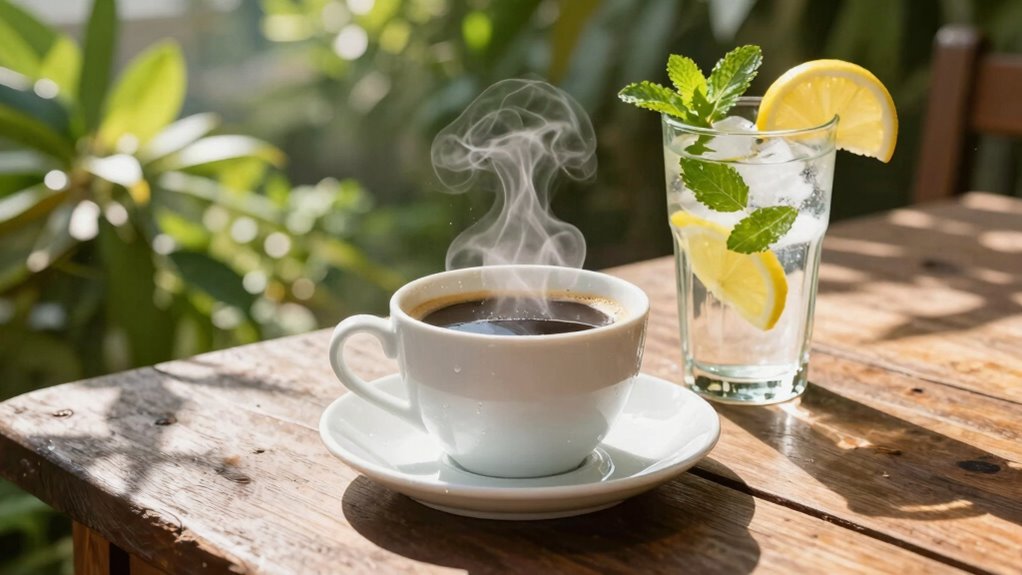
When the temperature rises, staying properly hydrated becomes more important, especially if you’re a coffee drinker. Coffee brewing can be an enjoyable part of your day, but in hot weather, it can also contribute to dehydration if you’re not careful. You might love starting your morning with a strong cup or craving that afternoon pick-me-up, but it’s vital to balance your coffee intake with effective hydration strategies. While coffee contains caffeine, which acts as a diuretic, it doesn’t mean you have to give it up entirely. Instead, focus on how you can enjoy your favorite brew while maintaining fluid levels in your body.
Enjoy coffee in moderation and stay mindful of hydration, especially in hot weather. Balance is key.
One way to do this is by adjusting your coffee brewing habits. Opt for lighter roasts or brewing methods that produce less caffeine, reducing its dehydrating effects. You can also limit the number of cups you consume during the hottest parts of the day, replacing some of your coffee with water or electrolyte drinks. Incorporating cold brew coffee into your routine is another smart move since it tends to be less acidic and, when prepared with more water, can be less dehydrating. Remember, the key isn’t necessarily cutting out coffee altogether but finding a balance that keeps you refreshed without risking dehydration. Additionally, understanding the effects of caffeine on hydration can help you make more informed choices.
Hydration strategies become especially vital when it’s hot outside. Make it a point to drink water regularly throughout the day, even if you don’t feel thirsty. Carry a reusable water bottle with you and set reminders if needed. Consider adding slices of lemon, cucumber, or fresh herbs to make your water more appealing. You might also enjoy hydrating foods like watermelon, oranges, or cucumbers, which help boost your fluid intake naturally. Incorporating hydration foods into your diet can be an easy way to support your fluid levels. If you’re engaging in outdoor activities or sweating more than usual, replenish lost electrolytes with drinks designed for hydration rather than sugary sodas or caffeinated beverages. Being mindful of your body’s hydration needs is essential, especially with the diuretic effects of caffeine.
Incorporating awareness of dehydration signs into your daily routine can help you stay alert to your body’s needs and prevent potential health issues. Balancing coffee consumption with hydration isn’t about eliminating your favorite beverage but about being mindful of your body’s needs in hot weather. Pay attention to your body’s signals—if you notice signs of dehydration like dry mouth, fatigue, or dark urine, increase your water intake. You can still savor your coffee, just with a strategic approach: drink smaller portions, choose brewing methods with less caffeine, and prioritize hydration through water and hydrating foods. With a little planning, you can enjoy the rich flavors of coffee without compromising your hydration status during the hotter months.
reusable water bottle with fruit infuser
As an affiliate, we earn on qualifying purchases.
As an affiliate, we earn on qualifying purchases.
Frequently Asked Questions
Can Coffee Consumption Improve or Worsen Dehydration in Hot Weather?
Coffee can worsen dehydration in hot weather because its acidity and caffeine content act as diuretics, making you lose fluids faster. While coffee’s rich flavor profiles might tempt you to drink more, it’s best to balance your intake with plenty of water. If you enjoy coffee, choose milder brews and drink water alongside to stay properly hydrated. Moderation is key to avoiding dehydration risks.
How Does Caffeine Affect Body Temperature Regulation During Heatwaves?
Caffeine can slightly impair your body’s ability to regulate core temperature during heatwaves by affecting your sweat response. It acts as a diuretic, which may reduce fluid levels, making it harder for your body to cool down effectively. As a result, your core temperature might rise more quickly. To stay safe, limit caffeine intake and prioritize hydration, especially when the heat is intense.
Are There Specific Coffee Types Better Suited for Hydration?
Surprisingly, light or cold brew coffee can be better suited for hydration because they often have lower acidity and caffeine levels, which reduces dehydration risk. When choosing coffee types, consider brewing methods like cold brew or pour-over, which preserve more subtle flavor profiles and maintain a smoother taste. These options can help you stay refreshed, especially during hot days, by providing hydration without excessive caffeine.
What Are Signs of Dehydration Caused by Coffee Intake in Hot Climates?
You might notice signs of dehydration from coffee intake in hot climates, such as a persistent thirst sensation and darker urine. Coffee’s diuretic effect can cause electrolyte imbalance, leading to symptoms like dizziness, dry mouth, and fatigue. If you experience these signs, it’s essential to drink water, replenish electrolytes, and moderate your coffee consumption to stay properly hydrated and avoid dehydration-related health issues.
How Much Water Should I Drink Alongside Coffee in Hot Weather?
You should aim to drink an extra glass of water for every cup of coffee you enjoy in hot weather. Since coffee brewing can cause dehydration, combining it with effective hydration strategies is essential. Keep a water bottle handy and sip regularly. By balancing your coffee intake with adequate hydration, you prevent dehydration and stay comfortable. Remember, staying mindful of your hydration needs helps you enjoy coffee without risking health issues.
Conclusion
As the sun sets on your hot day, remember that balancing coffee and hydration is like tending a delicate garden. Coffee, vibrant and energizing, is the shining sun, but too much can dry out your roots. Water, the gentle rain, nurtures your well-being quietly. Keep their dance in harmony, and you’ll find your inner oasis—refreshing, resilient, and ready to face whatever tomorrow brings. Stay hydrated, stay balanced, and let your well-being bloom.
Halloween Picks
halloween
As an affiliate, we earn on qualifying purchases.