Tiny changes in your kettle pour patterns can have a big impact on extraction and flavor. Adjusting your pour speed, angle, or pattern affects how water interacts with the coffee grounds, leading to more even saturation or channeling. Small tweaks help you control flow and improve consistency, revealing nuanced flavors. Mastering these subtle differences can elevate your brew from good to exceptional, and if you keep exploring, you’ll uncover even more ways to perfect your pour-over.

Get coffee and tea gear delivered free — and shop member deals
- Fast, free delivery on millions of items
- Access to Prime Big Deal Days deals on October 6–7
- Prime Video, Amazon Music and more included
Key Takeaways
- Small adjustments in pour angle and speed influence water distribution, affecting uniform extraction.
- Tiny changes in pour pattern can prevent channeling, ensuring even saturation of coffee grounds.
- Precise control over flow rate impacts the contact time between water and coffee, altering flavor extraction.
- Slight variations in pour size and timing enhance or diminish flavor nuances in the final brew.
- Consistent, deliberate pour techniques help achieve balanced extraction, emphasizing bean characteristics.
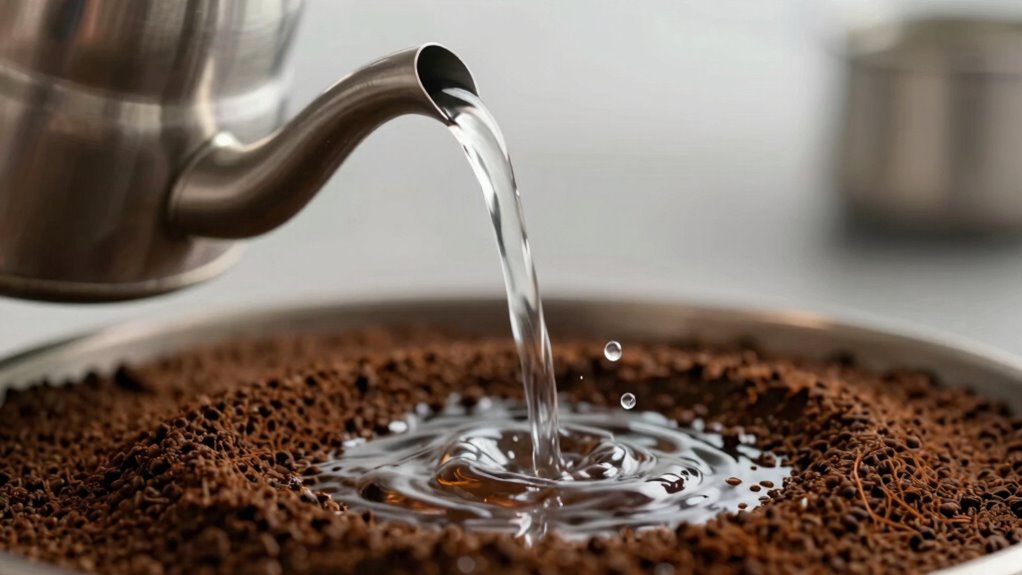
Mastering kettle pour patterns is essential for achieving the perfect pour-over coffee. When you pay attention to how you pour, you influence not just the aesthetics but the very essence of your brew—its coffee flavor and brewing consistency. Tiny adjustments in your pouring technique can lead to noticeable differences in extraction, impacting the taste, aroma, and overall quality of your coffee. The way you pour directly affects how water interacts with the coffee grounds, which in turn influences how evenly the coffee extracts. A well-executed pour pattern ensures that water flows smoothly and consistently over the grounds, promoting uniform extraction and preventing under- or over-extraction. This precision is what allows you to unlock the full potential of your beans and achieve that balanced, flavorful cup you’re after.
Mastering pour patterns ensures even extraction and unlocks the full flavor potential of your coffee.
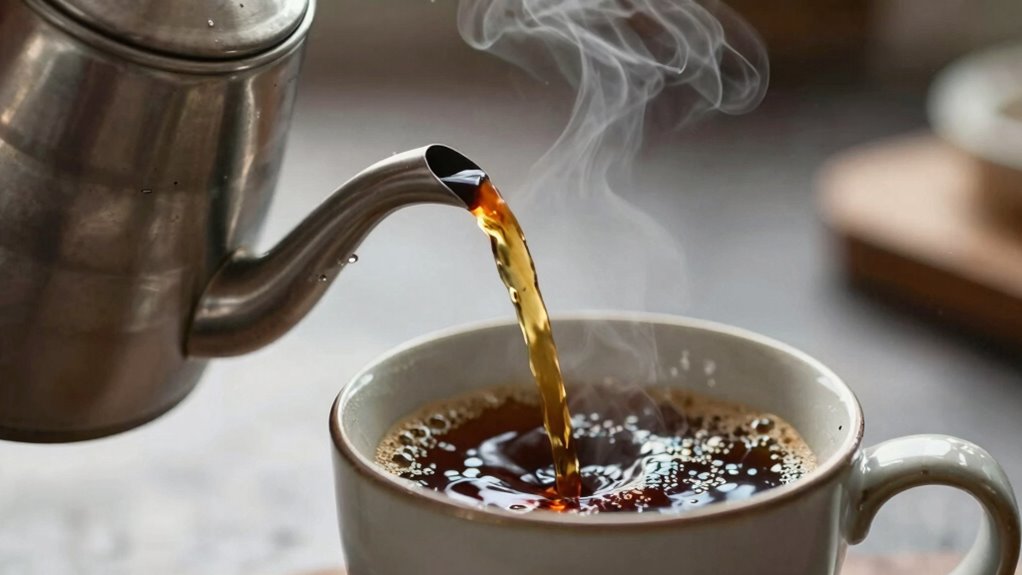
Your pour speed, angle, and pattern all play pivotal roles. A slow, steady pour generally encourages better control, giving you the ability to fine-tune the flow and maintain a consistent water level. When you vary the pouring angle—whether pouring in a circular motion or a straight line—you change how water saturates the coffee bed. A consistent circular motion, for example, helps evenly distribute water, reducing the risk of channeling, where water flows unevenly and extracts only certain parts of the grounds. Channeling is one of the main culprits behind inconsistent brewing, leading to a coffee flavor that’s either weak or overly bitter. Additionally, understanding pouring techniques can significantly improve your brewing results. Developing awareness of water flow control is essential for mastering the nuances of pour-over brewing. Moreover, practicing these techniques can help you develop a more intuitive feel for your equipment and coffee beans, leading to more consistent outcomes over time.
The size and shape of your pour also matter. Pouring in smaller, controlled increments allows you to monitor the flow rate more precisely, ensuring that each stage of brewing is optimized. When you master these subtle differences, you gain greater brewing consistency from cup to cup. This consistency is crucial whether you’re making coffee for yourself or for guests, since it guarantees that each brew will taste just as good as the last. Furthermore, these tiny adjustments help you better understand your equipment and beans, allowing you to experiment with pour techniques to find what best highlights the unique characteristics of different coffee beans.
Ultimately, it’s about developing a keen sense of control over your pouring. When you focus on your pour patterns, you’re not just making coffee—you’re crafting a beverage with depth and clarity. Small changes in your technique can elevate a decent cup into a memorable one, revealing nuanced flavors and achieving a level of brewing consistency that turns a simple ritual into a true art form.
Frequently Asked Questions
How Do Different Kettle Spout Designs Influence Pour Patterns?
Different kettle spout designs influence your pour patterns through their shape and flow control. A narrow spout creates a focused, steady stream, giving you precise control, while a wider spout produces a gentler, more widespread pour. The spout shape affects how the water flows, impacting pour consistency. By choosing a spout with ideal flow control, you can fine-tune your pour pattern, ultimately affecting extraction quality and flavor.
What Is the Ideal Pouring Speed for Optimal Extraction?
You should aim for a steady pouring speed, maintaining consistent flow control to guarantee ideal extraction. A moderate, controlled pour helps achieve pouring consistency, allowing water to evenly interact with the coffee grounds. Rapid or uneven pouring can disturb the bed, leading to uneven extraction. Practice maintaining a smooth, continuous flow, adjusting your speed as needed to keep the pour steady, which results in a more balanced and flavorful brew.
How Does Kettle Material Affect Pour Consistency?
Ever wondered how your kettle’s material influences your pour? The right material, like stainless steel or ceramic, helps maintain a steady pouring temperature, especially with good insulation. A well-insulated kettle prevents heat loss, ensuring consistent flow and pour speed. This consistency makes a big difference in extraction, giving you a balanced brew. So, choosing the right kettle material keeps your pour stable and your coffee tasting just right.
Can Pouring Height Impact Flavor Extraction?
Yes, pouring height can impact flavor extraction. When you pour from a greater height, water gains more force, which can influence water temperature and how evenly it interacts with your coffee grounds. This can lead to faster extraction or over-extraction if your grind size is too fine. Conversely, a lower pour height offers gentler water flow, helping you better control extraction, especially with precise grind sizes and temperature adjustments.
Are There Specific Techniques for Controlling Flow Rate?
You can control flow rate by adjusting your grind size and water temperature, much like tuning a delicate instrument. A finer grind slows the pour, creating a steady, gentle stream, while a coarser grind speeds it up, like a rushing river. Warmer water increases flow, making it feel like a lively dance, whereas cooler water slows things down. These small tweaks give you precise control over extraction and flavor.
Conclusion
Now, as you experiment with your pour patterns, remember that tiny changes can make a big difference. Adjust your speed, alter your flow, or change your angle—each tweak shapes your brew’s flavor and extraction. Embrace the process, stay attentive, and keep refining. With each pour, you’re not just brewing coffee—you’re crafting an experience. So, pour intentionally, observe keenly, and savor the artistry in every small movement.
Fall Picks
fall essentials
As an affiliate, we earn on qualifying purchases.