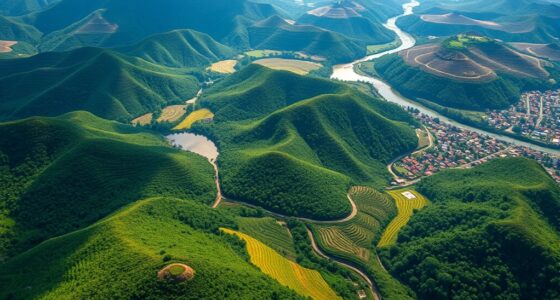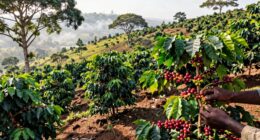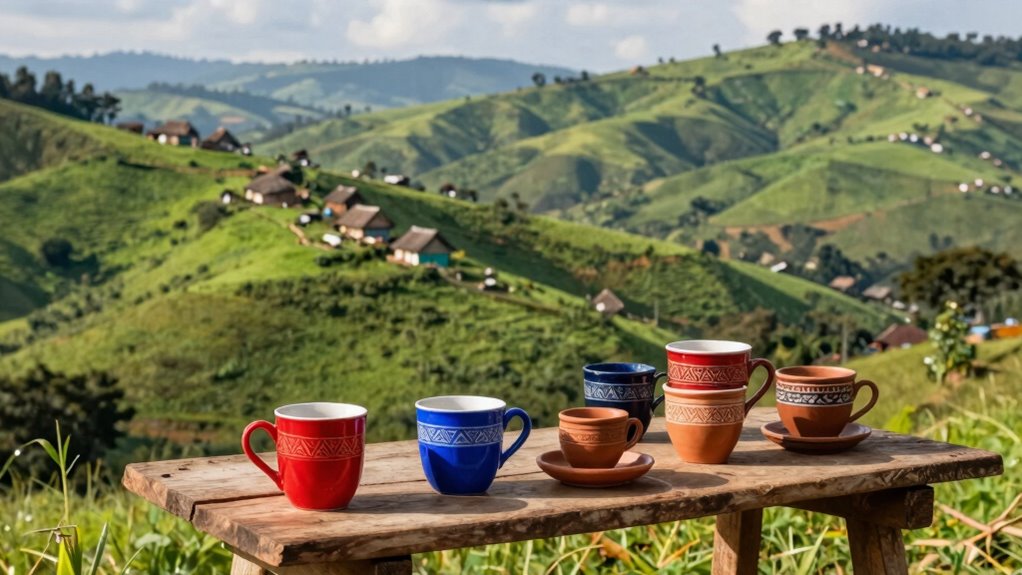

If you visit Burundi’s Ngozi and Kayanza, you’ll notice tiny rolling hills that shape the region’s vibrant coffee culture and stunning landscapes. Here, small slopes create ideal conditions for coffee farming, which is a crucial part of daily life. The region’s traditional and modern techniques give their coffee bright acidity and complex flavors, reflecting their unique terroir. These hills also foster rich cultural traditions and community bonds. Keep exploring to discover how these elements come together to produce such distinct and flavorful cups.
Key Takeaways
- The tiny hills of Ngozi and Kayanza create ideal conditions for high-quality coffee cultivation.
- Traditional and modern processing techniques give the region’s coffee its bright acidity and complex flavors.
- Coffee in these provinces reflects the region’s unique terroir and cultural heritage, enhancing its distinctiveness.
- Local traditions and communal practices deeply influence coffee processing and community life.
- The landscape and cultural customs together embody Burundi’s rich regional identity and authenticity.
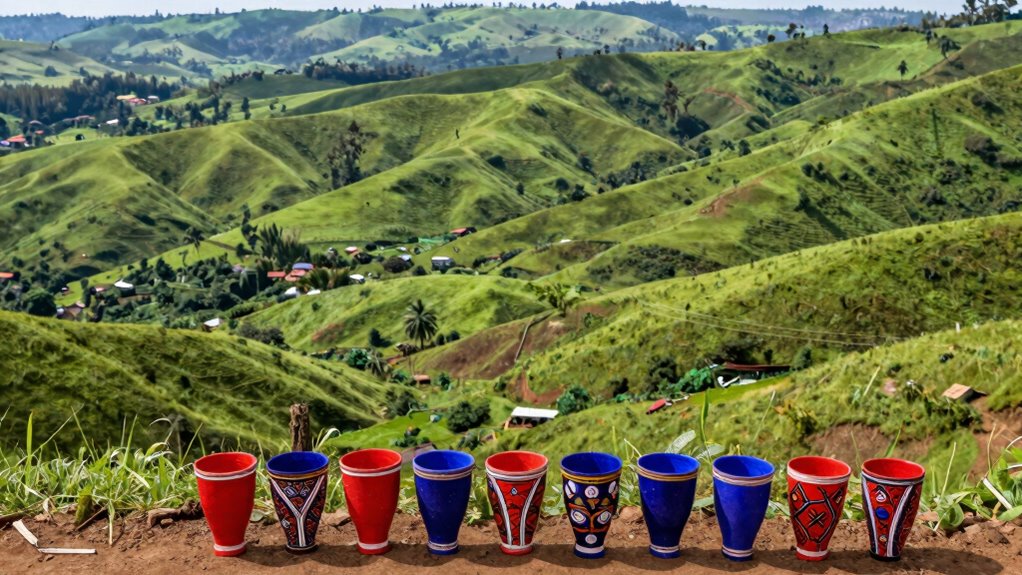
Have you ever wondered what makes Burundi’s Ngozi and Kayanza provinces stand out? It’s not just their rolling, tiny hills, but the vibrant blend of coffee cultivation and rich cultural traditions that truly define these regions. As you explore, you’ll notice how the landscape’s gentle slopes are perfectly suited for coffee farming, shaping both the economy and the daily lives of local communities. Coffee here isn’t just a crop; it’s a way of life passed down through generations. You can see the meticulous care farmers put into tending their coffee plants, from planting seedlings to harvesting ripe cherries. The process is labor-intensive, but the result is a cup of coffee that’s renowned for its bright acidity and complex flavor profile. This dedication to quality is rooted in centuries-old techniques, blending tradition with modern methods, ensuring each bean reflects the region’s unique terroir. The region’s unique terroir greatly influences the flavor and quality of the coffee produced here. Additionally, many farmers incorporate traditional processing methods that enhance the coffee’s distinctive characteristics. These methods are often deeply embedded in local cultural practices, which help preserve the authenticity of the coffee.
Beyond coffee, the cultural traditions of Ngozi and Kayanza add depth to the region’s identity. You’ll find that communal activities and local ceremonies are woven into daily life, reinforcing a sense of community and shared history. During festivals, locals wear vibrant attire and participate in dances that have been performed for generations, celebrating everything from harvests to religious events. These traditions aren’t just preserved; they’re lived and celebrated, giving visitors like you an authentic glimpse into Burundian heritage. The music, dance, and storytelling are integral parts of social gatherings, strengthening bonds and passing on values. You’ll notice that hospitality is a cornerstone here, with families welcoming visitors warmly, often offering a cup of coffee as a symbol of friendship and respect. Additionally, the region’s cultural heritage is a testament to the resilience and creativity of its people.
The combination of these tiny hills, coffee cultivation, and cultural traditions creates a landscape that’s both picturesque and meaningful. You can’t help but feel connected to the land and its people, understanding that each coffee bean holds stories of perseverance and tradition. Visiting Ngozi and Kayanza isn’t just about tasting coffee; it’s about immersing yourself in a way of life that values artistry, community, and history. As you sip the locally brewed coffee, you’ll recognize that these regions are more than just scenic spots—they’re living repositories of Burundi’s soul. The tiny hills may seem small, but their impact on the culture and economy is profound, making these provinces truly stand out on any map.
As an affiliate, we earn on qualifying purchases.
Frequently Asked Questions
What Is the History Behind Ngozi and Kayanza’s Coffee Production?
You should know that Ngozi and Kayanza have a rich coffee history rooted in traditional coffee fermentation and processing methods. Local farmers have perfected these techniques over generations, emphasizing quality and unique flavors. Coffee fermentation plays a crucial role in developing distinctive tastes, while careful coffee processing ensures beans retain their aromatic qualities. This history of craftsmanship and dedication continues to define these regions’ renowned coffee, making them globally appreciated for their vibrant, nuanced cups.
How Do Local Traditions Influence Coffee Farming in These Regions?
You embrace the rich tapestry of local traditions that shape coffee farming here, like the morning coffee ritual, a sacred act connecting generations. These customs, part of cultural heritage, influence everything from planting to harvesting, ensuring care and respect for the land. You’ll notice that these traditions foster community spirit and quality, turning coffee cultivation into a cultural expression that’s as much about identity as it is about flavor.
What Are the Main Challenges Faced by Farmers in Ngozi and Kayanza?
You face challenges like limited access to markets, which hinders your ability to sell coffee at good prices. Farmer livelihoods are affected by unpredictable weather and low-quality infrastructure, making it hard to sustain your farm income. Additionally, pests and diseases threaten your crops, and lack of resources can prevent you from adopting better farming practices. Overcoming these hurdles requires better support systems and improved market access to secure your future.
Are There Any Unique Coffee Varieties Specific to These Hills?
Yes, you’ll find unique coffee varieties in these hills, thanks to the distinct coffee bean genetics shaped by local climate and soil conditions. You can enhance your crop’s quality by practicing effective soil fertility management, which helps preserve these unique traits. By understanding the specific genetics and maintaining soil health, you’ll produce exceptional coffee that reflects the region’s unique flavor profile, setting your beans apart in the market.
How Do Climate Changes Impact Coffee Quality in Ngozi and Kayanza?
Climate change affects coffee quality in Ngozi and Kayanza by causing unpredictable weather patterns, leading to water scarcity and stress on coffee plants. You can implement climate adaptation strategies like efficient water management and shade planting to mitigate these impacts. These practices help maintain consistent quality, ensuring your coffee remains vibrant despite changing conditions. Staying proactive with climate adaptation is essential to preserve the unique flavor profiles of your coffee.
Conclusion
You’ve seen how Ngozi and Kayanza, though small hills, hold big stories and unique flavors, reminding us that sometimes, the greatest treasures are found in the tiniest places. Just as the adage says, “Small seeds can grow into mighty trees,” these regions prove that even modest beginnings can yield remarkable results. Keep exploring, for in every corner, there’s a story waiting to inspire you.