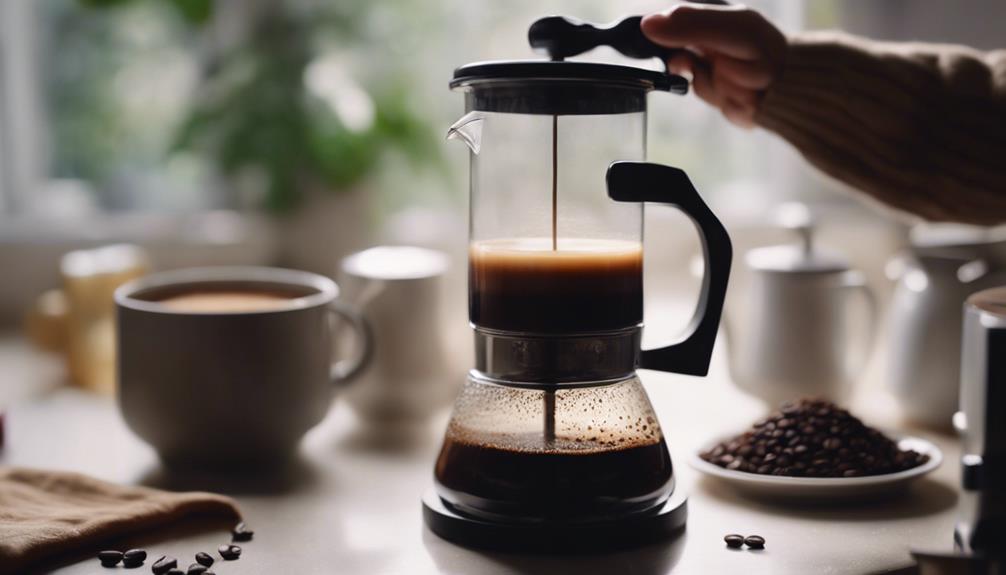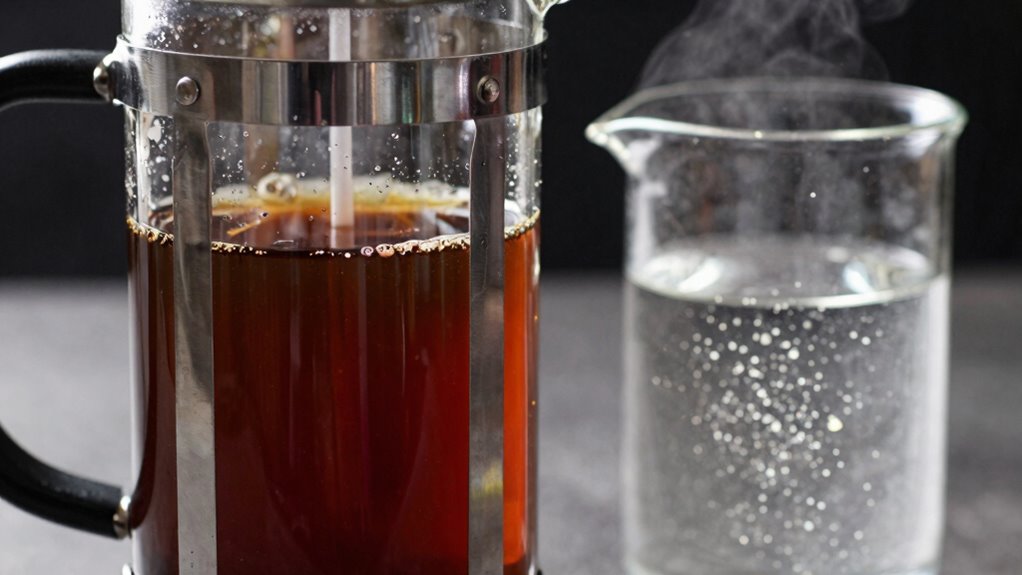

Your water minerals greatly impact your French press coffee’s flavor and extraction. Too much calcium and magnesium can cause over-extraction, leading to bitterness, while too little can result in flat, dull taste. The pH level also affects acidity and brightness. Balancing mineral content and water pH helps bring out nuanced flavors and guarantees a consistent, rich cup. Keep exploring these factors to master your brew and discover even better flavors.
Key Takeaways
- Mineral content in water directly influences the extraction of flavor compounds in French press coffee.
- Proper water pH levels optimize mineral interactions, enhancing coffee’s brightness and complexity.
- Hard water with excess calcium and magnesium can cause over-extraction, leading to bitterness.
- Adjusting mineral saturation and water hardness improves flavor clarity and balance.
- Monitoring and controlling water chemistry is essential for consistent, high-quality French press coffee.
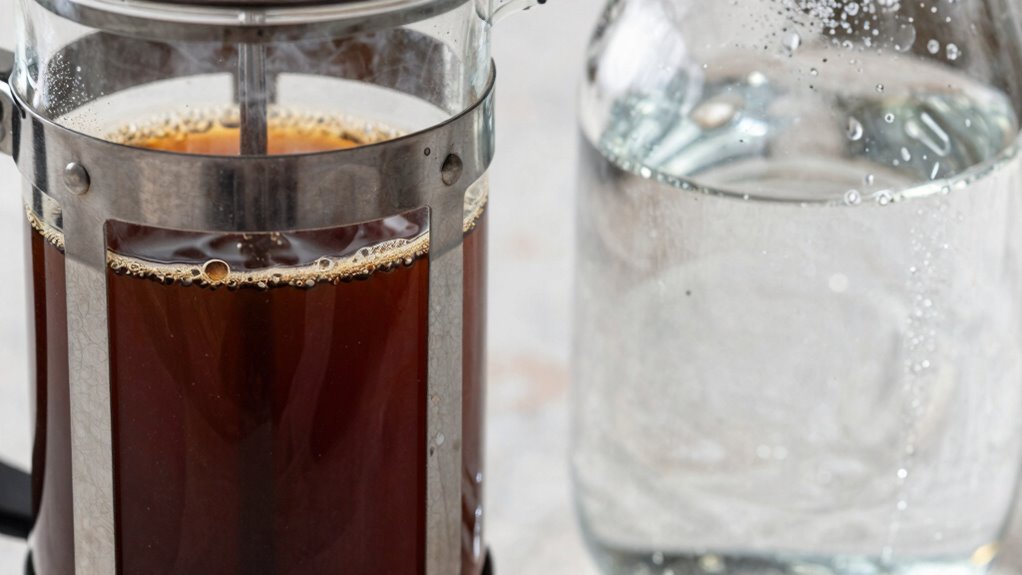
Have you ever wondered how the minerals in your water influence the taste of your French press coffee? It’s more than just about the quality of the beans or your brewing technique—water chemistry plays an essential role. The mineral content, especially in relation to water pH levels and mineral saturation, can dramatically alter the flavor profile of your brew. When water contains the right balance of minerals, it enhances extraction, bringing out the nuanced flavors of your coffee. Conversely, poor mineral balance can result in a flat or overly bitter cup.
Water pH levels are fundamental to this process. If your water is too acidic (low pH), it can lead to a sour or sharp taste, overpowering the coffee’s natural flavors. On the other hand, overly alkaline water (high pH) can produce a dull, flat taste, masking the coffee’s complexity. Ideally, for French press brewing, you want water with a neutral or slightly alkaline pH—around 7 to 8. This range ensures the best extraction without introducing undesirable flavors. The pH level influences how minerals interact with coffee grounds, affecting how flavors are released during brewing. Additionally, understanding your water’s mineral composition can help you better control these interactions.
Mineral saturation refers to how much mineral content your water holds in solution. When mineral saturation is too high, water becomes “hard,” containing significant amounts of calcium and magnesium. Hard water can lead to over-extraction, resulting in a bitter or astringent taste, which masks the coffee’s subtle notes. Conversely, soft water with low mineral saturation might not extract enough flavor compounds, leaving your coffee tasting weak or flat. The key is achieving a balance—moderate mineral saturation—so that the water enhances the coffee’s natural flavors without overpowering or dulling them. Regularly testing your water’s hardness levels can help you maintain this balance. Adjusting mineral levels through water mineral content adjustments can further refine your brewing process for optimal flavor.
In practical terms, you should pay attention to your water source and consider using a water filter or mineral adjustments if necessary. Bottled or filtered water often has more controlled mineral content, making it easier to fine-tune your brew. When you understand how water pH levels and mineral saturation influence extraction, you can experiment more intentionally. By adjusting these factors, you’ll notice a marked difference in the clarity, brightness, and complexity of your French press coffee. Ultimately, paying attention to water chemistry isn’t just about health or convenience—it’s an essential step toward crafting a consistently exceptional cup. Additionally, understanding the water mineral composition can help you optimize your brewing process for better flavor.

Varify 17in1 Complete Drinking Water Test Kit – 100 Strips + 2 Bacteria Tester Kits – Well, Tap, Home, City Water Testing Strip for Lead, Alkaline, Chlorine, Hardness, Iron, Fluoride, Copper & More
17 IMPORTANT PARAMETERS: The Varify Premium Drinking Water Test Kit offers an unrivaled, complete analysis of your drinking…
As an affiliate, we earn on qualifying purchases.
As an affiliate, we earn on qualifying purchases.
Frequently Asked Questions
How Do Mineral Levels Affect Coffee Extraction Efficiency?
Higher mineral levels, especially water hardness and mineral saturation, improve coffee extraction efficiency. When water has ideal mineral content, it interacts better with coffee grounds, extracting flavors more effectively. Too soft water can lead to under-extraction, making your brew taste flat, while overly mineral-rich water can cause over-extraction and bitterness. Balancing mineral levels ensures consistent extraction, enhancing flavor clarity and richness in your French press coffee.
Can Water Mineral Content Change Over Time?
Yes, water mineral content can change over time due to factors like water hardness and mineral stability. If your water source undergoes changes in mineral levels—perhaps from seasonal shifts, plumbing updates, or filtration adjustments—the mineral composition can vary. This impacts not only taste but also extraction efficiency in your French press, so it’s good to regularly check your water’s mineral stability to maintain consistent flavor and quality.
What Minerals Are Most Beneficial for French Press Brewing?
You’ll find calcium and magnesium are most beneficial for French press brewing because they enhance water mineral stability and improve extraction. These minerals interact positively with coffee compounds, boosting flavor clarity and body. Avoid excessive mineral content, as it can cause mineral interaction effects that dull the taste. Using water with balanced calcium and magnesium levels guarantees your French press coffee delivers a rich, well-rounded flavor experience.
How Does Water pH Influence Flavor Extraction?
Think of water pH as the bassline in your coffee symphony—it sets the tone for flavor extraction. If the pH is too high or low, it can mute or exaggerate certain notes. When you adjust water temperature and grind size, a balanced pH helps extract the best flavors. Keep pH neutral for a harmonious brew, and you’ll find your French press coffee tasting just right.
Are There Specific Mineral Ratios to Enhance French Press Taste?
Yes, maintaining a good mineral balance enhances your French press taste. Aim for a water composition with a balanced mix of calcium, magnesium, and bicarbonates, which improves extraction and flavor clarity. Too much calcium might make your brew bitter, while too little can result in flatness. Adjust mineral ratios to suit your taste, ensuring your water supports ideal extraction without overpowering the coffee’s natural flavors.

Digital pH Tester for Water, pH Meter for Hydroponic Water, TDS Tester EC PPM Test for Plant Nutrients, 4-in-1 Meter for Conductivity, pH Pen for Drinking Water, DWC, Indoor Plants
Multi-functional 4-in-1 pH Tester: Our GIDIGI digital pH testers are versatile and can measure not only pH values…
As an affiliate, we earn on qualifying purchases.
As an affiliate, we earn on qualifying purchases.
Conclusion
Understanding how water minerals impact your French press brew can truly elevate your coffee experience. Did you know that mineral content influences flavor more than you might realize? For example, water with just the right balance of calcium and magnesium can enhance the coffee’s richness, making each cup more enjoyable. So, next time you brew, pay attention to your water’s mineral profile—you might just discover a whole new level of flavor in every sip.

COFFEE WATER Mineral Packs for Making Water for Coffee (Makes 25 Gallons)
COFFEE WATER mineral packs turn pure water into the optimal water for brewing a truly amazing cup of…
As an affiliate, we earn on qualifying purchases.
As an affiliate, we earn on qualifying purchases.
COFFEE WATER Mineral Packs for Making Water for Coffee (Makes 25 Gallons)
COFFEE WATER mineral packs turn pure water into the optimal water for brewing a truly amazing cup of…
As an affiliate, we earn on qualifying purchases.
As an affiliate, we earn on qualifying purchases.