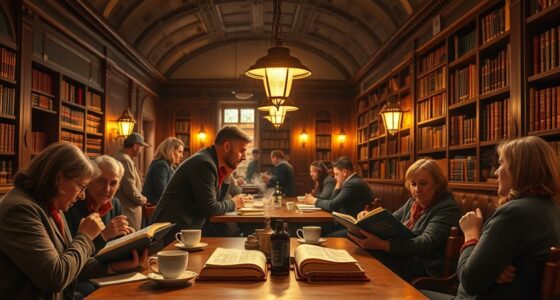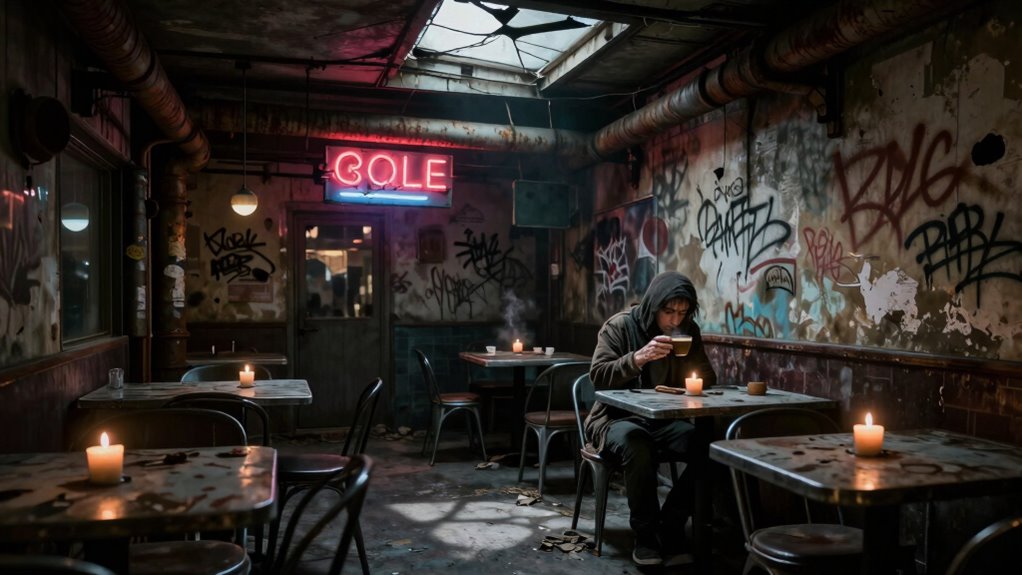

In dystopian worlds, cafés act as essential sanctuaries where you find fleeting comfort and hope amidst chaos. These spaces often serve as symbols of resilience, embodying acts of rebellion and normalcy despite decay and oppression. Characters savor coffee rituals as small acts of resistance, preserving human connection and tradition. As you explore further, you’ll discover how these gritty yet inviting spaces highlight the enduring human spirit and the importance of hope in bleak times.
Key Takeaways
- Dystopian cafés serve as safe havens, offering solace and normalcy amidst societal collapse.
- They embody resistance through makeshift repairs, gritty aesthetics, and symbolic coffee rituals.
- These cafés foster human connection, hope, and resilience despite oppressive environments.
- Design elements include reclaimed materials, graffiti, and dim lighting, reflecting decay and defiance.
- They function as allegories for perseverance, emphasizing small acts of self-care and community in bleak worlds.
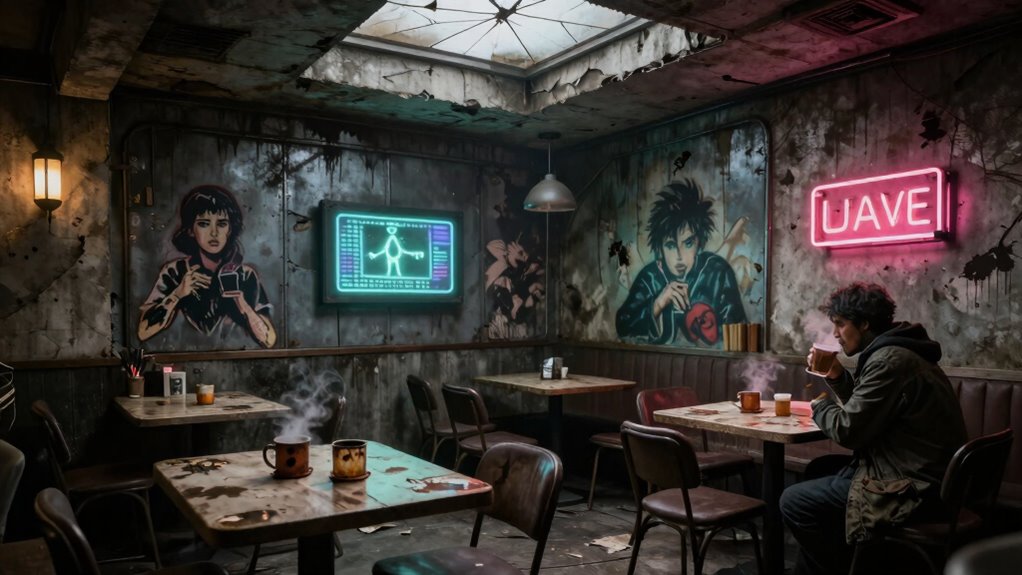
Have you ever noticed how cafés in fiction often become more than just places to grab a drink? In dystopian worlds, these spaces transform into sanctuaries where people cling to familiar routines amid chaos. The coffee rituals performed within these cafés serve as small acts of rebellion, a way to preserve a sense of normalcy in a fractured society. You might find characters meticulously preparing their coffee, savoring each sip as if it’s a precious commodity, a symbol of resilience. These rituals anchor them, offering fleeting moments of comfort against a backdrop of despair. The aesthetics of these cafés often reflect dystopian themes—gritty, utilitarian, yet strangely inviting. Walls might be battered, lighting dim, with signs of decay blending with makeshift repairs. Despite the oppressive environment outside, inside, the space becomes a paradox: a refuge that embodies both vulnerability and defiance. The contrast amplifies the significance of the coffee rituals, which stand out as acts of mindfulness amid chaos.
In these worlds, the cafés don’t just serve coffee—they become communal hubs where stories are shared, plans are whispered, and hopes are kept alive. You might see characters huddled over steaming mugs, exchanging secrets or comforting each other with quiet companionship. The dystopian aesthetics—metal, concrete, graffiti—enhance the feeling that these cafés are pockets of resistance. Every detail, from the worn furniture to the flickering neon signs, echoes the struggle to maintain humanity in a dehumanized landscape. The act of brewing coffee, sometimes with limited resources, underscores a desire to reclaim control and retain identity. These rituals, simple as they may seem, become symbols of perseverance, emphasizing that even in the bleakest circumstances, small acts of self-care matter. Additionally, the preservation of biodiversity within these fictional settings can symbolize hope for a future where harmony with nature is restored, even in the face of societal collapse. This connection to environmental resilience highlights how fictional societies often reflect real-world hopes for ecological recovery. Moreover, the inclusion of sustainable practices in these settings emphasizes a longing for balance and renewal amid destruction.
Furthermore, these cafés sometimes incorporate reclaimed materials, illustrating an effort to reduce environmental impact and embody resilience through sustainable design choices. You’re drawn into these spaces because they remind you that, even at the end of the world, human connection and tradition persist. The cafés in fiction aren’t just about caffeine—they’re about holding onto what makes life worth living. The dystopian aesthetics highlight the contrast between destruction and hope, chaos and comfort. Every cup served is a *testament* to resilience, a reminder that even in the darkest times, people find ways to create meaning. As you read these stories, you realize that these cafés are more than fictional settings—they’re allegories for the enduring human spirit, where coffee rituals become acts of rebellion and sanctuary amid dystopian despair.
reclaimed wood coffee table
As an affiliate, we earn on qualifying purchases.
As an affiliate, we earn on qualifying purchases.
Frequently Asked Questions
How Do Dystopian Cafés Reflect Societal Collapse?
You see dystopian cafés as symbols of societal collapse, showcasing urban resilience by adapting to chaos. These spaces foster cultural resilience, offering refuge and community amid destruction. They reflect how people cling to familiar routines and cultural identity despite upheaval. By serving as hubs of connection and hope, these cafés demonstrate that, even in collapse, human spirit and resilience persist, helping society rebuild from the ruins.
Are These Cafés Typically Safe Environments for Characters?
You might find these cafés aren’t always safe environments for characters. Often, they serve as underground hideouts or secret meeting spots, making them vulnerable to discovery by hostile factions or authorities. While they can offer temporary comfort and a sense of community, their covert nature means danger lurks nearby. Characters must stay alert, knowing that a safe haven can quickly turn into a trap if they’re not cautious.
What Role Do These Cafés Play in Character Development?
These cafés serve as personal refuges, where you can escape reality and reflect on your circumstances. They reveal your character’s resilience, vulnerabilities, and desires, helping you understand their motivations and growth. Through interactions and moments of solitude, these spaces deepen your connection to characters, showing how they seek comfort and normalcy amidst chaos. Ultimately, the cafés shape their development by providing a safe haven for introspection and emotional exploration.
How Do Café Atmospheres Contrast With Their Dystopian Settings?
You notice that café atmospheres contrast sharply with dystopian settings through their futuristic decor and silent ambiance. While the outside world may be bleak and chaotic, inside, you experience a rare sense of calm and innovation. The futuristic decor offers a glimpse of hope and progress, while the silent ambiance creates a peaceful refuge. This contrast highlights how these cafés serve as sanctuaries amid societal despair.
Are Real-World Cafés Inspired by Dystopian Fiction?
Yes, some real-world cafés draw inspiration from dystopian fiction, especially in their future aesthetics and cultural symbolism. You might notice modern cafés adopting minimalist, industrial styles reminiscent of dystopian settings, creating a sense of resilience or rebellion. These spaces often evoke a futuristic vibe, blending innovation with symbolic elements that challenge traditional notions, making them feel like a nod to dystopian worlds while offering a unique, thought-provoking atmosphere for patrons.
dim lighting LED lamps
As an affiliate, we earn on qualifying purchases.
As an affiliate, we earn on qualifying purchases.
Conclusion
As you step into these dystopian cafés, you realize they’re more than just refuges—they’re beacons of fleeting normalcy in a shattered world. Like lanterns in the dark, they offer comfort amid chaos, whispering promises of better days. In these pages of fiction, you find that even in the end times, small acts of connection can bloom like fragile flowers through concrete cracks, reminding you that hope, no matter how tiny, can still shine brightly against the shadows.
graffiti wall art decor
As an affiliate, we earn on qualifying purchases.
As an affiliate, we earn on qualifying purchases.
industrial style café furniture
As an affiliate, we earn on qualifying purchases.
As an affiliate, we earn on qualifying purchases.