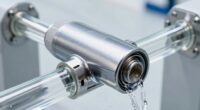
Inline water filters for espresso are installed directly in your water line before the machine, typically between the water supply and the inlet. They remove impurities like chlorine, sediments, and minerals, improving water quality and protecting your equipment from scale buildup. This helps guarantee every shot tastes better and prolongs your espresso machine’s lifespan. Proper installation and maintenance are key—continue exploring to learn how to get the best results from your filter setup.

Get coffee and tea gear delivered free with Prime
- Fast, free delivery on millions of items
- Prime Video, Amazon Music and more included
- Member-only deals all year
Key Takeaways
- Inline water filters are installed directly on the water line before the espresso machine.
- They remove impurities, chlorine, and sediments to improve water quality for better espresso.
- Proper placement ensures water is filtered just prior to brewing, protecting the machine from scale buildup.
- Installation involves connecting the filter between the water supply and machine inlet following manufacturer instructions.
- Regular maintenance and filter replacement are essential for optimal performance and espresso quality.

If you want consistently great espresso, installing an inline water filter is a smart move. The quality of water you use directly impacts the flavor, aroma, and overall performance of your espresso machine. Poor water quality can lead to mineral buildup, scale formation, and even damage to your equipment over time. An inline water filter acts as a barrier, removing impurities, chlorine, and sediments before the water reaches your machine, ensuring that every shot you pull is rich and flavorful. It’s a simple step that can considerably improve your brewing experience and extend the lifespan of your investment. Additionally, understanding the importance of water quality can help you make more informed choices about filtration options and maintenance routines.
Proper filter maintenance is vital to keep your inline water filter working effectively. Over time, filters become less efficient as they trap contaminants, and neglecting maintenance can lead to reduced water flow and compromised water quality. Typically, you’ll need to replace the filter cartridge every few months, depending on usage and water hardness. Regularly checking and changing the filter ensures you’re consistently delivering clean, quality water to your espresso machine. Many filters come with built-in indicators or reminders, making it easier to stay on top of maintenance. Neglecting filter maintenance not only diminishes the filter’s ability to remove impurities but can also introduce bacteria or mold if the filter sits unused for prolonged periods. Staying vigilant about replacing the filter helps maintain ideal water quality, ensures your machine functions smoothly, and preserves the integrity of your espresso.
When installing an inline water filter, you’ll typically attach it directly to your water line before the water reaches your espresso machine. This placement is ideal because it allows the filter to treat the water just before brewing, ensuring that every shot benefits from purified water. The installation process is straightforward and usually involves connecting the filter between your water supply and the machine’s inlet. Make sure to follow the manufacturer’s instructions regarding flow direction and secure fittings to prevent leaks. Once installed, it’s a good idea to run some water through the system to flush out any carbon dust or loose particles from the new filter. This initial flush also helps to prime the filter and prepare it for regular use.
inline water filter for espresso machine
As an affiliate, we earn on qualifying purchases.
As an affiliate, we earn on qualifying purchases.
Frequently Asked Questions
How Often Should I Replace My Inline Water Filter?
You should replace your inline water filter every 6 to 12 months, depending on its filter lifespan and your water quality. Regular replacement guarantees peak filtration and prevents buildup that can affect your espresso’s taste. Check the manufacturer’s guidelines for specific replacement frequency, but don’t wait too long. Staying on top of filter changes helps maintain your machine’s performance and keeps your coffee tasting fresh.
Can I Install an Inline Water Filter Myself?
Yes, you can install an inline water filter yourself. Just follow some simple installation tips like turning off the water supply, ensuring proper fitting, and checking for leaks. Make sure to read the manufacturer’s instructions carefully. Regular filter maintenance, like replacing the filter when needed, keeps your espresso machine in top shape. With patience and attention to detail, you can do it easily and enjoy fresh-tasting coffee every time.
Does Water Temperature Affect Filter Performance?
You might be surprised, but water temperature can truly impact filter performance. When water gets too hot or too cold, it can reduce filter efficiency, allowing impurities to slip through and affect your espresso’s flavor. Keep your water at an ideal temperature, and you’ll ensure your inline water filter works at its best, delivering pure, clean water every time. Don’t let temperature sabotage your perfect shot—pay attention and stay vigilant.
Are All Inline Filters Compatible With Every Espresso Machine?
Not all inline filters are compatible with every espresso machine. You need to check the filter material to guarantee it suits your water quality and machine requirements. The installation process varies, so follow the manufacturer’s instructions carefully. Some filters are designed specifically for certain models or connection types, so verify compatibility before purchase. Doing this ensures peak performance and prevents potential damage to your espresso machine.
What Signs Indicate My Filter Needs Replacing?
You’ll know your filter needs replacing when you notice a decline in water flow or a change in the taste of your espresso. Check for increased pressure or reduced filtration effectiveness, as these are common replacement indicators. Keep in mind the filter lifespan—most last around 3 to 6 months—and replace it promptly to maintain peak water quality and espresso flavor. Regular checks help ensure your machine functions smoothly.
Conclusion
Now that you know where to place inline water filters and how they work, isn’t it satisfying to picture your espresso machine running smoothly, delivering rich, flavorful shots every time? By installing the right filter, you’re not just protecting your equipment but elevating your coffee experience. So, why settle for mediocre brews when a simple upgrade can make all the difference? Keep your water pure and your espresso exceptional—your taste buds will thank you.
Halloween Picks
halloween
As an affiliate, we earn on qualifying purchases.