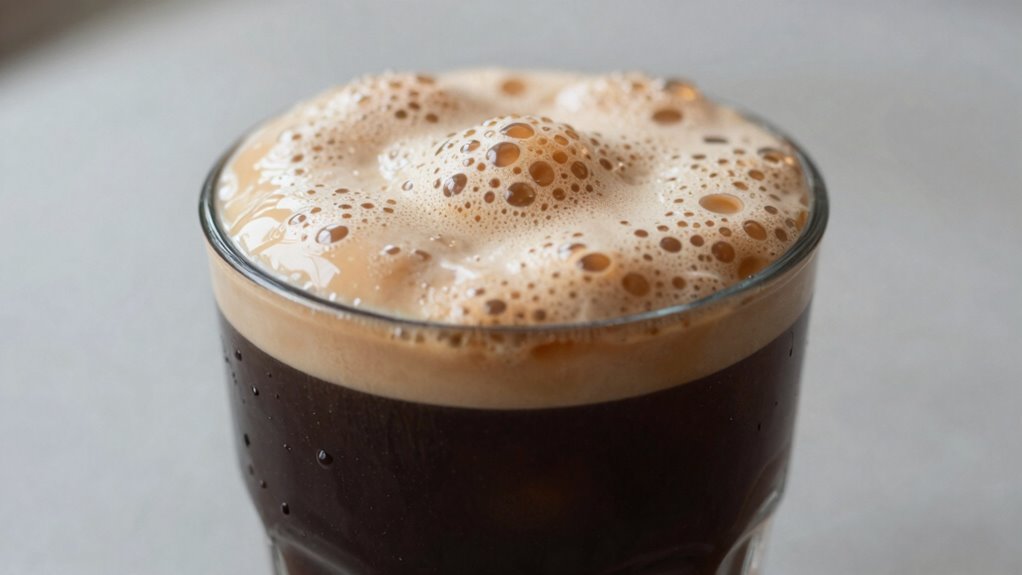

To make nitro cold brew at home with that creamy, cascading head, you rely on physics principles like microbubble stability and controlled pressure. Cold brewing creates a concentrated coffee base, which you infuse with nitrogen under high pressure for tiny, stable bubbles. Proper pouring and maintaining cold temperatures preserve the foam’s velvety texture. Mastering these techniques guarantees your homemade brew mimics café-quality nitro drinks—if you keep exploring, you’ll discover exactly how to perfect this fizzy, smooth experience.
Key Takeaways
- Proper nitrogen infusion requires a pressurized vessel to dissolve nitrogen into cold brew without disrupting microbubbles.
- Maintaining cold temperatures during pouring preserves nitrogen microbubbles, ensuring a smooth, creamy head.
- Gentle pouring techniques prevent foam collapse by minimizing agitation and bubble disruption.
- Consistent high pressure during infusion maximizes nitrogen dissolution and foam stability over time.
- The physics of microbubble formation and stability creates the characteristic cascading, Guinness-like head on nitro cold brew.
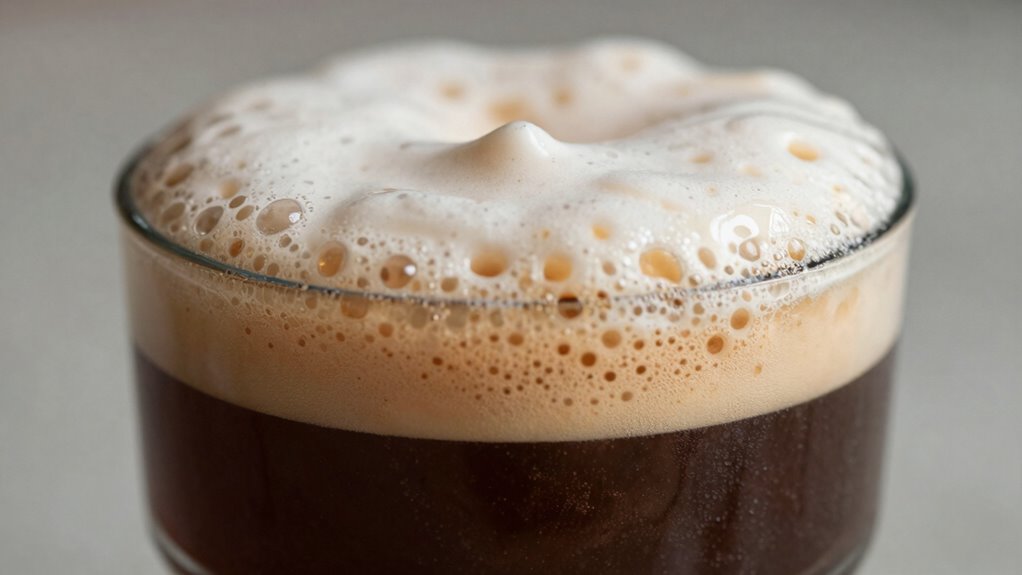
Have you ever wondered how to enjoy the rich, creamy texture of nitro cold brew right in your own kitchen? The secret lies in understanding the science behind coffee brewing and foam stability. When you brew cold brew coffee, you start with a high concentration of coffee extract, which creates a smooth, bold flavor. To replicate the nitro effect at home, you need more than just cold brew—you need to introduce nitrogen gas, which creates tiny bubbles that give the drink its signature creaminess. The key is to master the balance between proper coffee brewing and the stability of the foam or microbubbles that form when nitrogen is infused. foam stability is essential for maintaining that velvety texture over time. Achieving the perfect nitro cold brew at home begins with selecting quality coffee beans and brewing them correctly. Cold brewing involves steeping coffee grounds in cold water for 12 to 24 hours, resulting in a smooth, less acidic beverage. Once you have your cold brew, pour it into a pressurized vessel designed for nitrogen infusion, such as a whipped cream dispenser or a specialized nitro cold brew tap system. These devices are essential because they maintain the high pressure needed to dissolve nitrogen into the liquid, creating tiny, stable bubbles.
Foam stability is *paramount* for that luxurious, velvety mouthfeel that makes nitro cold brew so appealing. The nitrogen bubbles are much smaller than typical coffee foam, and their stability depends on factors like temperature, agitation, and the composition of the liquid. Cold temperatures help keep the bubbles intact longer, so serving your brew cold is *imperative*. Additionally, the right ratio of coffee to nitrogen ensures the foam maintains its structure without quickly dissipating. If the foam collapses prematurely, you’ll lose that signature creamy texture, so it’s worth experimenting with the infusion process to find the perfect balance.
When you pour your nitro cold brew, do so gently to preserve the microbubbles. The pressurized container forces nitrogen into the coffee, creating that cascading, Guinness-like head. Proper coffee brewing techniques ensure the base liquid is smooth and free of oils or impurities that could destabilize the foam. Maintaining foam stability isn’t just about the initial pour; it’s about keeping the drink cold and avoiding excessive agitation. The microbubbles need a stable environment to persist, which is why the right equipment and temperature control are *indispensable*.
In the end, enjoying homemade nitro cold brew with that irresistibly creamy texture is all about understanding the physics of foam stability and perfecting your coffee brewing process. When you get it right, this simple yet impressive beverage transforms ordinary cold brew into a luxurious, café-quality experience right in your kitchen.
As an affiliate, we earn on qualifying purchases.
Frequently Asked Questions
Can I Make Nitro Cold Brew Without Specialized Equipment?
You can try DIY methods to make nitro cold brew without specialized equipment. Use a French press or a Mason jar to steep your coffee, then vigorously shake it with nitrogen-infused water or a whipped cream dispenser with nitrous oxide chargers. While these equipment alternatives won’t perfectly replicate commercial nitro cold brew’s creamy texture, they can get you close and are fun ways to experiment at home.
How Long Does Homemade Nitro Cold Brew Stay Fresh?
You can keep your homemade nitro cold brew fresh for about 2 to 3 days if you store it properly. Use an airtight container to preserve its freshness and prevent oxidation, which can affect flavor and texture. Keep it refrigerated at all times, and give it a gentle swirl before serving to maintain the creamy, fizzy quality. For the best taste, try to enjoy it within this storage duration.
Is There a Way to Adjust the Creaminess of the Drink?
Ever wondered how to control the creaminess of your cold brew? You can easily adjust the texture by tweaking your cream or milk ratio, or using alternative ingredients like coconut or almond milk for a different mouthfeel. For texture adjustment, try whipping your milk before adding it or using a milk frother to create more foam. These methods give you creaminess control, allowing you to customize your drink exactly how you like it.
What Are the Best Coffee Beans for Nitro Cold Brew?
You should choose a coffee bean selection that offers bold, smooth flavor profiles for your nitro cold brew. Look for beans labeled as medium or dark roast, as they tend to provide richer, more robust flavors that complement the creamy texture. Beans from regions like Central America or Africa often have bright, complex flavor profiles, adding depth to your drink. Experimenting with different beans helps you find the perfect balance for your taste.
Can I Add Flavors to My Nitro Cold Brew at Home?
Ever wondered how to elevate your nitro cold brew? Yes, you can add flavors at home! Try flavor infusions like vanilla, caramel, or cinnamon to enhance its richness. You can also experiment with sweetener options such as honey, agave, or simple syrup. Just mix in your favorites before pouring, and enjoy a custom, flavorful experience that turns your cold brew into a delicious treat.
Conclusion
Now that you’ve revealed the secret to creamy, frothy nitro cold brew at home, you’re not just making coffee—you’re creating a moment of pure indulgence. The magic of physics turns simple beans into a velvety cascade of flavor, like a gentle waterfall of dreams. So go ahead, pour yourself that perfect glass, and savor the silky sensation—because with a little science and a lot of passion, you’ve crafted your own café masterpiece, ready to awaken your senses.