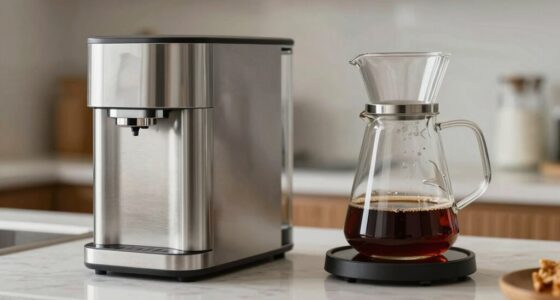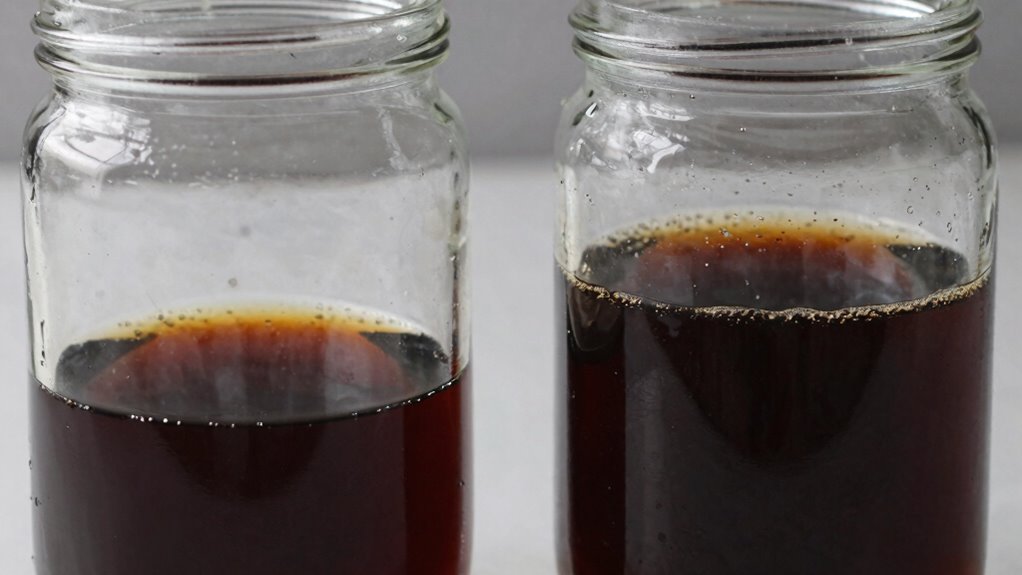

Choosing between filtered and spring water for your cold brew makes a bigger difference than you might expect. Filtered water removes impurities and chlorine, offering a neutral base that highlights coffee’s true flavors. Spring water contains natural minerals that can enhance aroma and body, but may also overpower delicate notes if not balanced well. Your choice impacts extraction and overall taste more than you think—keep exploring to discover how water mineral content influences your perfect brew.

Get coffee and tea gear delivered free with Prime
- Fast, free delivery on millions of items
- Prime Video, Amazon Music and more included
- Member-only deals all year
Key Takeaways
- Filtered water provides neutrality and consistency, emphasizing the true flavors of coffee without mineral interference.
- Spring water contains natural minerals that can enhance aroma but may overpower delicate flavors if not balanced.
- Mineral content in spring water influences extraction, potentially creating a more complex or overly bold cold brew.
- Excess minerals in spring water can cause metallic or bitter tastes, while filtered water minimizes such risks.
- Choosing between filtered and spring water depends on desired flavor profile and mineral balance for optimal cold brew quality.
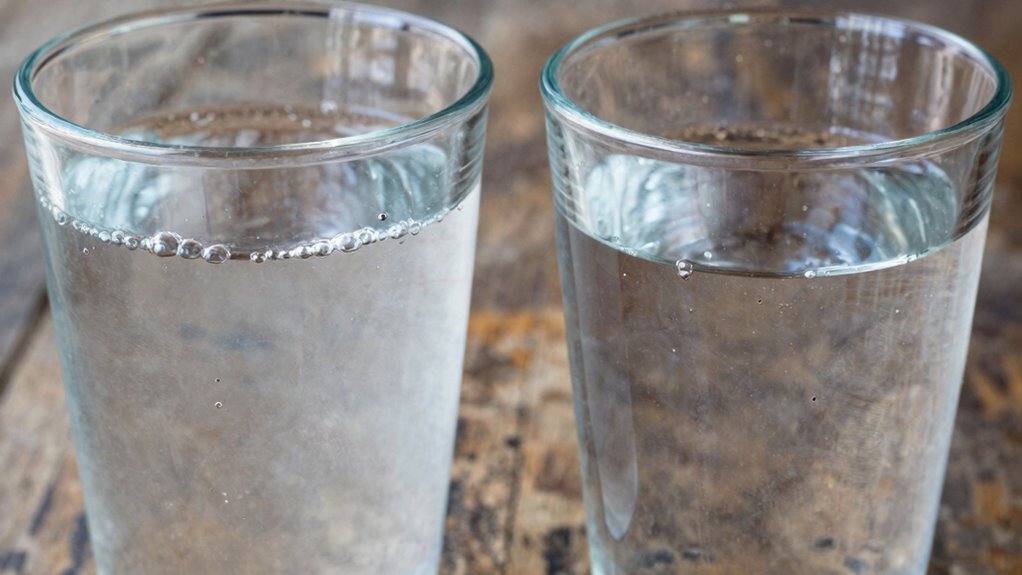
When making cold brew coffee, the choice of water can considerably influence the final flavor. You might think that using any clean water would produce similar results, but subtle differences in water quality can significantly impact your brew. Water mineral content plays a vital role here, affecting both extraction and taste. The minerals in water, like calcium, magnesium, and trace elements, interact with coffee grounds during brewing, unlocking flavors and aromas. Different types of water—filtered or spring—bring varying mineral compositions, which can alter how your cold brew develops.
Water mineral content influences cold brew flavor by affecting extraction and aroma development.
Coffee brewing techniques demand precision, and water quality is no exception. Filtered water is often prized for its purity, as it removes impurities, sediments, and chlorine that could interfere with extraction. Without these impurities, the water’s mineral profile becomes more prominent, emphasizing specific flavor notes in your coffee. On the other hand, spring water contains natural minerals from underground sources, which can enhance certain flavor nuances due to their unique mineral balance. These minerals can boost the overall aroma, body, and complexity of your cold brew, but too much mineral content might lead to an overly bitter or metallic taste. Additionally, understanding water mineral composition can help you select the most suitable water for your brewing style. Properly balancing water mineral levels ensures that your cold brew maintains its intended flavor profile, avoiding undesirable tastes caused by mineral imbalance.
When choosing between filtered and spring water, consider how their mineral contents will influence your cold brew. Filtered water usually has a neutral profile, making it ideal if you want to keep the true character of your coffee intact. It allows you to control the mineral levels by adding mineral drops or water enhancers if desired. Spring water, with its natural mineral richness, can create a more vibrant and full-bodied cold brew, but it’s essential to select a spring water with a balanced mineral profile. Excessive minerals can overshadow delicate flavors and make the brew taste off.
Understanding water mineral content and its effects can help you fine-tune your brewing process for optimal flavor. Water that’s too soft or too hard can lead to under-extraction or over-extraction, respectively. Filtered water provides consistency, helping you achieve predictable results, while spring water offers a more dynamic experience with potential flavor enhancements. Additionally, being aware of water mineral balance can assist in adjusting brewing parameters to perfect your cold brew. Recognizing the importance of water mineral profile can guide you in selecting the right water for your preferred flavor outcome. Think of it as choosing the right canvas for your masterpiece; the water sets the stage for the coffee’s potential. Whether you prefer the purity of filtered water or the natural complexity of spring water, understanding their differences helps you craft a cold brew that’s tailored to your taste preferences.
filtered water for cold brew coffee
As an affiliate, we earn on qualifying purchases.
As an affiliate, we earn on qualifying purchases.
Frequently Asked Questions
How Does Water Mineral Content Affect Cold Brew Flavor?
You’ll notice that water mineral content directly impacts your cold brew’s flavor. Mineral balance influences extraction, sharpening or dulling flavors, while poor mineral levels can muddy clarity. Using well-balanced water enhances flavor clarity, letting the coffee’s nuanced notes shine through. Too many minerals can overpower the brew, while too few might result in a flat taste. So, choosing water with the right mineral content makes your cold brew taste cleaner and more vibrant.
Is One Water Type More Environmentally Sustainable Than the Other?
Think of choosing water types for cold brew like tending a garden—every choice impacts the environment. Spring water often involves more resource extraction, making it less eco-friendly. Filtered water, especially when sourced from tap water, supports water conservation and eco-friendly practices. By selecting filtered water, you help reduce environmental footprints, conserve resources, and nurture a healthier planet—turning your cold brew habit into a small act of sustainability.
Can Water Temperature Influence the Cold Brew Extraction Process?
Yes, water temperature can influence the cold brew extraction process. If the temperature isn’t consistent, it can affect flavor extraction, leading to uneven taste profiles. Cooler water extracts flavors more slowly, while warmer water speeds up the process, possibly resulting in over-extraction or bitterness. Maintaining temperature consistency guarantees ideal extraction, allowing you to enjoy a balanced, flavorful cold brew without unwanted bitterness or weak spots.
Are There Health Benefits to Choosing Filtered or Spring Water?
Choosing filtered water offers you cleaner, impurity-free sips, while spring water provides a natural mineral balance that can enhance flavor. Water filtration removes contaminants, supporting your health, whereas spring water’s minerals can boost your body’s nutrient intake. Imagine a crystal-clear stream versus a well-tended river; both nourish, but in different ways. Your health benefits depend on your priorities—pure purity or mineral richness—each offering unique advantages.
How Does Water Purity Impact Cold Brew Shelf Life?
Water purity greatly impacts your cold brew’s shelf life. Using well-filtered water reduces impurities and bacteria that can spoil your coffee faster. Mineral influence also matters; water with balanced minerals preserves flavor and prevents spoilage. Poor-quality water, whether spring or unfiltered, may introduce contaminants, shortening your cold brew’s freshness. So, opting for filtered water ensures your cold brew stays fresh longer, maintaining quality and safety.
Conclusion
Choosing between filtered and spring water for your cold brew can markedly impact its taste. Did you know that using spring water can enhance flavor complexity by up to 30% compared to filtered water? That’s a noticeable difference you’ll definitely taste. So, next time you’re brewing, consider switching to spring water for a richer, more vibrant cold brew experience. Your palate will thank you for the upgrade!
Fall Picks
fall essentials
As an affiliate, we earn on qualifying purchases.