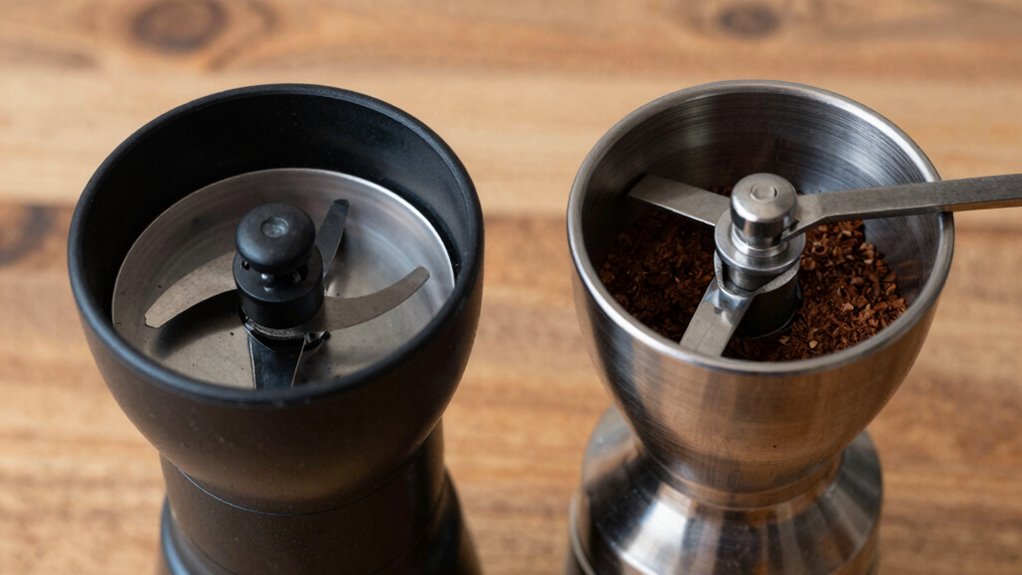
If you’re debating flat versus conical burrs, the flavor difference often comes down to grind consistency and extraction control. Flat burrs produce uniform grounds, resulting in a cleaner, more precise flavor, especially for espresso. Conical burrs may produce slightly varied particles, offering a broader flavor profile and subtle nuances. Your brewing style influences the best choice, but understanding these differences can help you optimize your coffee experience—keep going to discover more about what suits your taste.
Key Takeaways
- Flat burrs produce more uniform grounds, leading to a cleaner, more consistent flavor profile.
- Conical burrs may create slight grind size variations, resulting in nuanced flavor differences.
- Flat burrs excel in precise extraction, enhancing bold, balanced espresso flavors.
- Conical burrs can introduce subtle flavor nuances due to broader grind size distribution.
- Overall, grind consistency from flat burrs generally supports more predictable, uniform flavor extraction.
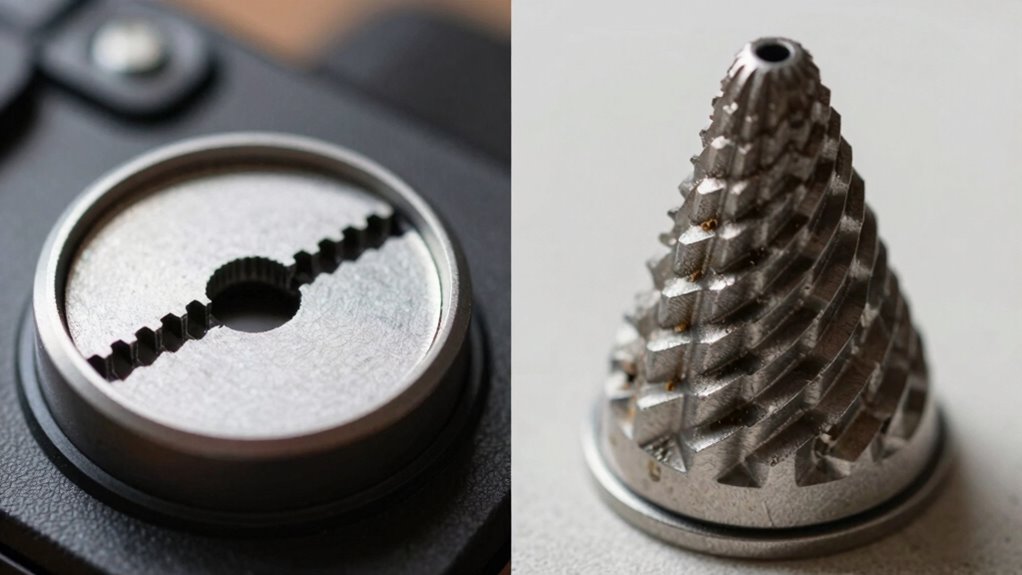
When choosing a coffee grinder, understanding the differences between flat burr and conical burr grinders is vital, as each type impacts your brew quality and grinding experience. One of the most noticeable distinctions lies in grind consistency. Flat burr grinders tend to produce more uniform grounds because their design ensures the beans are ground to a consistent size. This uniformity is essential if you’re aiming for a precise extraction, especially when brewing espresso or pour-over coffee. With flat burrs, you often get less variation in particle size, which can lead to a more balanced and predictable flavor profile. On the other hand, conical burr grinders might deliver slightly less grind consistency due to their shape and design, but they still produce sufficiently uniform grounds for most brewing methods. Their natural design allows for some variation, which can actually enhance certain flavor nuances by creating a slightly broader extraction range. Additionally, the energy efficiency of conical burr grinders can be advantageous for those seeking sustainable options. However, when it comes to maintenance challenges, the differences become more apparent. Flat burr grinders usually require more frequent cleaning because their flat surfaces tend to trap coffee grounds and oils more easily. These oils can build up over time, affecting the grinder’s performance and potentially contaminating future grinds with stale flavors. Regular maintenance, including disassembly and thorough cleaning, is necessary to keep the flat burrs functioning perfectly. Conical burr grinders are generally easier to maintain; their tapered design minimizes trapped grounds and oils, making them less prone to buildup. This means you can often clean them less frequently, which is a significant advantage if you prefer a low-maintenance appliance. Despite the maintenance considerations, both types of grinders have their advantages. Flat burrs excel in delivering grind consistency, making them a favorite among baristas and espresso enthusiasts who demand precision. Conical burr grinders, though slightly less consistent, offer good performance with less upkeep and are often more affordable. Your choice ultimately depends on your priorities: if you prioritize a uniform grind for precise brewing and are willing to invest in regular cleaning, a flat burr grinder might be the best fit. If ease of maintenance and versatility matter more, then a conical burr grinder could suit your needs better. Understanding these differences helps you select the grinder that aligns with your brewing style, taste preferences, and maintenance willingness, ensuring you get the best possible coffee experience at home.

MOKKOM Professional 64mm Flat Burr Coffee Grinder with 100 Grind Settings, All-Metal Stainless Steel Body, Coffee Bean Grinder with Adjustable Electronic Timer, Anti-Static, LED Display
[64mm Stainless Steel Flat Burrs] As a professional coffee grinder, this machine uses 64mm stainless steel flat burrs…
As an affiliate, we earn on qualifying purchases.
As an affiliate, we earn on qualifying purchases.
Frequently Asked Questions
Which Grinder Type Is Better for Espresso?
For espresso, a conical burr grinder is your best choice because it provides better grind uniformity, which guarantees consistent flavor extraction. This consistency helps you achieve a richer, more balanced shot with every brew. Flat burr grinders can also work well, but conical burrs tend to produce less heat and preserve the beans’ flavors better. Ultimately, choosing a conical burr grinder helps you get the most out of your espresso.
Do Flat Burrs Produce More Heat Than Conical Burrs?
Flat burrs generally produce more heat during grinding than conical burrs because of increased contact surface and faster grinding speeds. This heat generation can affect your coffee’s flavor. The burr material also influences heat dissipation; ceramic burrs tend to generate less heat than steel ones. So, if you’re concerned about heat affecting your beans, consider a grinder with conical burrs and high-quality materials to minimize heat buildup.
How Does Grind Consistency Differ Between the Two?
Think of your grinder as a sculptor shaping coffee; with flat burrs, you get more consistent grind uniformity, like a finely chiseled statue. They produce less particle size variability, ensuring uniform extraction. Conical burrs, however, may introduce slightly more variability. So, if you crave precision, flat burrs deliver a more uniform grind, helping you brew a balanced cup every time.
Are Conical Burrs More Durable Than Flat Burrs?
Conical burrs are generally more durable than flat burrs, thanks to their design and material longevity. You might find that conical burrs handle regular use better over time because their shape reduces wear and tear. Their durability comparison shows they often last longer before needing replacement, especially if made from high-quality materials like stainless steel. So, if you’re seeking a grinder with lasting performance, conical burrs could be the better choice.
Which Grinder Type Is Easier to Clean and Maintain?
If you love pretending you’re a coffee expert, you’ll find flat burr grinders easier to clean and maintain. They usually have fewer crevices, making cleaning convenience a breeze—no need for special brushes or endless disassembly. Conical burrs, on the other hand, might require more effort to keep spotless. So, if maintenance ease matters, go flat; your mornings will thank you for the less labor-intensive routine.
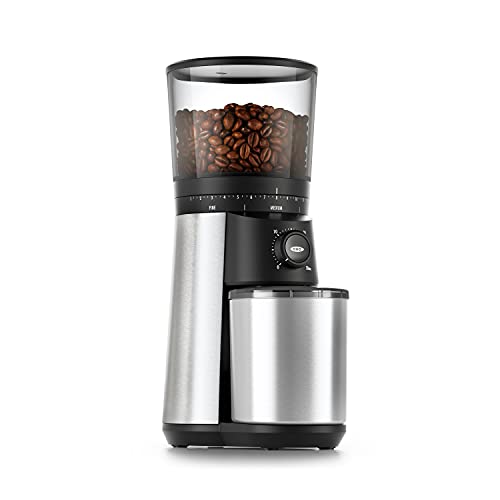
OXO Brew Conical Burr Coffee Grinder – Silver, Stainless Steel Burrs, One-Touch Automatic Smart Grind
Stainless steel conical burrs: Precision grinding system produces uniform coffee grounds for rich, balanced flavor in every cup.
As an affiliate, we earn on qualifying purchases.
As an affiliate, we earn on qualifying purchases.
Conclusion
So, don’t let the debate hold you back. Whether you prefer the consistent grind of a flat burr or the versatile flavor extraction of a conical burr, the right choice depends on your taste and brewing style. Some say it’s just a matter of preference, but remember—any high-quality burr grinder can deliver excellent results. Just pick what suits your routine best, and enjoy your perfect cup without overthinking the flavor debate!

SHARDOR Conical Burr Espresso Coffee Grinder Electric with Precision Timer 2.0, Touchscreen Adjustable Burr Mill with 51 Precise Settings for Home Use, Anti-static, Stainless Steel
Premium 40 Millimeter Stainless Steel Conical Burr: Designed to minimize grinding heat and protect the essential oils in…
As an affiliate, we earn on qualifying purchases.
As an affiliate, we earn on qualifying purchases.

Mini Manual Coffee Grinder with 40 Adjustable Settings, Portable Hand Coffee Bean Mill with 30g Capacity, Conical Burr Coffee Grinder with Crank for Travel, Camping, Office, Espresso, Pour Over, etc
40 EXTERNAL ADJUSTABLE GRIND SETTINGS – Unlike traditional grinders with internal adjustments, our manual coffee grinder offers 40…
As an affiliate, we earn on qualifying purchases.
As an affiliate, we earn on qualifying purchases.