
Bottomless portafilters might look messy, but they’re incredibly useful for learning espresso. As you watch your shot spray out, you’ll see grind quality, tamping pressure, and flow all at once. Messiness indicates areas for improvement, and instant visual feedback helps you perfect your technique quickly. Over time, you’ll develop a sharper eye for consistency and quality. Keep exploring, and you’ll discover how this transparent tool can transform your espresso skills profoundly.

Get coffee and tea gear delivered free with Prime
- Fast, free delivery on millions of items
- Prime Video, Amazon Music and more included
- Member-only deals all year
Key Takeaways
- Bottomless portafilters reveal the espresso flow, helping identify grind and tamping issues visually.
- The messiness during extraction indicates areas for technique improvement and calibration.
- Visual feedback from a bottomless portafilter accelerates troubleshooting and skill development.
- Messy shots teach precision in grind consistency and tamping pressure for better extraction.
- Using a bottomless portafilter transforms messy processes into valuable learning experiences.
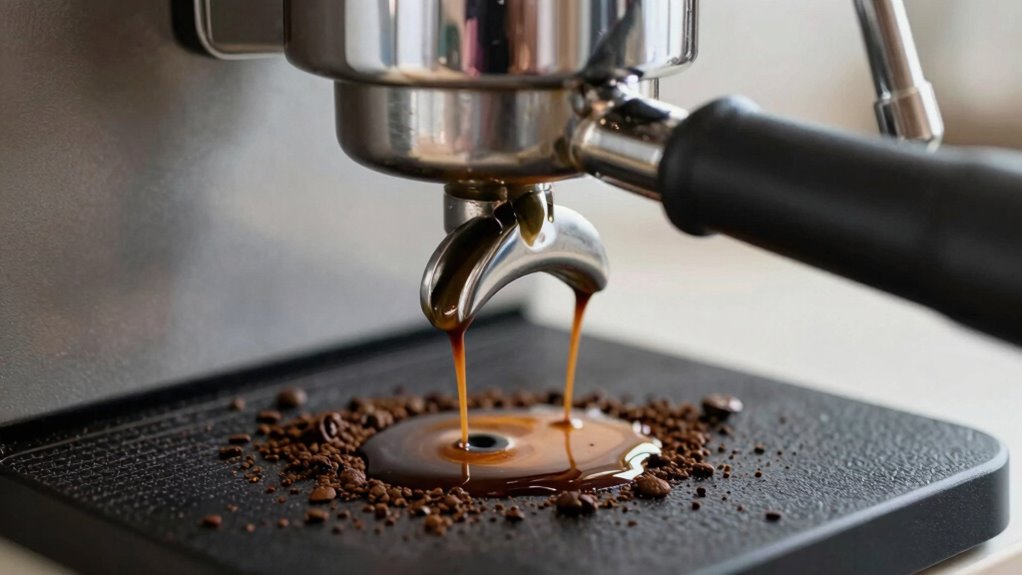
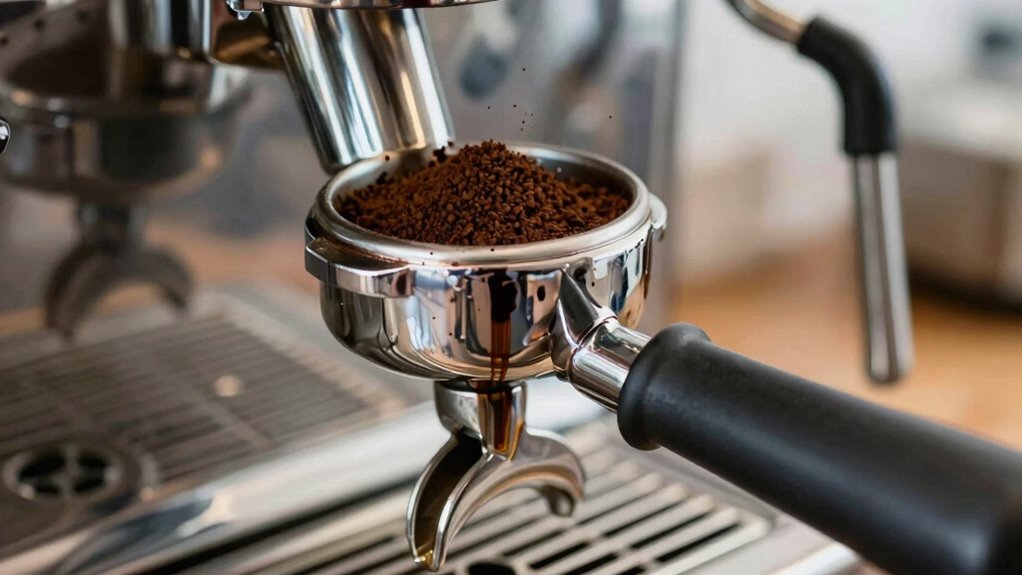
A bottomless portafilter, also known as a naked portafilter, is a popular tool among espresso enthusiasts because it allows you to see the coffee extraction process directly. When you use one, you get a clear view of the espresso as it flows out, revealing a lot about your technique and the quality of your grind and tamping. This transparency makes it an invaluable learning tool. As you prepare your espresso, you’ll notice that grind consistency plays a vital role in the shot’s outcome. If your grind is uneven or too coarse, you’ll see water channeling through the coffee bed, resulting in a weak extraction. Conversely, a consistent grind produces an even flow, and you’ll notice a rich, honey-like stream during extraction. Achieving this consistency requires attention to your grinder settings and regular calibration, so you develop a uniform coffee bed that promotes even extraction. Proper calibration is essential for optimal results and is a key aspect of grind consistency. Tamping pressure is just as important. When you press the coffee grounds into the portafilter, applying the right amount of pressure ensures a flat, compact puck. Too little tamping pressure results in a loose coffee bed, causing water to find the path of least resistance and channel through unevenly. This leads to under-extraction, which you’ll see as a thin, wispy flow or uneven spray. On the other hand, excessive tamping pressure can make it difficult for water to pass through, leading to over-extraction and a bitter taste. With a bottomless portafilter, you can observe these effects instantly. If your shot sputters or produces uneven streams, it’s often a sign to adjust your tamping pressure. Practice helps you develop a feel for the right amount of force—firm but not excessive. Using a bottomless portafilter might seem messy at first, with espresso splashing and dribbling everywhere. But that mess is your opportunity to learn. You see exactly how your grind size, consistency, and tamping pressure influence the shot. Over time, you’ll develop a sharper eye and steadier hand, refining your technique with each pull. The visual feedback enables you to troubleshoot issues quickly—if your shot looks uneven or drips unevenly, you can tweak your grind size or tamping force on the spot. This immediate feedback loop accelerates your learning curve, transforming a sometimes frustrating process into an educational experience. In the end, a bottomless portafilter isn’t just a messy tool; it’s a direct window into your espresso craftsmanship.
bottomless portafilter for espresso machine
As an affiliate, we earn on qualifying purchases.
As an affiliate, we earn on qualifying purchases.
Frequently Asked Questions
How Do I Clean a Bottomless Portafilter Properly?
To clean your bottomless portafilter properly, start by removing the basket and rinsing it with warm water. Use a soft brush to scrub away coffee grounds and apply a cleaning solution designed for espresso equipment. Regular maintenance routines include soaking in a cleaning solution weekly, then rinsing thoroughly. This helps prevent buildup, keeps your portafilter sanitary, and guarantees ideal espresso flavor with each shot you pull.
What Are the Best Practices for Tamping With a Bottomless Portafilter?
Tamping with a bottomless portafilter is like striking a tuning fork—precision matters. Use a consistent distribution technique to evenly spread coffee grounds, then apply tamping pressure firmly but gently, like pressing down on a pillow. Keep your wrist steady, avoid tilting, and aim for a smooth, level surface. This way, you guarantee even extraction and a rich, balanced shot every time.
Can a Bottomless Portafilter Improve My Espresso Shot?
Yes, a bottomless portafilter can improve your espresso shot. It reveals your grind consistency and tamp pressure, helping you spot issues like channeling or uneven extraction. By observing the flow directly, you can fine-tune your technique, ensuring a more balanced and flavorful shot. It’s a great tool for learning, as it visually shows where adjustments are needed, ultimately elevating your espresso game.
What Types of Baskets Are Compatible With Bottomless Portafilters?
Imagine your espresso shot bursting forth with clarity—your choice of basket matters. You’ll find that compatible baskets include standard, double, and single shot filters designed for bottomless portafilters. Filter types like stainless steel or plastic fit snugly, ensuring a perfect seal. Always check your portafilter’s diameter and design, so your basket matches seamlessly, making every shot as smooth and flavorful as you envision.
How Do I Troubleshoot Uneven Extraction Using a Bottomless Portafilter?
You troubleshoot uneven extraction by first checking your distribution consistency; make sure the coffee bed is even before brewing. Adjust your grind size to guarantee water flows evenly through the puck—finer for slow flow, coarser for fast. Also, verify your tamping pressure is uniform. These steps help create an even coffee bed, leading to a more consistent extraction and a better espresso shot.
Conclusion
Embracing a bottomless portafilter is like opening a window to your espresso’s soul, revealing every detail of your craft. Though it may seem messy at first, it’s the best teacher you’ll find—showing you exactly where your technique can improve. Keep experimenting and learning from each shot, because mastery isn’t built in perfection but in understanding the imperfections. With patience and practice, you’ll turn chaos into the art of a perfect pour.
Fall Picks
fall essentials
As an affiliate, we earn on qualifying purchases.