Choosing the right filter for your cold brew depends on your desired clarity and mouthfeel. Paper filters trap tiny particles, producing a clean, smooth brew with minimal sediment. Cloth filters allow more oils and some grit, giving a richer texture. Metal filters are coarse, letting through more grit and oils, creating a robust, textured drink. Each option influences the final flavor and clarity, so exploring your preferences can help you craft the perfect cold brew—discover more tips below.

Get coffee and tea gear delivered free with Prime
- Fast, free delivery on millions of items
- Prime Video, Amazon Music and more included
- Member-only deals all year
Key Takeaways
- Paper filters produce the clearest cold brew with minimal sediment due to fine porosity trapping tiny particles.
- Cloth filters offer a reusable, eco-friendly option with a slightly gritty, fuller-bodied brew.
- Metal filters allow more grit and oils, resulting in a richer, textured cold brew with less clarity.
- Filter choice affects clarity, flavor, and mouthfeel, with paper filters providing the smoothest results.
- Combining filter type with grind size and brewing temperature optimizes sediment control and brew quality.
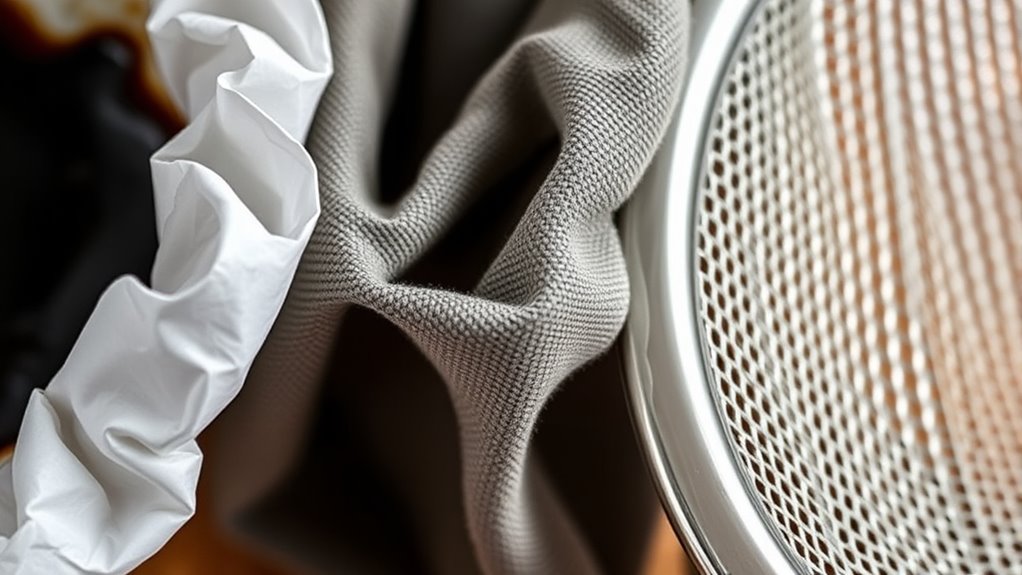
Have you ever wondered how to achieve that smooth, grit-free cold brew? It all starts with understanding how the filtering process impacts the final texture. The key factors are grit size and brewing temperature, both of which influence how much sediment ends up in your cup. Grit size refers to the size of coffee particles that pass through your filter, and managing it is essential for a clean brew. If your grind is too fine, it can create tiny particles that slip through standard filters, resulting in a gritty texture. Conversely, using a coarser grind can help improve clarity, but only if the filter used can effectively catch the larger particles. Brewing temperature also plays a role; brewing at too high a temperature can cause extraction to accelerate, producing finer particles and more sediment, while a lower temperature tends to produce larger, less problematic grounds.
When filtering cold brew, choosing the right method depends on the outcome you prefer. Paper filters are known for their fine porosity, which traps even the smallest grit particles. They produce a very smooth, almost syrupy cold brew, free of sediment. However, they can also strip some of the coffee’s oils and nuanced flavors, leading to a cleaner but sometimes slightly muted profile. Cloth filters offer a middle ground—they’re reusable, environmentally friendly, and have a slightly larger pore size than paper, which allows more oils and tiny particles to pass through. This results in a richer, fuller-bodied brew with a bit more grit, but still relatively smooth. Metal filters, such as stainless steel mesh, are the coarsest option. They allow more grit and oils into the final product, giving you a robust, textured cold brew. Metal filters are durable and easy to clean, but they require careful attention to grit size during brewing.
Adjusting your brewing temperature can also help control sediment. Cold brewing at lower temperatures, around 45-55°F (7-13°C), minimizes extraction of fine particles, leading to a cleaner brew. Warmer cold brew, closer to room temperature, increases extraction and can produce more tiny particles, increasing grit unless filtered meticulously. Proper filtering techniques and selecting the appropriate filter type can significantly influence the clarity and grit level of your cold brew. Ultimately, the choice of filter type combined with proper grind size and controlled brewing temperature determines how grit-free your cold brew will be. If you want a silky-smooth experience, opt for paper filters and a coarser grind, and keep your brewing temperature low. For a richer, more textured cold brew, cloth or metal filters work well, especially if you’re okay with a slightly gritty mouthfeel. Experimenting with these elements lets you craft your perfect cup—smooth, flavorful, and free of unwanted grit.
As an affiliate, we earn on qualifying purchases.
Frequently Asked Questions
Which Filter Material Preserves Coffee Flavor Best?
You’ll find that paper filters preserve coffee flavor best because they trap fine particles and oils, maintaining the rich taste. Cloth filters also preserve flavor well and can be reused, but they may introduce subtle flavors if not cleaned thoroughly. Metal filters allow more oils through, which can enhance body but might compromise pure flavor preservation. For a clean, balanced taste, paper filters are your best choice.
Are Reusable Filters More Eco-Friendly Than Disposable Ones?
Reusables are your eco-friendly champions, outlasting disposables like a sturdy oak amid fleeting leaves. They’re more eco-friendly because of their filter durability, standing up to daily use without throwing away resources. Though they might cost more upfront, they’re a smart move for your wallet and the planet in the long run. Choosing reusables means you’re weaving a greener future, one cold brew at a time, with lasting savings and less waste.
How Do Filter Materials Affect Cold Brew Clarity?
You’ll notice that filter material affects cold brew clarity mainly through filter particle size and brewing speed. Paper filters have the smallest particles, resulting in a clearer brew and slower brewing. Cloth filters have larger pores, allowing more fine particles through, which can make the coffee cloudier but speeds up the process. Metal filters have the largest openings, producing a more textured brew with quicker brewing times and less clarity.
Can Filter Choice Impact Cold Brew Shelf Life?
Think of your filter as a gatekeeper, controlling what slips through. The choice of filter material can indeed impact cold brew’s shelf life by affecting filtering speed and removing oils or particles that cause spoilage. Metal filters offer quick filtering and cost efficiency, but paper or cloth filters may trap more impurities, extending freshness. Your filter’s design influences how long your brew stays vibrant and delicious on your shelf.
Which Filter Type Is Easiest to Clean and Maintain?
You’ll find metal filters easiest to clean and maintain because they have higher filter durability and can be rinsed or scrubbed without damage. Cloth filters require regular washing and careful handling to prevent mold, making cleaning more time-consuming. Paper filters are disposable, so maintenance mainly involves replacing them. Overall, metal filters offer the most convenience for ongoing use, especially if you prefer a quick, easy cleaning process.
Conclusion
Choosing the right filter shapes your cold brew experience. Paper offers clarity and quick cleanup, but cloth provides a richer flavor with more oils, while metal is durable and reusable. Each has its strengths, yet none can do it all perfectly. So, pick your filter based on what matters most to you—clarity, flavor, or convenience. After all, the perfect cold brew isn’t just in the beans, but in how you filter it.
Halloween Picks
halloween
As an affiliate, we earn on qualifying purchases.