
To fix sour coffee, focus on improving extraction by adjusting your grind size and brew time. Make your grind slightly finer to slow water flow and extract more flavor, but avoid going too fine to prevent bitterness. Slightly increase brew time if the coffee is under-extracted, or shorten it if over-extracted. Temperature plays a role but is secondary. Small tweaks can transform your sour brew into a balanced cup—keep exploring for more tips.
Open a free Amazon Business account
Business pricing, bulk buying and tax-exempt orders.
As an affiliate, we earn on qualifying purchases.
Key Takeaways
- Use a finer grind size to increase surface area and improve extraction, reducing sourness.
- Slightly extend brew time to allow more flavor extraction and balance acidity.
- Maintain proper brewing temperature to support consistent, optimal extraction.
- Make small, incremental adjustments to grind and time to avoid over- or under-extraction.
- Taste and track changes to find the ideal combination for a well-balanced, less sour coffee.

Ever poured a cup of coffee only to find it sour and off-putting? It’s frustrating, especially when you’re craving that rich, balanced flavor. The good news is that sourness often comes down to extraction issues, which you can fix by adjusting your grind size and brew time. These two factors have a direct impact on how your coffee develops during brewing. If you get them right, you’ll enjoy a smoother, more flavorful cup instead of one that’s overly acidic or under-extracted.
Start with your grind size. If your coffee tastes sour, it likely means the extraction is incomplete. That’s usually caused by a grind that’s too coarse. When your grind is too coarse, water flows through the coffee too quickly, not giving enough time for the flavors to develop fully. As a result, you end up with under-extracted coffee that tastes sour and sharp. To fix this, try grinding your beans a bit finer. A finer grind increases the surface area of the coffee, slowing down the flow of water and allowing extraction to occur more evenly. Be careful, though—grinding too fine can lead to over-extraction and bitterness, so make small adjustments and taste as you go.
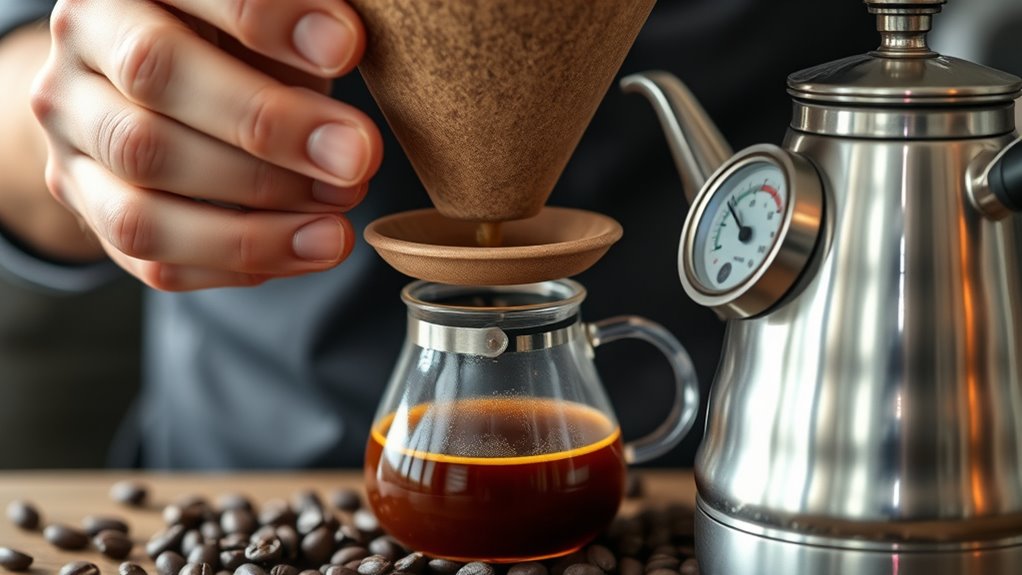
Brew time is equally pivotal. If your brew time is too short, the water won’t have enough contact with the coffee grounds to extract all the desirable flavors, leaving behind sour notes. On the other hand, if it’s too long, you risk over-extraction, which can make the coffee bitter and dull. For most brewing methods, aim for a balanced brew time—typically around 4 to 5 minutes for drip coffee or 3 to 4 minutes for pour-over. Adjust your brewing process to extend or shorten this window slightly, depending on the taste. If your coffee is sour, try increasing the brew time slightly. Conversely, if it’s too bitter or flat, shorten it. Additionally, understanding the importance of contrast ratio can help in selecting brewing parameters that enhance overall flavor and clarity.
Temperature also plays a part, but focusing on grind size and brew time gives you immediate control. When you tweak these parameters, you directly influence how efficiently flavors are extracted. Remember, coffee extraction is a delicate balance—small adjustments can make a big difference. Keep track of your changes and taste each cup to find the perfect harmony. With patience and attention to detail, you’ll turn sour, underwhelming coffee into a smooth, flavorful experience that truly satisfies.
coffee grinder for precise grind size
As an affiliate, we earn on qualifying purchases.
As an affiliate, we earn on qualifying purchases.
Frequently Asked Questions
Can Sour Coffee Be Caused by the Type of Beans Used?
Yes, sour coffee can be caused by the type of beans used. If you choose beans from certain bean origins or with specific processing methods, they might have brighter, more acidic flavors that come across as sour if not brewed correctly. For instance, lightly processed or certain high-altitude beans tend to be more acidic. To avoid sourness, consider darker roasts or beans from different origins, and adjust your brewing method accordingly.
How Does Grind Size Influence Coffee Sourness?
Ever wondered how grind size affects sourness? When you use a too coarse grind, the extraction slows down, leaving behind under-extracted, sour flavors. Conversely, a fine grind increases surface area, promoting even extraction and reducing sourness. Consistent particle size ensures uniform extraction; inconsistent grind size can cause uneven sour notes. By adjusting your grind size and maintaining grind consistency, you can control sourness and enjoy a perfectly balanced cup every time.
Is It Better to Adjust Brewing Time or Temperature First?
You should start by adjusting the brewing temperature first because it directly affects extraction and sourness. Lowering the temperature can diminish sour notes, while increasing it might enhance brightness. Once you’ve set a proper temperature, tweak your brew time if needed to achieve the desired flavor profile. This approach ensures you control the factors influencing sourness effectively, leading to a more balanced and enjoyable cup.
Do Different Brewing Methods Affect the Likelihood of Sourness?
Yes, your brew method considerably influences the likelihood of sourness in your coffee. For example, pour-over and Aeropress tend to highlight acidity, making sour notes more prominent, while French press and espresso often produce a richer, fuller flavor profile with less perceived sourness. Choosing the right brew method allows you to control the flavor profile better, reducing sourness if that’s your goal, or emphasizing brightness if you prefer a lively taste.
Can Water Quality Impact the Sourness of Coffee?
Yes, water quality can impact the sourness of your coffee. Water with impurities or high mineral content can interfere with extraction, making your coffee taste off. Hard water, rich in minerals like calcium and magnesium, can enhance sour flavors, while impurities like chlorine can add unwanted acidity. Using filtered or bottled water helps guarantee your coffee’s flavor stays balanced, reducing sourness caused by water quality issues.
Conclusion
Think of your coffee as a symphony—each note must be just right. When sourness strikes, you’re tweaking the temperature and extraction to fine-tune that harmony. With a little experimentation, you’ll turn a discordant cup into a beautifully balanced melody. Remember, patience and precision are your best allies. Keep adjusting, trust your palate, and soon you’ll be savoring a cup that sings with vibrant, perfect flavor—your personal masterpiece.
Flea & tick season Picks
flea and tick prevention
As an affiliate, we earn on qualifying purchases.