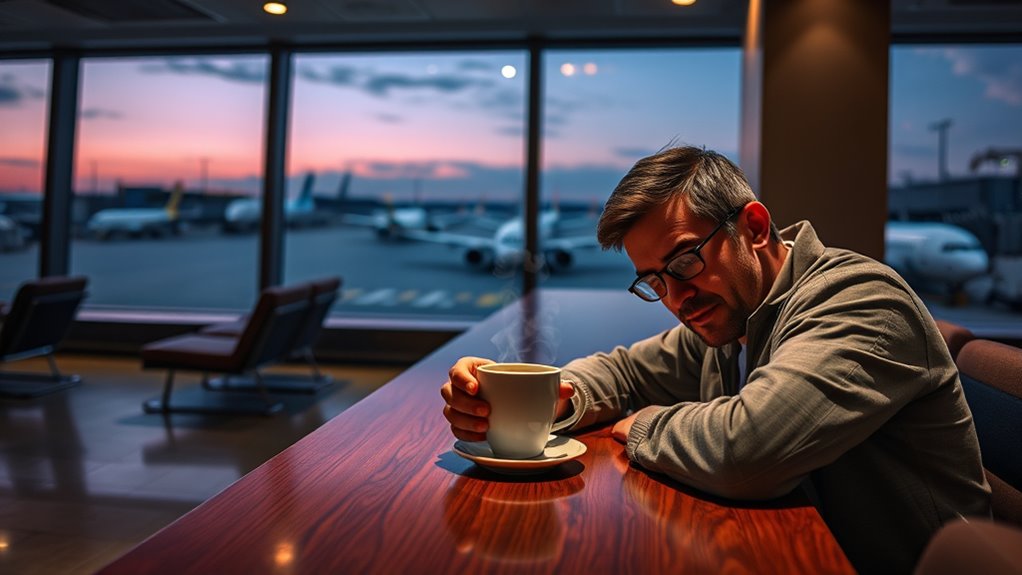

To manage jet lag with coffee, time your caffeine intake wisely to boost alertness during your new local daytime while avoiding late-day consumption that could disrupt sleep. Drink coffee shortly after arriving to jump-start your day and avoid it at least six hours before bedtime. This strategic caffeine use helps your body adjust more smoothly to the new schedule. If you keep these tips in mind, you’ll be better equipped to minimize jet lag effects and stay energized on your trip.
Listen free for 30 days with Audible
Thousands of audiobooks and originals — cancel anytime.
As an affiliate, we earn on qualifying purchases.
Key Takeaways
- Consume coffee shortly after arriving in the morning to boost alertness aligned with the new daytime schedule.
- Avoid caffeine at least six hours before bedtime to prevent sleep disturbances and worsening jet lag.
- Use caffeine during natural wake periods to maintain alertness without disrupting sleep cycles.
- Timing caffeine intake strategically helps realign circadian rhythms and eases adaptation to new time zones.
- Limit late-day caffeine to support better sleep quality and reduce jet lag symptoms.
Have you ever wondered how coffee can help you beat jet lag? When you’re crossing multiple time zones, your body’s internal clock gets out of sync with the local time, leading to fatigue, disorientation, and sleep issues. Coffee, with its caffeine content, can be a useful tool if you understand how to use it properly. The key lies in caffeine timing—knowing when to consume coffee to boost your alertness without further disrupting your sleep cycle. If you drink coffee too late in the day, it can cause sleep disruption, making it even harder to adjust to the new schedule. Conversely, strategic caffeine intake during your wakeful hours can help you stay alert and combat fatigue, easing the transition.
The first thing to think about is your arrival time and planned activities. If you’re arriving in the morning, having a cup of coffee shortly after landing can help you shake off the jet lag and jump-start your day. This initial caffeine boost aligns with your body’s new daytime, supporting alertness when your body might still be craving sleep. However, if you plan to sleep later that day, avoid caffeine at least six hours before your intended bedtime. Consuming caffeine too late can lead to sleep disruption, making it harder to fall asleep and reducing sleep quality—precisely what you’re trying to avoid when adjusting to a new time zone. Additionally, understanding the role of caffeine in adjusting circadian rhythms can help optimize its use during your trip.
Timing your caffeine intake becomes even more critical when you need to stay awake during the day. For example, if you’re trying to stay alert during a long flight or after arriving, a moderate dose of coffee can help, but be careful not to overdo it. Too much caffeine or drinking it too late can interfere with your sleep later on, creating a cycle of fatigue and restless nights. It’s best to consume caffeine in the first half of your day or during your natural awake hours, aligning with your body’s new schedule. This way, you can maximize alertness during critical times while giving your body ample opportunity to wind down at night.
As an affiliate, we earn on qualifying purchases.
Frequently Asked Questions
Can Caffeine Consumption Worsen Jet Lag Symptoms?
Yes, caffeine consumption can worsen jet lag symptoms if you’re dependent on it, as it might disrupt your sleep schedule further. Caffeine increases your heart rate and alertness, making it harder to fall asleep or adjust to new time zones. To minimize negative effects, limit intake during your trip and avoid caffeine late in the day. This helps your body reset its internal clock more effectively.
Is There an Optimal Time to Drink Coffee During Travel?
The best timing strategies for caffeine timing during travel involve aligning your coffee intake with your destination’s daytime. You should drink coffee in the morning to boost alertness, avoid it in the late afternoon to prevent disrupting your sleep, and skip it near bedtime. By coordinating your caffeine consumption with your new time zone, you help reset your internal clock, stay alert, and minimize jet lag symptoms.
How Does Caffeine Affect Sleep Quality After Crossing Time Zones?
Caffeine can disrupt your sleep quality after crossing time zones because it affects your caffeine metabolism, making it harder to fall asleep and stay asleep. When you consume caffeine too late in the day, it prolongs alertness and increases sleep disruption. To minimize these effects, avoid caffeine at least 6 hours before your intended sleep time, allowing your body to clear the stimulant and improve your chances of restful sleep.
Are There Specific Types of Coffee Better for Jet Lag Recovery?
Certain coffee bean varieties, like light roasts, can be better for jet lag recovery because they contain more caffeine and antioxidants, helping you stay alert. Brew methods like pour-over or AeroPress preserve more caffeine and flavor, giving you a gentle energy boost without overwhelming your system. Avoid heavy, dark roasts late in the day, as they may disrupt your sleep. Choose wisely to support your body’s adjustment.
Can Caffeine Help Reset Your Internal Clock Faster?
Yes, caffeine can help reset your biological rhythms faster by aiding circadian adjustment. When you consume caffeine strategically, it can promote alertness during the daytime and help shift your internal clock to match the new time zone. To maximize this effect, take caffeine at appropriate times, avoiding late doses that might disrupt your sleep. This approach supports your body’s natural circadian processes and accelerates recovery from jet lag.
Conclusion
As you navigate crossing time zones, your caffeine choices hold the power to reset or disrupt your internal clock. Will that morning coffee help you seize the day, or will it throw off your rhythm entirely? The secret lies in timing, but the true outcome remains a mystery until you experience it firsthand. So, next time you jet off, remember—your perfect caffeine moment might just be the key to conquering jet lag.
Fall Picks
fall essentials
As an affiliate, we earn on qualifying purchases.