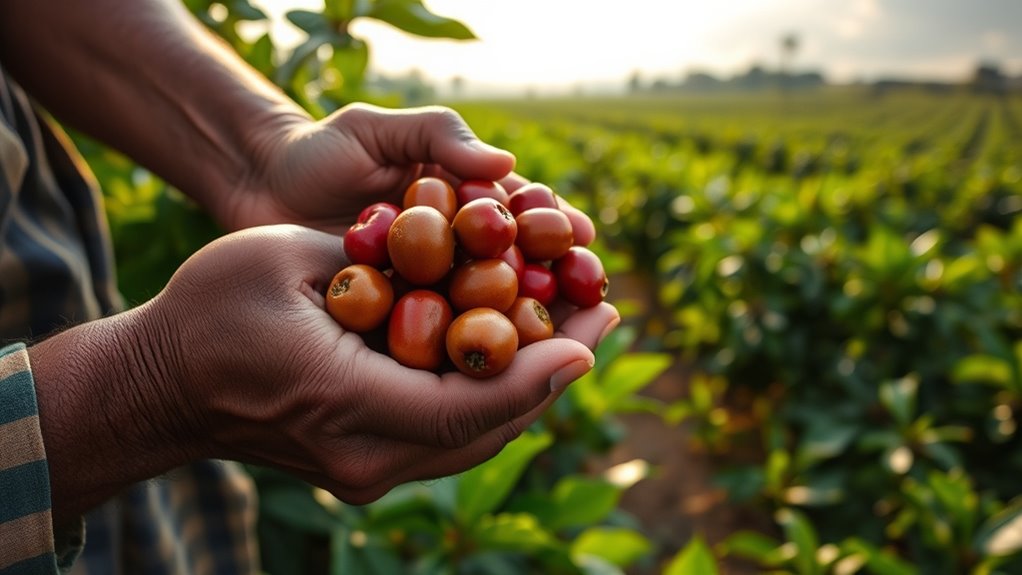

Living income benchmarks matter for coffee farmers because they set a fair standard for covering basic needs and ensuring a decent quality of life. When farmers earn enough, they can afford nutritious food, healthcare, education, and better housing. Fair wages and sustainable practices help break the cycle of poverty and build resilient communities. If you want to understand how this supports both farmers and the environment, just keep exploring further.
Key Takeaways
- They establish a standard for sufficient income to meet farmers’ basic needs and improve quality of life.
- They serve as a guide for fair wages, ensuring farmers are compensated ethically and sustainably.
- They promote sustainable farming practices that enhance productivity and reduce environmental impact.
- They support community development by enabling farmers to invest in health, education, and infrastructure.
- They foster resilience and stability in coffee communities by breaking poverty cycles and encouraging fair trade.

A living income benchmark sets a clear standard for what households need to meet their basic needs and maintain a decent quality of life. For coffee farmers, this benchmark isn’t just about covering expenses; it’s about guaranteeing dignity, stability, and the ability to invest in their future. When farmers earn a living income, they can afford nutritious food, healthcare, education, and housing without constantly worrying about financial shortfalls. This standard acts as a guide for governments, organizations, and consumers to support fair wages and sustainable farming practices that uplift entire communities. Implementing sustainable farming techniques is crucial in helping farmers achieve and maintain a living income. Sustainable farming plays an essential role in achieving a living income. When farmers adopt environmentally friendly methods, they often reduce input costs, improve soil health, and increase crop resilience. These practices, such as shade-grown coffee or organic cultivation, can lead to higher yields over time and better quality beans. However, sustainable farming isn’t just about environmental benefits; it’s about creating a resilient livelihood. Farmers who embrace sustainable techniques often find they can produce coffee more efficiently and with less reliance on costly chemicals, which helps them meet their income needs more consistently. But sustainable farming alone isn’t enough; it must be paired with fair trade practices.
A living income ensures dignity, stability, and a better future for coffee farmers and their communities.
Fair trade practices ensure that farmers receive equitable prices for their coffee, directly impacting their ability to reach a living income. When coffee is sold under fair trade certification, farmers are paid premiums that go directly into community development, social projects, and improvements in farming infrastructure. This fair compensation helps cover costs, invest in better equipment, and provide for their families. It also encourages practices that support long-term sustainability, such as crop diversification and soil conservation. As a consumer, choosing fair trade coffee signals your commitment to supporting farmers who earn enough to meet their basic needs, breaking the cycle of poverty and dependence.
Understanding the importance of a living income benchmark means recognizing that fair wages, sustainable farming, and ethical trade are interconnected. Supporting farmers through fair trade practices ensures they can implement sustainable farming techniques that both protect the environment and secure their livelihoods. When farmers are paid fairly, they’re motivated to maintain high-quality standards and invest in their farms’ future. This creates a cycle where sustainable practices lead to better income, which in turn promotes more sustainable farming. Ultimately, a living income benchmark isn’t just a figure; it’s a pathway toward just, resilient, and sustainable coffee farming communities.
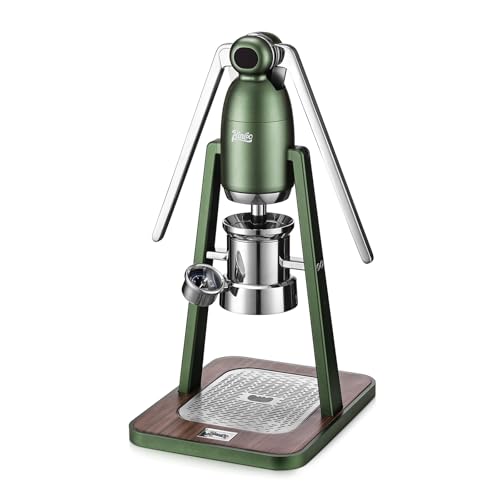
Bincoo Manual Espresso Maker Set - Hand Press Espresso Machine – 12Bar Pressure Profiling, Dual-Lever Manual Coffee Maker with Pre-Infusion, Portable for Custom Espresso Shots, Stainless Steel
Precision 3-12Bar Pressure Control: The industrial dual-lever system with micro-adjustable pressure springs and pressure gauge lets you professionally...
As an affiliate, we earn on qualifying purchases.
Frequently Asked Questions
How Are Living Income Benchmarks Calculated for Coffee Farmers?
You find out how living income benchmarks are calculated for coffee farmers by examining socioeconomic data and using income calculation methods. These approaches analyze costs of living, farm productivity, and household expenses. You gather detailed info on income sources, expenses, and local conditions, then apply standardized formulas to determine the income needed for a decent standard of living. This helps guarantee farmers earn enough to meet their basic needs sustainably.
What Are the Main Challenges in Implementing Living Income Benchmarks?
Imagine trying to build a bridge with uneven planks—that’s like overcoming policy barriers. You face challenges like limited farmer empowerment and inconsistent enforcement, making it tough to implement living income benchmarks effectively. These policy barriers often slow progress, leaving farmers vulnerable. Without supportive policies, even well-intentioned efforts struggle to reach farmers, highlighting the need for stronger advocacy and systemic change to guarantee fair income for coffee growers.
How Do Living Income Benchmarks Impact Coffee Market Prices?
Living income benchmarks influence coffee market prices by promoting fairer wages, which can lead to greater market stability. When farmers earn enough to cover their costs, it reduces price volatility caused by supply shortages or surpluses. As a result, prices become more predictable, benefiting both producers and consumers. This balance encourages sustainable practices and steady income, helping the coffee industry maintain resilience against economic fluctuations.
Are There Successful Case Studies of Living Income Benchmarks?
You’ll find success stories that highlight how living income benchmarks can transform coffee farming. For example, certain cooperatives have improved livelihoods through transparent pricing and fair wages, serving as inspiring case study examples. These successes show how setting and achieving benchmarks isn’t just theoretical—it’s practical, empowering farmers to reach sustainable income levels. Coincidentally, these stories remind us that positive change often begins with clear, achievable goals.
How Can Consumers Support Living Income for Coffee Farmers?
You can support living income for coffee farmers by choosing Fair Trade and ethically sourced coffee. Look for certifications that guarantee farmers receive fair wages and work under good conditions. By purchasing these coffees, you directly contribute to sustainable incomes and better living standards. Your support encourages companies to adopt fair practices, helping farmers reach their income benchmarks and thrive economically. Small choices as a consumer can make a big difference.
Amazon Product B0FD63L3YY
As an affiliate, we earn on qualifying purchases.
Conclusion
By understanding and advocating for living income benchmarks, you can help transform coffee farmers’ lives. It’s not just about numbers; it’s about ensuring they earn enough to thrive, support their families, and sustain their communities. Some might doubt whether fair income is achievable, but evidence shows it’s possible with the right support and commitment. Together, you can make a real difference—proving that fair wages aren’t just a dream but a necessary reality.
Amazon Product B0CRGBM653
As an affiliate, we earn on qualifying purchases.

Flair UPDATED Espresso Maker - Classic: All manual lever espresso maker for the home - Pressure gauge and two portafilters included
HANDCRAFT SHOTS OF ESPRESSO - With the Flair Espresso Maker, you have a complete manual espresso machine that...
As an affiliate, we earn on qualifying purchases.