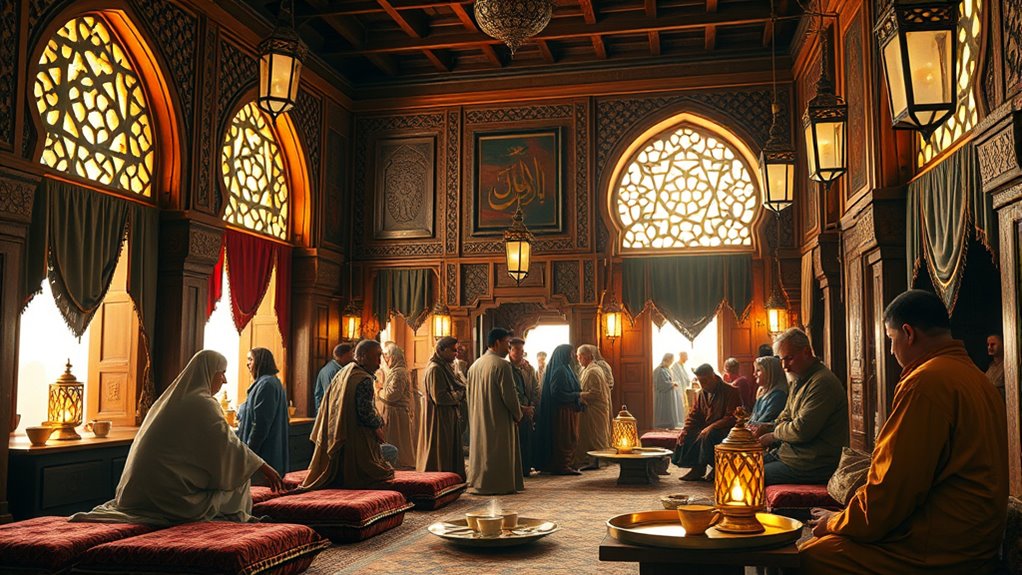

The first coffeehouses in the Islamic world appeared in the 15th and 16th centuries, originating in Persia, the Ottoman Empire, and the Arabian Peninsula. These venues quickly became social hubs where people gathered to enjoy coffee, tea, and lively discussion. They promoted interaction, intellectual exchange, and cultural sharing. Over time, they evolved into vibrant centers for poetry, storytelling, and debate. To discover how these spaces influenced society and culture, keep exploring their rich history.
Key Takeaways
- The first cafés, or coffeehouses, originated in the Middle East during the 15th and 16th centuries.
- They served as social hubs for discussion, poetry, and intellectual exchange across the Islamic world.
- Coffeehouses promoted communal seating and lively atmospheres, reducing social barriers among patrons.
- They played a key role in shaping public opinion, disseminating knowledge, and fostering cultural dialogue.
- Their legacy continues today, influencing modern cafés as spaces for community and social interaction.
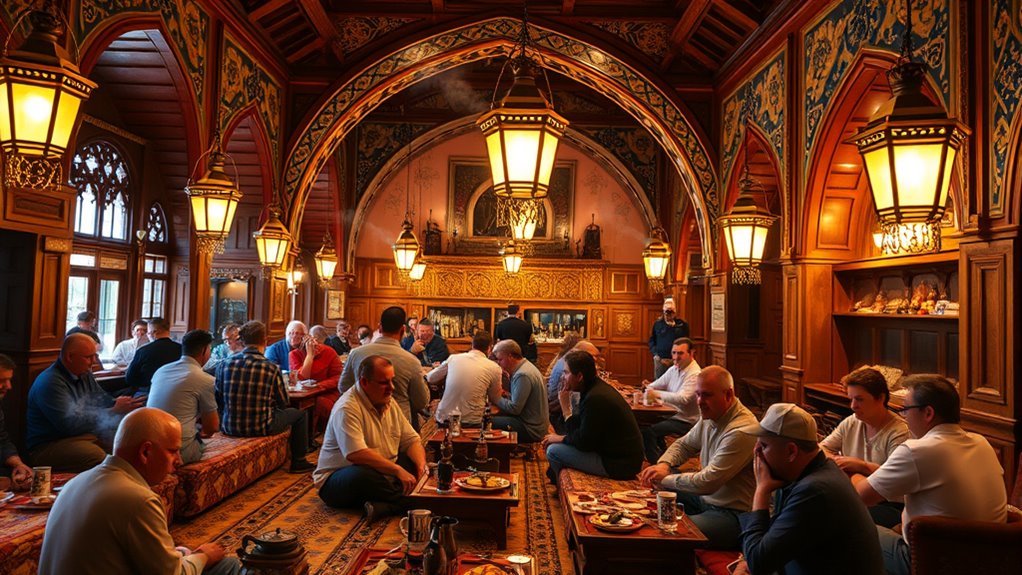
Cafés have long been a vibrant part of the Islamic world, serving as social hubs where people gather to enjoy coffee, tea, and lively conversation. These early establishments, known as coffeehouses, played a pivotal role in shaping the social fabric of many Islamic societies. When you step into one of these historic venues, you’re entering a space where coffeehouse culture thrives, fostering social interactions that transcend class, age, and background. It’s not just about drinking coffee; it’s about engaging in meaningful dialogue, exchanging ideas, and building community. The atmosphere is lively yet intimate, with patrons sitting in groups or alone, absorbed in conversations or quietly observing the bustling environment around them.
The origins of these coffeehouses date back to the 15th and 16th centuries, with their roots in the Middle East, especially in Persia, the Ottoman Empire, and the Arabian Peninsula. They quickly became centers for social interaction, where news was shared, poetry was recited, and debates flourished. As these coffeehouses spread across the Islamic world, they became more than just places to enjoy a warm drink—they evolved into cultural institutions that supported intellectual exchange and social cohesion. You’d notice that the design often encourages communal seating, promoting interaction among patrons and reducing social barriers. This setup helps forge a sense of belonging and community, making the experience more than just about caffeine.
The influence of coffeehouse culture extended beyond mere socialization. It played a part in fostering political discussions, artistic expression, and the dissemination of knowledge. People gathered here to read newspapers, listen to music, or participate in storytelling sessions. These social interactions helped shape public opinion and encouraged intellectual growth, making the coffeehouse an essential part of social life. You might also observe that many of these venues hosted poets, philosophers, and scholars, turning them into lively forums for ideas and debate. Such vibrant exchanges contributed profoundly to the culture and history of the Islamic world.
In essence, the early coffeehouses weren’t just about the beverages served—they were about creating spaces where social interactions could flourish. They helped forge connections, inspire creativity, and promote a shared sense of community that endures in many modern cafés today. As you sit in a historic coffeehouse, you’re experiencing a tradition that has shaped social life across centuries and continues to influence the way we gather and converse.

DEMMEX Turkish Greek Arabic Coffee Making and Serving Full Set with Cups Saucers Lids Sugar Bowl Tray and Copper Coffee Pot, 12 Pcs
DEMMEX 12 Pcs Turkish coffee Full Set for 2.
As an affiliate, we earn on qualifying purchases.
As an affiliate, we earn on qualifying purchases.
Frequently Asked Questions
How Did Coffee Influence Social Interactions in Islamic Societies?
You see, coffee greatly influenced social interactions in Islamic societies by fostering coffee socialization and encouraging communal gatherings. It became a central part of daily life, where people met in cafes to discuss ideas, share news, and enjoy each other’s company. Coffee’s role in these gatherings helped build stronger community bonds and created a lively, interactive environment that promoted social cohesion and cultural exchange.
What Were the Earliest Methods of Coffee Preparation?
You might wonder about early coffee preparation methods. Back then, people used simple techniques like boiling roasted coffee beans or grinding them into a powder to brew strong, flavorful drinks. Early preparation often involved boiling coffee grounds directly in water or using a cezve to make a thick, concentrated brew. These methods laid the foundation for today’s diverse coffee brewing practices, transforming how you enjoy your favorite beverage.
How Did Islamic Culture Shape Café Architecture and Design?
You notice how Islamic culture influences café architecture through intricate Islamic calligraphy and elegant courtyard designs. These elements create a welcoming, serene atmosphere, emphasizing harmony and community. Courtyards provide shaded, open spaces for socializing, while calligraphy decorates walls, reflecting spiritual and artistic values. This blend of aesthetics and function helps make cafés a cultural hub, inviting patrons to enjoy conversation and reflection in a beautiful, thoughtfully designed environment.
Were There Any Restrictions or Bans on Coffee Consumption?
You might think coffee was always freely enjoyed, but history shows there were coffee bans and religious restrictions in some societies. Islamic authorities, wary of its stimulating effects, occasionally imposed restrictions or bans, fearing it could lead to unruliness or challenge religious authority. Despite these restrictions, coffee’s popularity persisted, and it eventually became a essential part of social life, blending tradition with a growing love for the beverage.
How Did Islamic Trade Routes Facilitate Coffee Spread?
Trade routes and cultural exchange played pivotal roles in spreading coffee across regions. As you follow these routes, you see how traders and travelers introduced coffee to new lands, blending it into local cultures. The movement of goods and ideas facilitated not just commerce but also the sharing of traditions, making coffee a global phenomenon. You can imagine how these interactions helped embed coffee into societies far beyond its origins.

Middle Eastern Persian Iranian Russian Arab Turkish Style Electric Cordless Tea Maker Samovar Stainless Steel Glass Double Kettle Smart Keep Warm Tray Plate (Modern)
tray on off switch
As an affiliate, we earn on qualifying purchases.
As an affiliate, we earn on qualifying purchases.
Conclusion
You now see how the first cafés in the Islamic world sparked a cultural revolution, shaping social life and ideas. These coffeehouses weren’t just about drinks—they were the heart of lively conversations and new discoveries. Remember, they proved that a good cup of coffee can truly open doors. So, next time you sip your brew, think of it as part of a centuries-old tradition that keeps the spirit of innovation alive.

YCWF Turkish Coffee Cup Set of 6 with Saucers,3.5oz Ottoman Style Ceramic Tea Cups for Espresso Cappuccino Latte Mocha,White Gold
Superior Ceramic Material : The use of ceramic in this Turkish coffee cups and saucers set ensures durability…
As an affiliate, we earn on qualifying purchases.
As an affiliate, we earn on qualifying purchases.

Funny Coffee Figurines Set – Bar Decor – Cute Accessories for Kitchen or Office – Barista Gift
✨ Unique Coffee-Inspired Decor – Bring warmth & charm to your home with this 4-piece coffee figurine set….
As an affiliate, we earn on qualifying purchases.
As an affiliate, we earn on qualifying purchases.