For an espresso machine for newbies, I’d start with the Breville Bambino as the best overall choice: it keeps the setup compact while offering useful control as your skills grow. The De’Longhi Stilosa suits newcomers who want a straightforward manual machine, while the Breville Barista Express pairs espresso making with an integrated grinder for a more involved all-in-one setup. The main tradeoff is between simpler operation and the hands-on control that can improve your routine but takes practice. Compact machines can save counter space, though their feature sets and milk-steaming options vary. Read on for the full breakdown and a guide to choosing the right fit.

Get coffee and tea gear delivered free with Prime
- Fast, free delivery on millions of items
- Prime Video, Amazon Music and more included
- Member-only deals all year
Complete the kit


Key Takeaways
- The Bambino leads for most newcomers because its compact format and room to build skills make it a stronger all-around starting point than the more involved Barista Express.
- The Stilosa favors hands-on learning; its manual approach can suit buyers who want to practice, but it asks more of the user than a simpler control layout.
- The Barista Express bundles more of the workflow with a built-in grinder, which may reduce separate equipment needs but adds complexity for a first setup.
- Many machines in this lineup emphasize compact size and milk frothers, so buyers should compare day-to-day controls and maintenance rather than treat similar headline features as proof of equal ease.
- Touchscreen and pressure claims do not settle the beginner question; practical fit depends more on how clearly a machine supports the steps a new user needs to learn.
| XIXUBX Compact Espresso Machine with Milk Frother, White |  | Best for Temperature Consistency | Type: Semi-automatic espresso machine | Pump pressure: 20 bar | Temperature control: PID | VIEW ON AMAZON | See Our Full Breakdown |
| XIXUBX Cold Brew Espresso Machine with Milk Frother, Grey |  | Best for Hot and Cold Drinks | Type: Semi-automatic espresso machine | Power: 1350 W | Pump pressure: 20 bar | VIEW ON AMAZON | See Our Full Breakdown |
| De’Longhi Stilosa Compact Manual Espresso Machine with Manual Milk Frother | 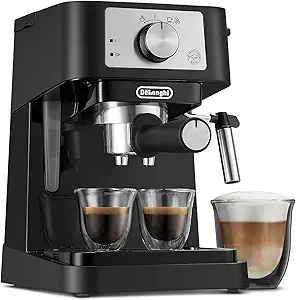 | Best for Learning the Basics | Type: Manual espresso machine | Milk frother: Manual | Boiler: Stainless steel | VIEW ON AMAZON | See Our Full Breakdown |
| Compact 20-Bar Espresso Machine with Milk Frother, Stainless Steel, Silver |  | Best for a Small Counter | Type: Semi-automatic espresso machine | Pump pressure: 20 bar | Power: 1450 W | VIEW ON AMAZON | See Our Full Breakdown |
| Compact Espresso Machine with Steam Wand, PID and NTC Temperature Control |  | Best Feature-Rich Compact Pick | Type: Semi-automatic espresso machine | Power: 1400 W | Voltage: 120 V | VIEW ON AMAZON | See Our Full Breakdown |
| Neretva 20-Bar Compact Semi-Automatic Espresso Machine |  | Best for Learning Espresso Basics | Machine type: Semi-automatic espresso machine | Pump pressure: 20 bar | Power: 1350 watts | VIEW ON AMAZON | See Our Full Breakdown |
| XIXUBX Espresso Machine with Milk Frother |  | Best for Making Several Drinks Between Refills | Extraction pressure: 20 bar | Water tank capacity: 42 ounces | Steam wand: 360° rotating and detachable | VIEW ON AMAZON | See Our Full Breakdown |
| Aromaster 1400W Espresso Machine with Milk Frother |  | Best for Easier Routine Cleaning | Power: 1400 watts | Pump pressure: 20 bar | Water tank capacity: 37 ounces | VIEW ON AMAZON | See Our Full Breakdown |
| Breville Bambino Espresso Machine, Brushed Stainless Steel | 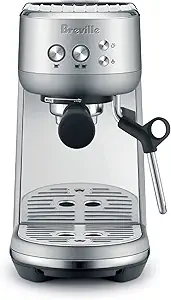 | Best Overall for New Espresso Makers | Model: BES450BSS | Heating system: ThermoJet | Heat-up time: 3 seconds | VIEW ON AMAZON | See Our Full Breakdown |
| Gevi 20-Bar Compact Espresso Machine | 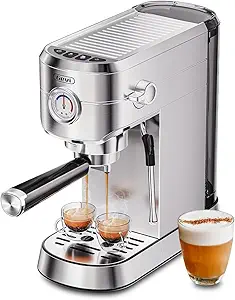 | Best for Basic Milk and Hot Water Drinks | Pump pressure: 20 bar | Temperature control: NTC | Brewing features: Pre-infusion, pressure gauge, semi-automatic brewing | VIEW ON AMAZON | See Our Full Breakdown |
| CASABREWS 3700 Essential Stainless Steel Espresso Machine |  | Best Straightforward Starter | Operation: Semi-automatic | Pump pressure: 20 bar | Power: 1350 watts | VIEW ON AMAZON | See Our Full Breakdown |
| Atatix Espresso Machine with Milk Frother, 20 Bar |  | Best for Guided Shot Experiments | Pressure system: 20 bar | Temperature control: 90–96°C | Preheat time: 30 seconds | VIEW ON AMAZON | See Our Full Breakdown |
| SHARDOR 20-Bar Espresso Machine with Milk Frother and Touchscreen |  | Best for Easy Controls | Type: Semi-automatic espresso machine | Pump pressure: 20 bar | Power: 1350 watts | VIEW ON AMAZON | See Our Full Breakdown |
| Breville Barista Express Espresso Machine, Black Truffle (BES870BTR) |  | Best Premium All-in-One | Model: BES870BTR | Type: Manual espresso machine with built-in grinder | Grinder: Integrated precision conical burr grinder | VIEW ON AMAZON | See Our Full Breakdown |
| CASABREWS CM5418 Compact Espresso Machine with Milk Frothing Steam Wand |  | Best Compact Pick | Machine type: Semi-automatic espresso machine | Pump pressure: 20 bar | Power: 1350 W | VIEW ON AMAZON | See Our Full Breakdown |
| espresso machine for newbie | Pump pressure | Power |
|---|---|---|
| XIXUBX Compact Espresso Machin | 20 bar | — |
| XIXUBX Cold Brew Espresso Mach | 20 bar | 1350 W |
| De’Longhi Stilosa Compact Manu | — | — |
| Compact 20-Bar Espresso Machin | 20 bar | 1450 W |
| Compact Espresso Machine with | 20 bar | 1400 W |
| Neretva 20-Bar Compact Semi-Au | 20 bar | 1350 watts |
| XIXUBX Espresso Machine with M | — | — |
| Aromaster 1400W Espresso Machi | 20 bar | 1400 watts |
| Breville Bambino Espresso Mach | — | 1560 watts |
| Gevi 20-Bar Compact Espresso M | 20 bar | — |
| CASABREWS 3700 Essential Stain | 20 bar | 1350 watts |
| Atatix Espresso Machine with M | — | — |
| SHARDOR 20-Bar Espresso Machin | 20 bar | 1350 watts |
| Breville Barista Express Espre | — | 1600 W |
| CASABREWS CM5418 Compact Espre | 20 bar | 1350 W |
More Details on Our Top Picks
XIXUBX Compact Espresso Machine with Milk Frother, White
The PID temperature control gives this compact XIXUBX a useful edge for beginners who want repeatable shots while learning to grind and tamp. It also supports single- and double-shot brewing, and the included pitcher means milk drinks are possible without a separate accessory purchase. Compared with the De’Longhi Stilosa, this model spells out more brewing guidance, including pre-infusion and a 22–30 second brewing time; the Stilosa keeps its setup simpler and specifies single- and double-shot filters. The tradeoff is that neither the PID nor one-button brewing removes the hands-on work: grind size and tamping still affect the result, and the steam wand takes practice. I’d choose it for a small counter and a learner who values shot consistency over automatic convenience.
Pros:- PID control is designed to keep brew temperature consistent
- Pre-infusion supports a more gradual start to extraction
- Compact vertical design suits small counters
- Includes a pitcher and supports single or double shots
Cons:- Grinding and tamping remain the user’s responsibility
- Learning to steam milk adds steps and practice
Best for: New home baristas with limited counter space who want temperature control and plan to practice grinding, tamping, and steaming.
Not ideal for: Buyers who want espresso with minimal technique or prefer a fully automatic milk-drink routine.
- Type:Semi-automatic espresso machine
- Pump pressure:20 bar
- Temperature control:PID
- Brewing time:22–30 seconds
- Milk frother:Steam wand
- Included accessory:Stainless steel frothing pitcher
- Design:Compact vertical
- Warranty:1 year
- Color:White
Our verdict“Choose this XIXUBX if you want a compact machine with temperature control and are ready to learn the manual parts of espresso making.”
XIXUBX Cold Brew Espresso Machine with Milk Frother, Grey
This XIXUBX suits a beginner who wants more than conventional hot espresso: its one-touch cold brew adds a simple alternative to the usual shot-and-steam routine. Push-button controls and a stated heating time of about 30 seconds keep the basic operation approachable, while the adjustable wand and included pitcher open the door to milk drinks. Compared with the XIXUBX Compact Espresso Machine with Milk Frother, White, this model trades its stated PID control and pre-infusion for the cold-brew option and NTC temperature sensing. That makes the choice fairly clear: pick this one for drink variety, and the white model for more explicit shot-temperature features. The listing gives no tank capacity or dimensions, so I can’t tell from the supplied details how well it fits a very tight counter or a busy household.
Pros:- Offers one-touch cold brew alongside hot espresso
- Push-button controls simplify drink selection
- Adjustable steam wand and pitcher support milk drinks
- About 30-second heating time is specified
Cons:- Tank capacity and machine dimensions are not provided
- NTC control is specified, but no PID feature or pre-infusion is listed
Best for: Beginners who alternate between hot espresso, cold brew, and milk drinks and want push-button drink selection.
Not ideal for: Shoppers who need confirmed machine dimensions or water capacity before planning a compact kitchen setup.
- Type:Semi-automatic espresso machine
- Power:1350 W
- Pump pressure:20 bar
- Heating time:About 30 seconds
- Temperature control:NTC sensor
- Beverage options:Hot espresso and one-touch cold brew
- Milk frother:Adjustable steam wand
- Included accessory:Frothing pitcher
- Warranty:1 year
Our verdict“Pick this XIXUBX if cold brew matters as much as espresso and you can shop without stated size and capacity details.”
De’Longhi Stilosa Compact Manual Espresso Machine with Manual Milk Frother
The Stilosa is the most straightforward choice here for a beginner who wants to learn espresso through a manual workflow. Its portafilter comes with single- and double-shot filters, and the two-level cup holder accommodates different cup sizes without adding much complexity. The XIXUBX Compact Espresso Machine with Milk Frother, White offers specified PID temperature control and pre-infusion, so it has more listed features for someone focused on shot consistency. The Stilosa instead keeps the decision-making visible: you prepare the coffee and manage the milk frothing yourself. That can help a curious beginner understand each step, but it also means more effort and a learning curve for both espresso and milk drinks. I’d favor it over the touchscreen XIXUBX when hands-on simplicity matters more than selectable functions or a large stated tank.
Pros:- Compact design fits smaller countertops
- Includes single- and double-shot filters
- Manual frother supports cappuccinos, lattes, and flat whites
- Two-level cup holder accommodates different cup sizes
Cons:- Manual operation takes more effort than an automatic machine
- Espresso preparation and milk frothing require practice
Best for: First-time espresso makers who want a compact manual setup with separate single- and double-shot filters.
Not ideal for: People seeking one-touch preparation or who do not want to practice manual milk frothing.
- Type:Manual espresso machine
- Milk frother:Manual
- Boiler:Stainless steel
- Included filters:Single and double espresso
- Cup holder:Two-level
Our verdict“Choose the Stilosa if you want to learn the basic manual steps on a compact machine and accept a hands-on routine.”
Compact 20-Bar Espresso Machine with Milk Frother, Stainless Steel, Silver
At 5.3 inches wide, this silver machine is the easiest fit in the group for a narrow counter, while its removable 34-ounce tank and drip tray make routine filling and cleanup more manageable. The pressure gauge also gives a beginner a visible cue during brewing, although it does not replace learning grind and tamp technique. Compared with the De’Longhi Stilosa, it adds a stated preheating time of about 20 seconds and a removable tank; compared with the touchscreen XIXUBX, it gives up features such as cold brew and customizable shot volume for a more focused setup. One workflow quirk matters: after steaming milk, the machine needs to cool before brewing, so back-to-back cappuccinos can take longer. This is a practical pick for space-conscious learners who don’t mind managing that sequence.
Pros:- Narrow 5.3-inch width suits limited counter space
- Pressure gauge offers a visible brewing indicator
- Removable 34-ounce tank and drip tray simplify refilling and cleaning
- About 20-second preheating time is specified
Cons:- Must cool after frothing milk before brewing again
- Semi-automatic brewing still requires hands-on preparation
Best for: Apartment dwellers or first-time baristas with a narrow counter who want a gauge and removable water tank.
Not ideal for: People who make several milk drinks in a row and want to switch directly from steaming to brewing.
- Type:Semi-automatic espresso machine
- Pump pressure:20 bar
- Power:1450 W
- Preheating time:About 20 seconds
- Water tank capacity:34 oz
- Dimensions:5.3 × 12.2 × 11.5 inches
- Features:Pressure gauge, steam wand, removable water tank and drip tray
- Material:Stainless steel
- Color:Silver
Our verdict“Choose this compact silver machine if a narrow footprint and removable tank matter more than uninterrupted milk-drink preparation.”
Compact Espresso Machine with Steam Wand, PID and NTC Temperature Control
This machine packs an unusually broad set of options into a 5.3-inch-wide body: touchscreen controls, customizable shot volume, hot water, cold brew, and a rotating steam wand. Its 57.5-ounce removable tank also means fewer refills than the 34-ounce tank on the Compact 20-Bar Espresso Machine with Milk Frother. For a beginner, the touchscreen can make choosing a drink more direct, while PID and NTC control plus pre-infusion offer features aimed at consistent shots. The tradeoff is a more involved control set than the De’Longhi Stilosa’s filter-and-portafilter approach, and the single boiler can slow a brew-and-steam sequence. It uses ground coffee, so it won’t take over grinding. I’d choose it for a learner who wants room to explore different drinks and is comfortable with a little setup.
Pros:- Touchscreen allows customizable shot volume
- PID and NTC control with pre-infusion are specified
- 57.5-ounce removable tank reduces refill frequency
- Cold brew, hot water, and rotating steam wand add drink options
Cons:- Single boiler can slow switching between brewing and steaming
- Requires ground coffee and does not include a grinder
Best for: Curious beginners with limited counter space who want touchscreen shot settings, cold brew, hot water, and a larger tank.
Not ideal for: Buyers seeking a simple workflow, built-in grinding, or quick back-to-back brewing and steaming.
- Type:Semi-automatic espresso machine
- Power:1400 W
- Voltage:120 V
- Pump pressure:20 bar
- Temperature control:PID and NTC
- Water tank capacity:57.5 oz
- Dimensions:11.4 × 5.3 × 11.4 in
- Interface:Touchscreen
- Features:Pre-infusion, rotating steam wand, cup warmer, cold brew, hot water dispensing, removable tank and descaling function
Our verdict“Pick this model if you want many drink controls in a compact footprint and are willing to manage a single-boiler workflow.”
Neretva 20-Bar Compact Semi-Automatic Espresso Machine
The Neretva gives a new espresso maker useful feedback through its temperature display and low-pressure pre-infusion, which can make the steps of brewing easier to follow. Its pressurized filter baskets are a more forgiving starting point than an unpressurized setup, while the steam wand lets you practice milk drinks. Compared with the Breville Bambino, it takes up a similar compact-countertop role but lacks the Bambino’s specified three-second heat-up. The Neretva’s stainless steel body, cup warmer, and included portafilter accessories make it a self-contained entry point. The tradeoff is that it uses ground coffee and still requires hands-on dosing and milk steaming; at 17 pounds, it is also less convenient to move than its compact dimensions suggest.
Pros:- Temperature display gives beginners a visible brewing reference
- Low-pressure pre-infusion adds a gentler start to extraction
- Pressurized filters and portafilter are included
- Steam wand and cup warmer support milk drinks and serving
Cons:- Requires ground coffee and manual preparation
- Its 17-pound weight makes frequent moving awkward
Best for: Beginners who want a temperature readout, forgiving pressurized baskets, and a steam wand while learning manual espresso steps
Not ideal for: Buyers who want one-touch drinks, use whole beans without a separate grinder, or need a machine that is easy to move
- Machine type:Semi-automatic espresso machine
- Pump pressure:20 bar
- Power:1350 watts
- Voltage:120 volts
- Water tank capacity:1.3 liters
- Dimensions:11 × 12 × 9.1 inches
- Weight:17 pounds
- Coffee input:Ground coffee
Our verdict“Choose the Neretva if you want helpful brewing feedback and included starter accessories in a compact manual machine.”
XIXUBX Espresso Machine with Milk Frother
The XIXUBX stands out for its 42-ounce water tank, giving a beginner more room to make several drinks before stopping to refill. Its visible pressure gauge offers a visual cue during brewing, though the listed 20-bar pump means newcomers may need to learn how to interpret that reading rather than treat it as a target. Compared with the Neretva, this model supplies a larger stated tank and a detachable, rotating steam wand that can be easier to clean around. A stainless steel frothing pitcher is included, so a new owner has a dedicated vessel for practicing milk texture. The tradeoff is that the provided details say less about temperature control and extraction guidance than the Neretva’s display and pre-infusion features, leaving fewer stated aids for learning brew consistency.
Pros:- 42-ounce tank supports multiple servings between refills
- Rotating, detachable steam wand supports frothing and cleaning
- Stainless steel milk pitcher is included
- Visible pressure gauge provides a brewing reference
Cons:- The listed 20-bar system may require learning how to monitor pressure for the stated 9-bar extraction target
- Product details provide limited information about temperature control and pre-infusion
Best for: Households new to espresso that make several drinks in a session and want a pitcher and visible pressure gauge included
Not ideal for: Beginners who want clearly specified temperature feedback or brewing guidance to help repeat results
- Extraction pressure:20 bar
- Water tank capacity:42 ounces
- Steam wand:360° rotating and detachable
- Body material:Stainless steel
- Included accessory:Stainless steel milk frothing pitcher
- Warranty:1 year
Our verdict“Pick the XIXUBX if serving several drinks per session and having the frothing pitcher included matter more than detailed brewing controls.”
Aromaster 1400W Espresso Machine with Milk Frother
The Aromaster pairs beginner-friendly temperature management with practical upkeep features: PID and NTC control support steadier brewing, while one-touch descaling and removable parts simplify routine care. That combination gives it a different appeal from the Gevi 20-Bar Compact Espresso Machine, whose listed features emphasize a pressure gauge and hot water function rather than a stated descaling routine. Pre-infusion and a 360° steam wand add room to learn both espresso and milk drinks. Its 37-ounce tank and narrow, seven-inch width also suit a small counter. The tradeoff is the manual work common to semi-automatic machines, and the listed brewing capacity of 2.4 ounces may limit the volume of a serving. Buyers seeking simple button-driven drinks may find the preparation less beginner-friendly than the cleaning features suggest.
Pros:- PID and NTC temperature control support more consistent brewing
- One-touch descaling and removable parts simplify maintenance
- Pre-infusion and a 360° steam wand support espresso and milk drinks
- Seven-inch width fits narrower countertops
Cons:- Semi-automatic operation still requires manual preparation
- Listed 2.4-ounce capacity may limit serving volume
Best for: New espresso owners with limited counter width who want temperature controls and a straightforward descaling routine
Not ideal for: People who want larger brewed servings or automated drink preparation with minimal hands-on steps
- Power:1400 watts
- Pump pressure:20 bar
- Water tank capacity:37 ounces
- Dimensions:13 × 7 × 14 inches
- Operation mode:Semi-automatic
- Temperature control:PID + NTC
- Special features:Pre-infusion, fast heat-up, one-touch descaling, anti-dry burn protection, auto shut-off, cup warmer, removable tank
- Drink types:Americano, cappuccino, espresso, latte, mocha
Our verdict“Choose the Aromaster if compact width and easier descaling matter more than automated preparation or larger servings.”
Breville Bambino Espresso Machine, Brushed Stainless Steel
The Breville Bambino earns the lead for a newcomer who wants manual espresso without waiting long to start: its three-second heat-up reduces friction in a daily routine, while PID temperature control and low-pressure pre-infusion provide two useful aids to repeatable brewing. Compared with the Neretva, the Bambino specifies faster heating and a 19-gram portafilter dose, though the Neretva includes pressurized filters that may feel more forgiving at first. The Bambino also includes a milk jug and supports hot water as well as steam, making it versatile for basic home drinks. Its compact footprint helps in smaller kitchens. The tradeoff is that it remains hands-on: users must prepare the coffee and texture milk themselves, and its controls are limited to one- or two-cup settings rather than broader customization.
Pros:- Three-second heat-up makes quick drinks easier to fit into a routine
- PID temperature control and low-pressure pre-infusion support consistent extraction
- Compact design suits smaller kitchens
- Milk jug and espresso accessories are included
Cons:- Manual coffee preparation and milk texturing require practice
- Settings are limited to one- or two-cup options, plus hot water and steam
Best for: Beginners who want a compact machine with fast startup, temperature management, and room to learn manual espresso and milk texturing
Not ideal for: Buyers who want automatic drinks, a built-in grinder, or more serving and customization settings
- Model:BES450BSS
- Heating system:ThermoJet
- Heat-up time:3 seconds
- Temperature control:Digital PID
- Portafilter size:54 mm
- Portafilter dose:19 grams
- Power:1560 watts
- Voltage:110–120 volts
- Settings:1 cup, 2 cups, hot water, steam
Our verdict“The Bambino is the strongest fit for beginners who value quick startup and guided consistency while learning hands-on espresso.”
Gevi 20-Bar Compact Espresso Machine
The Gevi is a practical entry point for someone who wants espresso alongside tea or Americanos: its hot water function broadens what the machine can do without adding another appliance. Pre-infusion and a pressure gauge give a beginner some brewing feedback, while the removable froth nozzle makes the steam wand easier to clean. Compared with the Aromaster, it lists hot water and a gauge but does not specify PID temperature control or one-touch descaling, so it offers fewer stated aids for managing consistency and maintenance. Its compact stainless steel housing suits a smaller counter. The tradeoff is that semi-automatic brewing leaves dosing, tamping, and timing to the user, and the listed features do not describe a built-in grinder or included coffee accessories.
Pros:- Hot water function supports tea and Americanos
- Pre-infusion and pressure gauge offer brewing feedback
- Removable froth nozzle simplifies steam-wand cleaning
- Stainless steel housing and compact design suit smaller counters
Cons:- Semi-automatic operation requires dosing, tamping, and timing
- Product details do not specify PID temperature control or one-touch descaling
Best for: New users in small kitchens who want a manual espresso machine that also dispenses hot water for tea or Americanos
Not ideal for: People seeking automated brewing, detailed temperature controls, or a machine with a stated descaling program
- Pump pressure:20 bar
- Temperature control:NTC
- Brewing features:Pre-infusion, pressure gauge, semi-automatic brewing
- Milk frother:Steam wand with removable froth nozzle
- Housing:Stainless steel
- Hot water function:Yes
- Warranty:12 months
- Technical support:Lifetime
Our verdict“Choose the Gevi if hot water versatility and a compact manual setup matter more than guided brewing controls.”
CASABREWS 3700 Essential Stainless Steel Espresso Machine
Simple button controls and included one-cup and two-cup filters make the CASABREWS 3700 a practical starting point for learning basic espresso routines. Its steam wand adds room to practice milk drinks, while the removable tank and drip tray make everyday cleanup less fiddly. Compared with the CASABREWS CM5418, this model trades the built-in pressure gauge for a larger 43.9-ounce tank, so it favors fewer refill trips over extra visual feedback while brewing. The tradeoff for newcomers is that there’s no gauge to help diagnose a weak shot, and the first-use cycle adds a setup step. Choose it if you want a compact machine with familiar manual steps and useful accessories; skip it if you want guided extraction cues.
Pros:- One-cup and two-cup filters support common serving sizes
- Steam wand allows practice with milk drinks
- Removable 43.9-ounce tank and drip tray ease refilling and cleaning
- Portafilter, tamper, and spoon are included
Cons:- No pressure gauge to provide a brewing cue
- Requires a first-use cycle before brewing
Best for: First-time home baristas who want button-operated brewing, milk frothing, and a larger removable tank without a built-in grinder.
Not ideal for: Beginners who want a pressure gauge to help troubleshoot shots or a grinder built into the machine.
- Operation:Semi-automatic
- Pump pressure:20 bar
- Power:1350 watts
- Voltage:120 volts
- Water tank:43.9 oz, removable
- Coffee input:Ground coffee
- Controls:Buttons
- Included filters:One-cup and two-cup
Our verdict“Pick the CASABREWS 3700 if you want a straightforward first machine with milk frothing and a larger tank, and can learn without a pressure gauge.”
Atatix Espresso Machine with Milk Frother, 20 Bar
The Atatix gives beginners a way to move from preset brewing toward experimenting: automatic modes cover single and double shots, while manual extraction allows more control over output. Temperature control and a stated 30-second preheat time add useful operating details, and the steam wand supports lattes and cappuccinos. Compared with the SHARDOR touchscreen machine, the Atatix emphasizes manual extraction options rather than touchscreen convenience and three temperature settings. Its main learning hurdle is that manual output is described in grams, which may be unfamiliar to someone who has not weighed coffee or espresso. The listed ABS and stainless steel construction also makes this a more mixed-material option than an all-stainless design. It suits a curious beginner willing to learn by adjusting; preset-only buyers can keep things simpler elsewhere.
Pros:- Offers both automatic and manual extraction modes
- Temperature control is specified from 90–96°C
- Steam wand supports milk foam for multiple drink styles
- Detachable water tank and drip tray simplify routine cleaning
Cons:- Manual extraction output in grams may be hard for newcomers to interpret
- Construction combines ABS and stainless steel
Best for: Curious beginners who want automatic shot modes now and the option to experiment with extraction time and output later.
Not ideal for: Buyers who want a very simple preset interface or do not want to interpret extraction output by weight.
- Pressure system:20 bar
- Temperature control:90–96°C
- Preheat time:30 seconds
- Manual extraction:Up to 102 seconds; 180–350 g
- Single espresso mode:28 seconds; 25–40 g
- Double espresso mode:42 seconds; 55–85 g
- Materials:ABS and stainless steel
- Accessories:Portafilter, funnel, coffee scoop/tamper, user manual
Our verdict“Choose the Atatix if you want preset shots with a path into manual adjustments and are comfortable learning the machine’s weight-based output figures.”
SHARDOR 20-Bar Espresso Machine with Milk Frother and Touchscreen
A touchscreen with single- and double-cup options makes the SHARDOR approachable for beginners who prefer a clear control panel over the CASABREWS 3700’s buttons. Three temperature settings offer a modest way to adjust brewing, while the 45-ounce removable tank reduces refill interruptions. At just 8.5 pounds and about 8.14 inches wide, it also has a narrow footprint for a small counter. The tradeoff is that touchscreen selections do not remove the hands-on work of dosing, tamping, and using the steam wand. Unlike the Atatix, which specifies manual extraction timing and output, SHARDOR’s appeal centers on direct controls and presets. It also requires descaling if brewing stops, so ongoing care matters. This is a fit for buyers who want straightforward controls and milk drinks, not a maintenance-free machine.
Pros:- Touchscreen provides single- and double-cup options
- Three temperature settings allow some adjustment
- 45-ounce removable tank and cup warmer add everyday convenience
- Compact 8.14-inch width suits limited counter space
Cons:- Requires descaling if it stops brewing
- Semi-automatic workflow still requires manual coffee preparation and milk texturing
Best for: Apartment dwellers and first-time espresso makers who want touchscreen shot selection, milk frothing, and a narrow machine.
Not ideal for: Buyers seeking a built-in grinder, detailed manual extraction controls, or minimal maintenance.
- Type:Semi-automatic espresso machine
- Pump pressure:20 bar
- Power:1350 watts
- Water tank:45 oz, removable
- Temperature settings:3
- Dimensions:8.14 x 5.12 x 15.27 inches
- Weight:8.5 pounds
- Controls:Touchscreen
- Filter:Reusable 51 mm permanent filter
Our verdict“Pick the SHARDOR if clear touchscreen controls and a small footprint matter more to you than an integrated grinder or highly detailed shot adjustments.”
Breville Barista Express Espresso Machine, Black Truffle (BES870BTR)
The Barista Express combines a conical burr grinder with dose control, PID temperature regulation, and low-pressure pre-infusion, giving a beginner one machine for learning the full bean-to-shot process. Fresh grinding directly into the portafilter removes the need to choose a separate grinder, while the 67-ounce tank supports repeated brewing before refills. Compared with the CASABREWS 3700, this Breville offers more control over preparation and extraction, but asks for more effort at every step. Grinding, dosing, tamping, pulling the shot, and texturing milk are all hands-on tasks. Its included tools support that routine, though they do not make it automatic. Choose it if learning espresso craft is part of the appeal; skip it if you want a quick button-led drink with little cleanup.
Pros:- Integrated conical burr grinder feeds coffee directly into the portafilter
- PID temperature control and low-pressure pre-infusion support controlled extraction
- 67-ounce water tank reduces refill frequency
- Includes portafilter, tamper, milk jug, and cleaning accessories
Cons:- Manual workflow involves grinding, extraction, and milk texturing
- Integrated grinder and hands-on preparation add steps and cleanup
Best for: Committed beginners who want to learn grinding, dosing, extraction, and milk texturing on one machine.
Not ideal for: Newcomers who prioritize a low-effort routine, minimal cleanup, or a machine that avoids manual grinding and tamping.
- Model:BES870BTR
- Type:Manual espresso machine with built-in grinder
- Grinder:Integrated precision conical burr grinder
- Water tank:67 oz
- Bean hopper:1/2 lb
- Power:1600 W
- Shot options:Single or double
- Portafilter:54 mm stainless steel
- Warranty:1-year limited
Our verdict“Choose the Barista Express if you want to learn espresso from beans onward and are ready for a more involved routine than the CASABREWS machines require.”
CASABREWS CM5418 Compact Espresso Machine with Milk Frothing Steam Wand
The CM5418’s built-in pressure gauge gives a new user a visible cue during brewing, a helpful distinction from the otherwise approachable CASABREWS 3700. Its compact design and removable 34-ounce tank suit a home office or a kitchen with limited counter space, and it handles single or double shots with a steam wand for milk drinks. The gauge is useful feedback, though low pressure may still call for changes to grind, dose, or tamping—so it cannot make preparation foolproof. Compared with the SHARDOR touchscreen model, the CM5418 favors a gauge and compact format over touchscreen controls and a larger 45-ounce tank. It also needs to cool after frothing before brewing, which can slow a milk-drink routine. Pick it for a small space and visible brewing feedback.
Pros:- Built-in pressure gauge offers a visible brewing cue
- Compact design suits smaller counters and office kitchens
- Removable 34-ounce tank is easy to refill
- Steam wand and one-cup and two-cup filters support varied drinks
Cons:- Must cool down after frothing milk before brewing
- Low pressure may require grind, dose, or tamp adjustments
Best for: Space-conscious beginners in a home office or small kitchen who want a pressure gauge and single- or double-shot brewing.
Not ideal for: People who make several milk drinks back-to-back or want a larger tank and no cool-down pause between frothing and brewing.
- Machine type:Semi-automatic espresso machine
- Pump pressure:20 bar
- Power:1350 W
- Water tank:34 oz, removable
- Pressure gauge:Built-in
- Milk frothing:Steam wand
- Shot options:Single or double
- Included filters:One-cup and two-cup
Our verdict“Choose the CM5418 if counter space and a visible pressure cue matter most, and you can work around its milk-frothing cool-down pause.”

How We Picked
I ranked these machines for someone learning espresso at home, weighing how approachable the controls appear, whether the machine leaves room to develop technique, the usefulness of its milk-steaming setup, and the likely burden of cleaning and maintaining it. I also considered footprint and workflow: a compact machine can be easier to accommodate, while an integrated grinder can consolidate equipment but adds steps to learn.
The Bambino ranks first as the strongest balance of compactness and growth potential. The Stilosa earns a place for learners who welcome manual practice, while the Barista Express suits buyers who want a more complete, involved station. The remaining compact and semi-automatic options are grouped by their likely appeal—space-conscious setups, milk drinks, or added controls—but feature labels alone do not establish that one will be easier to use. I treat value as a fit between workflow and buyer needs, without using price or customer-rating claims.
Factors to Consider When Choosing Espresso Machine For Newbies
Choosing a first espresso machine is mostly a decision about the routine you want to learn. I’d think through the whole process—from grinding and dosing to steaming milk and cleaning—before choosing based on a single spec.
Choose How Much of the Workflow You Want to Learn
Espresso involves several linked steps, and a machine only handles some of them. A semi-automatic model gives you control over starting and stopping a shot, while a machine with an integrated grinder brings another adjustment into the same routine. More control can make it easier to understand how grind and extraction affect a cup, but it also creates more opportunities for inconsistent results. If your priority is learning gradually, favor clear controls and a manageable number of adjustments. If you want fewer separate pieces of equipment, an all-in-one setup may suit you, provided you’re willing to learn its grinder as well. A common mistake is to buy for the most advanced workflow you might want someday rather than the routine you’ll actually use this month.
Plan for the Grinder Before You Pick the Machine
A capable grinder is part of the espresso setup, even when it is sold separately from the machine. Pre-ground coffee can simplify a first attempt, but it limits how much you can adjust extraction when a shot tastes too fast or too slow. An integrated grinder cuts down on separate gear and counter clutter, though its settings become part of what you need to learn and maintain. Before choosing a machine without one, decide whether you already own a grinder suited to espresso or are prepared to add one. Beginners often underestimate this part of the workflow and then blame the machine for results shaped by the grind. Choose a setup that gives you a workable path to fresh, adjustable grounds.
Match Milk Steaming to the Drinks You Make
A steam wand gives you direct control over milk texture, which can be rewarding if you want to learn cappuccino or latte preparation. That control also takes practice: milk temperature, texture, and timing all affect the result. If you mostly drink straight espresso, a prominent milk setup may add cleaning steps without much benefit. If milk drinks are part of your daily routine, check whether the wand and its position will be comfortable to use with your cups and counter arrangement. Plan for rinsing and wiping the wand after use, since dried milk is harder to clean. The right choice depends on how often you’ll steam milk, not simply whether the machine includes a frother.
Treat Pressure Numbers as One Clue
Marketing often highlights a machine’s bar rating, but that number by itself does not tell you whether the machine will be intuitive or produce a satisfying shot. For a new user, clear operating steps, consistent temperature behavior, and a grinder that can be adjusted matter more to the learning process. A display or extra temperature control may offer useful feedback, but it can also introduce settings that take time to understand. Look at what each control lets you change and whether you need that control now. Avoid choosing solely by the largest number printed in a listing. A simpler machine with a workflow you can repeat may be a better teacher.
Check Counter Space and Cleanup as One Decision
Measure the space where the machine will sit, including room above it for filling the water tank and room beside it for handling the portafilter. Compact bodies can fit a small kitchen, but a separate grinder, knock box, and accessories may still expand the working area. Consider where you’ll empty the drip tray and wipe the steam wand, because a cramped setup can make routine cleanup irritating. Removable parts and accessible surfaces can matter more over months of use than a small difference in listed dimensions. If the machine will stay out all day, its footprint and cord placement deserve attention. A setup that fits the kitchen comfortably is more likely to become part of your routine.
Pay More for a Need You Can Name
Extra controls and bundled equipment make sense when they solve a real problem in your routine. An integrated grinder may be useful if you want fewer separate purchases and are ready to learn grind adjustment; advanced temperature controls may appeal if you enjoy refining shots. If you mainly want occasional espresso or milk drinks with little experimentation, those additions can mean more setup and upkeep than benefit. Think about which tasks you expect to repeat each week, then choose features that support those tasks. Build quality and accessible replacement or cleaning parts also shape ownership beyond the first cup. Spending more is easiest to justify when it reduces friction or supports a skill you genuinely plan to develop.
Frequently Asked Questions
Should I start with a manual or semi-automatic espresso machine?
A manual machine can teach you how preparation and timing affect a shot, but it asks you to make more decisions from the start. A semi-automatic setup still involves hands-on work while giving you a more repeatable way to start and stop extraction. If you enjoy experimenting and don’t mind uneven early results, manual control may be part of the appeal. If you want a clearer learning curve, prioritize straightforward controls and a repeatable routine. Your choice should reflect whether practice is a hobby or an obstacle to your morning coffee.
Do I need an espresso grinder right away?
You can begin with coffee that is already ground, but espresso is sensitive to grind size, and pre-ground coffee gives you little room to adjust. A grinder made for espresso lets you respond when a shot runs too quickly or slowly. If you choose a machine with an integrated grinder, expect to learn its settings and include its cleaning in your routine. If the machine has no grinder, budget counter space and workflow for a separate one. Buying a machine first without a plan for grounds can leave you unable to use its potential well.
Is a built-in grinder worth choosing for a first machine?
A built-in grinder can make a setup more compact and keep grinding close to the brewing process. It also means you’ll learn both the espresso machine and grinder adjustments together, which may feel like a lot at first. A separate grinder gives you more flexibility to choose or change that part of the setup later, but takes extra space and adds another purchase decision. Think about how much you value a consolidated station versus the freedom to select components independently. Either route can work if the grinder supports espresso-fine adjustment.
Will a 20-bar machine make better espresso than a lower-rated one?
A pressure figure alone does not predict how easy a machine is to use or how good a shot will taste. Grind size, coffee freshness, dose, and consistent operation all affect extraction. For a beginner, it is more useful to understand the controls and build a repeatable process than to compare headline pressure claims. Look for clear setup guidance and a workflow that matches your willingness to practice. Treat the stated pressure as one specification among several, not a shortcut to choosing.
What should I prioritize if I mostly drink lattes and cappuccinos?
Give the milk-steaming workflow real weight, since you’ll use it as often as the espresso side. A steam wand can offer more control over texture, but you’ll need to learn how to position the pitcher and clean the wand after each use. Also check that your counter has room to place a milk pitcher and move it comfortably. If you only make milk drinks occasionally, a simpler machine may be easier to live with than one chosen for extra steaming features. The best fit is the one whose milk routine you’ll be willing to repeat and maintain.
Conclusion
For most new home espresso makers, I’d choose the Breville Bambino as the best overall balance of compact size and room to improve. The De’Longhi Stilosa is my best fit for beginners who want to practice a more manual routine, while the Barista Express is the premium pick for buyers who want a grinder built into a more involved station. For shoppers focused on a compact footprint or a milk-first routine, compare the lineup’s compact models and steam-wand options around the space and cleanup you can support. Choose the machine whose workflow matches your habits now, with only the extra controls you expect to use.