
TL;DR

Get coffee and tea gear delivered free with Prime
- Fast, free delivery on millions of items
- Prime Video, Amazon Music and more included
- Member-only deals all year
The University of Hawaiʻi at Mānoa will lead a new U.S. Department of State-funded research program on coffee and cacao, with $8 million obligated for its first year. The multi-institution initiative will study crop resilience, farming and processing, but its specific country research sites and projects have not yet been announced.
The University of Hawaiʻi at Mānoa will lead a new federally funded research program for coffee and cacao, backed by an initial $8 million obligation for its first year. Funded by the U.S. Department of State, the Feed the Future Innovation Lab for Coffee and Cacao is designed to support research in producing regions and is expected to operate under an agreement of up to five years.
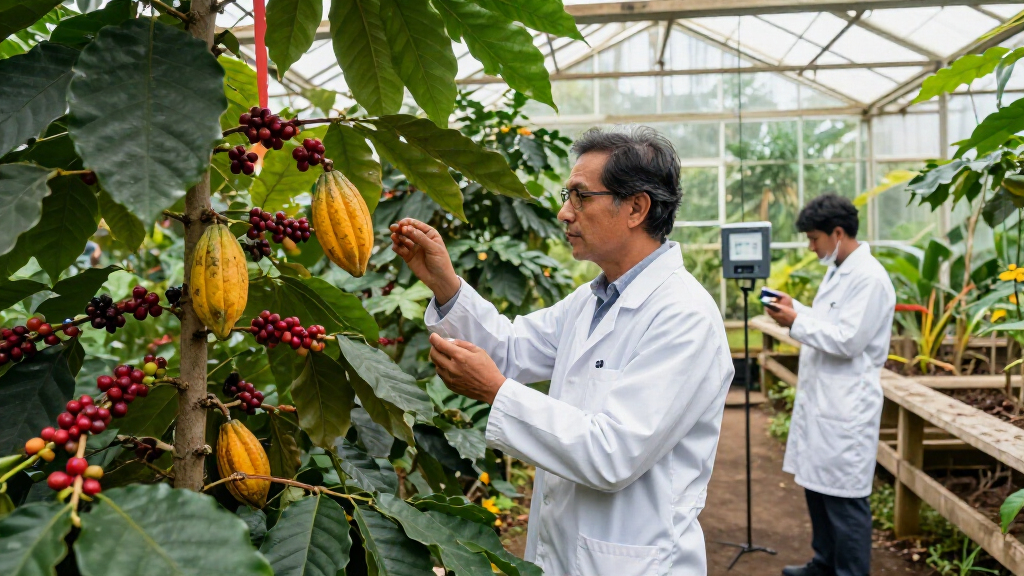
The initiative is a multi-institution research program, not a new standalone laboratory building. Clemson University will co-direct it, with research expected to span coffee- and cacao-producing regions in the United States, Latin America, Africa and Asia. The agreement could run for as many as five years, though the source report specifies only the first-year obligation, not a total program budget.
Partners include coffee organizations World Coffee Research and the Coffee Quality Institute, along with UC Davis, Michigan State University, Ohio State University and Penn State. Mars, PlantVillage+ and the Synergistic Hawaiʻi Agriculture Council are also participating. The program is expected to study breeding varieties with greater resistance to disease and drought, farm management, post-harvest processing, research capacity in producing countries and economic questions about where agricultural research spending may have the greatest effects.
The U.S. Department of State announced the coffee and cacao initiative on October 15 as one of eight Feed the Future Innovation Labs at U.S. universities. Other programs announced at the same time address areas including cereals, soil fertility, animal health, peanuts and aquaculture. The coffee and cacao lab is launching in October, according to the report, but named research sites and individual projects have not been released.
Research Aims at Crop Resilience
The program directs federal support toward crops facing threats from disease, drought and climate pressures. Breeding work and farm-management research could help producers respond to those risks, while post-harvest studies may address quality and handling. The report describes these as research priorities; it does not yet identify specific varieties, interventions or measurable targets.
The investment also matters to Hawaiʻi, where coffee and cacao production connect the university to domestic agriculture. The Synergistic Hawaiʻi Agriculture Council estimates the state will produce 20.7 million pounds of coffee in the 2025–26 season, down from 23.3 million pounds in 2023–24. SHAC says production has declined each year since 2022 and attributes much of the fall to coffee leaf rust. Those figures are estimates from the organization, not a confirmed final harvest tally.
At the global level, the new program is a targeted investment rather than a resolution of the sector’s broader research needs. A 2023 World Coffee Research report estimated that the global coffee sector would need an additional $452 million in agricultural research and development each year for a decade to help maintain production diversity and quality. That estimate concerns coffee-sector needs; it is not a cost estimate for the new lab.
As an affiliate, we earn on qualifying purchases.
Federal Research After USAID
The initiative follows advocacy by coffee-sector groups for greater U.S. public investment in coffee agriculture. SHAC says its administrator, Suzanne Shriner, and World Coffee Research began working with members of Congress in 2020. In 2023, SHAC, WCR, the National Coffee Association and the Hawaii Coffee Association supported federal legislation intended to expand funding for coffee plant-health research.
The announcement also comes after the dismantling of USAID in 2025, which disrupted the established funding structure for Feed the Future Innovation Labs. Those university-based programs had historically received support through USAID. Cornell had received a five-year, $5.485 million cooperative agreement for a Coffee Improvement Program with WCR shortly before the agency’s shutdown; federal award records show $1 million was obligated before the award was terminated in 2025.
Hawaiʻi has specific reasons to focus on coffee plant health. Coffee leaf rust was first detected in the state in 2020 and later spread statewide, according to the report. In 2021, the U.S. Department of Agriculture awarded SHAC more than $6 million for a coordinated leaf-rust research program involving university and federal scientists in Hawaiʻi and Puerto Rico.
“The Innovation Lab is designed to transform coffee and cacao science into practical benefits for small farmers in Hawaii, the continental U.S., and around the world.”
— Parwinder Grewal, dean of the UH Mānoa College of Tropical Agriculture and Human Resilience and the program’s principal investigator
Sites and Projects Still Pending
The announcement does not name the producing countries, farms or research stations where projects will take place. Specific project plans, participating local institutions and timelines have not been made public in the source report. It is also unclear how the first-year $8 million obligation will be divided among research partners or how much funding may be obligated in later years.
The agreement could run for up to five years, but the source does not state a total award value. Nor does it provide targets for crop improvements or a method for measuring results. The program’s stated goals should not be read as evidence that particular disease-resistant or drought-tolerant varieties are already available.
Project Details to Follow
The lab is beginning its work in October 2026. The next public details to watch for are named research locations, project selections and partner roles, along with information on how the initial federal obligation will be allocated. Those details will clarify how the program’s broad priorities translate into work with farmers and research institutions in the United States and abroad.
Future updates may also show whether the program receives additional obligations under the agreement and how it coordinates with existing plant-health research, including Hawaiʻi’s coffee leaf-rust efforts. No schedule for those announcements or specific milestones has been provided in the source material.
Key Questions
Who will lead the new coffee and cacao research program?
The University of Hawaiʻi at Mānoa will lead the Feed the Future Innovation Lab for Coffee and Cacao. Clemson University will co-direct it.
How much federal funding has been committed?
The program has an initial $8 million obligation for its first year. The agreement could last up to five years, but the report does not give a total award amount or future-year funding figures.
What will the research focus on?
Stated priorities include breeding coffee and cacao varieties for greater disease and drought resistance, as well as farm management, post-harvest processing, research capacity in producing countries and economic analysis of agricultural investment.
Where will researchers conduct the work?
Research is expected to cover producing regions in the United States, Latin America, Africa and Asia. Specific countries, sites and individual projects have not yet been announced.
Is this a new research building?
No. The “lab” is a multi-institution research program, not a single new laboratory facility.
Source: rss
Fall Picks
fall essentials
As an affiliate, we earn on qualifying purchases.