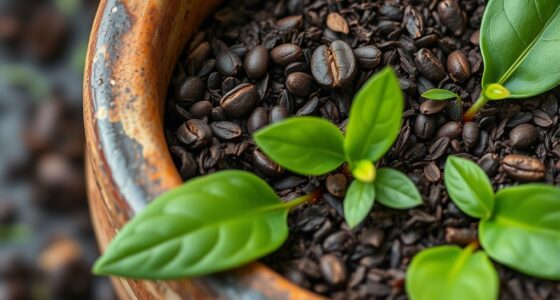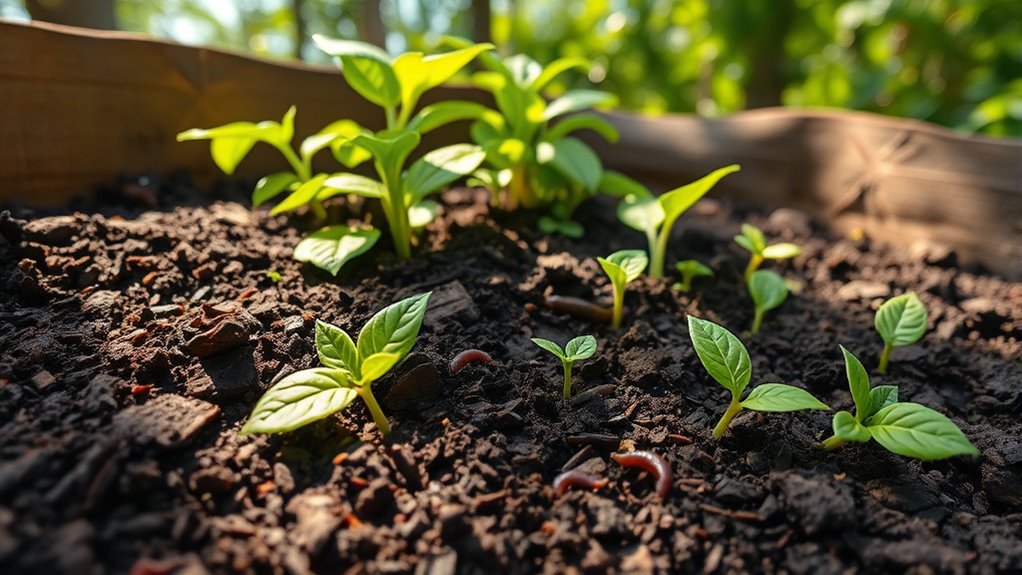

Composting coffee grounds boosts your soil by adding nitrogen, supporting healthy plant growth, and increasing microbial activity. They’re generally neutral or slightly acidic and won’t attract pests if mixed properly into your compost or soil. Using grounds moderately helps prevent overly acidic conditions, especially for plants that prefer neutral soil. Incorporating coffee grounds into your compost is an eco-friendly way to recycle waste and improve plant health. Keep exploring to discover more tips on maximizing their benefits.
Key Takeaways
- Coffee grounds are rich in nitrogen, boosting microbial activity and enriching compost.
- They have a near-neutral pH, making them safe for most garden soils when used properly.
- Proper mixing into compost prevents pests and avoids excessive soil acidity.
- Overapplication can lead to increased soil acidity, but moderate use generally benefits plant growth.
- Myth: Coffee grounds attract pests; fact: they decompose quickly and are safe when integrated correctly.
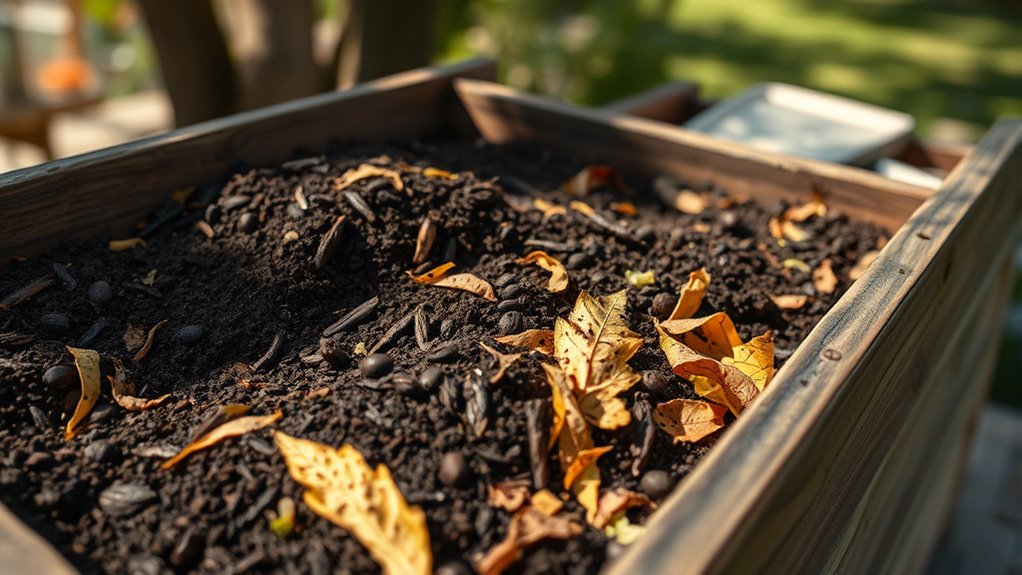
If you’re looking for an easy way to reduce waste and boost your garden’s health, composting coffee grounds is a smart choice. Coffee grounds are rich in nitrogen, making them an excellent addition to your compost pile or garden soil. When you add coffee grounds, you’re helping create a nutrient-dense environment that supports healthy plant growth. However, it’s important to understand how they impact your soil, especially regarding soil acidity and pest attraction. Coffee grounds are often thought to substantially alter soil pH, but in reality, they tend to be fairly neutral or slightly acidic. Used coffee grounds typically have a pH around 6.5 to 6.8, which is close to neutral. This means they won’t drastically change your soil’s acidity unless you use a large amount. If you have plants that prefer more acidic soil, like blueberries or azaleas, incorporating coffee grounds in moderation can be beneficial. Just remember, overusing them may lead to a more acidic environment, so it’s best to mix them well into your compost or soil.
Many gardeners worry that coffee grounds might attract pests, but this concern is largely a myth. Coffee grounds themselves don’t tend to attract pests like ants or rodents when used properly. In fact, when incorporated into compost or soil, they usually decompose quickly, reducing any potential attraction. However, if you spread a thick layer of wet coffee grounds on the surface of your garden beds without mixing, it could create a damp, organic layer that some pests might find appealing. To avoid this, always mix used coffee grounds into your compost or work them into the soil rather than leaving them exposed. This not only helps prevent pest attraction but also speeds up decomposition, allowing nutrients to become available for your plants sooner. Additionally, soil pH moderation is key to maintaining a healthy balance and preventing unintended effects from overapplication.
In addition to their effects on soil acidity and pest attraction, composting coffee grounds is a simple way to recycle waste and improve your garden’s sustainability. They add organic matter that boosts microbial activity, which is essential for healthy soil. Mixing coffee grounds with other compost ingredients like leaves, grass clippings, and kitchen scraps creates a balanced compost that’s rich in nutrients. This compost can then be used to enrich flower beds, vegetable gardens, or potted plants. Just be mindful not to overdo it—moderation is key. Using coffee grounds thoughtfully ensures you maximize their benefits while avoiding potential issues like overly acidic soil or attracting unwanted pests. Overall, composting coffee grounds is a practical, eco-friendly practice that can enhance your garden’s health when done correctly.

SHARDOR Conical Burr Espresso Coffee Grinder Electric with Precision Timer 2.0, Touchscreen Adjustable Burr Mill with 51 Precise Settings for Home Use, Anti-static, Stainless Steel
Premium 40 Millimeter Stainless Steel Conical Burr: Designed to minimize grinding heat and protect the essential oils in...
As an affiliate, we earn on qualifying purchases.
Frequently Asked Questions
Can Used Coffee Grounds Attract Pests in Compost?
Used coffee grounds can attract pests in your compost if not managed properly. To prevent pest attraction, avoid piling coffee grounds in thick layers and mix them thoroughly with other compost materials. Proper pest prevention techniques include maintaining a balanced compost, turning it regularly, and keeping it covered. This way, you can enjoy the benefits of coffee grounds without attracting unwanted pests to your compost bin.
How Long Does It Take for Coffee Grounds to Decompose?
Like a slow-burning ember, coffee grounds take time to break down, usually around 3 to 6 months, depending on your soil acidity and microbial activity. You’ll notice the grounds transform as microbes feast on them, enriching your soil. If your compost has vibrant microbial activity, decomposition speeds up, turning those grounds into nourishing humus. Patience rewards you with a richer, more balanced garden soil over time.
Are There Specific Plants That Benefit Most From Coffee Grounds?
You’ll find that plants like roses, blueberries, and acid-loving evergreens benefit most from coffee grounds. Their compatibility with the slightly acidic soil enrichment coffee grounds provide can boost growth. Be sure to mix grounds into your soil rather than placing them directly on the surface to avoid mold. Using coffee grounds thoughtfully enhances plant health and supports a thriving garden, especially for plants that prefer more acidic conditions.
Is There an Optimal Amount of Coffee Grounds to Add?
You should aim for a coffee grounds ratio of about 10% of your compost to avoid imbalance. Add grounds gradually and mix thoroughly with other organic materials like leaves or grass clippings. Compost mixing tips include turning the pile regularly and maintaining moisture. This approach guarantees the grounds decompose properly, enriching your compost without causing nitrogen imbalance or attracting pests. Keep the ratio moderate for best results.
Do Coffee Grounds Affect Compost Ph Levels Significantly?
Imagine your compost as a balanced recipe; coffee grounds act like a pinch of spice, slightly affecting soil acidity. While they do influence pH levels, adding them in moderation helps maintain compost balancing without turning your soil acidic. Too many grounds can tip the scales, making your soil too acidic for some plants. Keep it well-mixed, and you’ll enjoy a rich, balanced compost that nurtures your garden’s growth.

Neretva Espresso Grinder, 2 in 1 Professional Coffee Bean Grinder Stainless Steel Suit 51~58mm Portafilter Burr Coffee Grinder 30 Precise Setting&Anti-Static for Espresso/French Press/Drip/Moka-Silver
PROFESSIONAL CONICAL BURR COFFEE GRINDER- WIth new upgraded 3.0 conical burr grinding technoloy, the coffee grinder ensures that...
As an affiliate, we earn on qualifying purchases.
Conclusion
By now, you see how coffee grounds gently nurture your compost, offering subtle benefits that may surprise you. While some myths linger like shadows, the truth whispers of their value when used thoughtfully. Embrace the small, everyday acts that enrich your garden’s story, turning simple scraps into nature’s quiet treasures. With a gentle touch and an open mind, you can transform your coffee leftovers into a lasting, nourishing gift for your plants and the earth.

SHARDOR Professional 64mm Burr Coffee Grinder with 100 Grind Settings and All-Metal Chamber, Coffee Bean Grinder with Adjustable Electronic Timer and LED Display, Anti-Static,Black
64mm Flat Burr: Achieves uniform grinding with minimal heat generation, enhancing the flavor profile for a superior taste...
As an affiliate, we earn on qualifying purchases.
AMZCHEF Coffee Grinder, Coffee Bean Grinder for Home Use with Precise Grinding, LED Control Panel, Detachable Funnel Stand, Anti-static Design, 48 Grind Settings, Silver
DESIGN FOR ESPRESSO:We provide portafilter holder ,Portafilter holder pad and photophobic coffee ground container. It is compatible with...
As an affiliate, we earn on qualifying purchases.