
Traceability in coffee lets you follow each step from farm to cup, providing transparency about how the beans are grown, harvested, and processed. It guarantees sustainable farming practices, responsible water use, and ethical working conditions. By verifying supply chain integrity, it builds trust and supports fair trade. This transparency benefits everyone, from farmers to consumers. Want to discover how traceability really impacts quality and ethics? Keep exploring to learn more.
Key Takeaways
- Traceability ensures transparency and quality control throughout the coffee supply chain, from farm to consumer.
- It verifies sustainable farming practices, including responsible water use and chemical avoidance.
- Traceability helps prevent fraud, mislabeling, and supports fair trade certifications.
- It fosters direct connections between consumers and coffee producers, promoting social responsibility.
- Implementing traceability encourages environmentally friendly practices and industry-wide ethical standards.
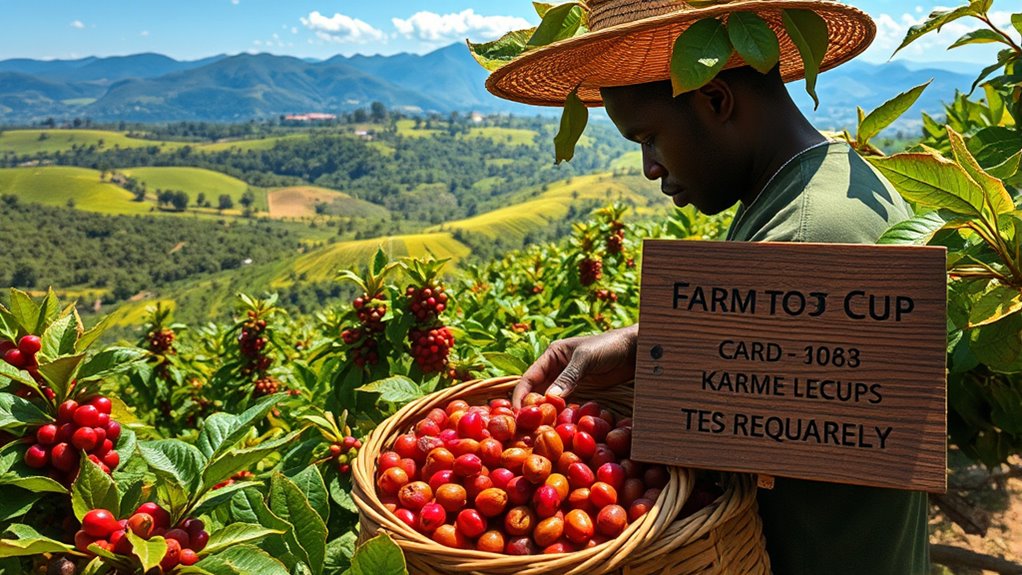
Traceability in coffee has become essential for ensuring quality, transparency, and sustainability in the supply chain. When you can trace each step of the journey, from the farm where the coffee is cultivated to the cup you enjoy, it offers confidence that sustainable practices are being followed. This transparency helps you understand the origins of your coffee, ensuring that the farmers and workers who produce it are treated fairly and that environmentally friendly methods are maintained throughout production. By focusing on supply chain transparency, producers can demonstrate their commitment to ethical standards, which ultimately benefits everyone involved—farmers, consumers, and the planet alike.
Traceability in coffee ensures ethical sourcing, quality, and sustainability from farm to cup.
As you look for high-quality coffee, traceability allows you to verify that the coffee beans were grown using sustainable practices. These practices include responsible water usage, soil conservation, and the avoidance of harmful chemicals, all of which contribute to healthier ecosystems and more resilient farms. When coffee producers adopt sustainable methods, they not only protect the environment but often improve the quality of their beans. Knowing the specific farm or region your coffee comes from gives you insight into how it was cultivated and whether sustainable practices were integrated into the process. This level of detail empowers you to make conscious choices aligned with your values.
In the supply chain, traceability acts as a safeguard against fraud and mislabeling, reinforcing trust in the products you’re purchasing. It enables you to see that the coffee has moved through legitimate channels, with clear documentation at each stage. This transparency is crucial for supporting fair trade, ethical sourcing, and environmentally responsible production. It also encourages transparency among stakeholders, prompting coffee companies to uphold high standards and be accountable for their supply chain practices. Additionally, the incorporation of high-quality projectors in processing facilities can improve quality control and monitoring throughout the supply chain.
Furthermore, traceability supports efforts to improve social conditions in coffee-growing communities. When you can follow your coffee back to its source, you’re more likely to support initiatives that promote fair wages, safe working conditions, and community development. It creates a direct link between consumers and producers, fostering a sense of connection and responsibility. As a result, you can enjoy your coffee with the assurance that it aligns with your desire for products that respect both people and the planet.
In essence, traceability in coffee isn’t just about tracking ingredients; it’s about building a transparent, sustainable supply chain that benefits everyone involved. By valuing transparency and sustainable practices, you help encourage a more ethical and environmentally conscious coffee industry. Your choices as a consumer can drive positive change, ensuring that your favorite brew supports ethical farming, preserves natural resources, and promotes fairness across the entire supply chain.
Frequently Asked Questions
How Does Traceability Impact Coffee Pricing?
Traceability impacts coffee pricing by enhancing supply chain transparency, which can justify higher costs. When you see transparent sourcing, you’re more likely to trust the quality and ethical standards behind your coffee, boosting consumer trust. This trust allows producers to charge premium prices, as customers value ethically sourced, traceable coffee. Ultimately, traceability creates a direct link between your purchase and responsible farming, making the coffee more valuable and better priced.
What Technologies Are Used for Tracking Coffee Origins?
Imagine tracking your coffee like a treasure map—you’d want accurate GPS mapping and blockchain transparency to guarantee authenticity. Technologies like GPS mapping help pinpoint origin locations precisely, while blockchain creates an unchangeable record of each step. This combo assures you that your coffee’s story is transparent, from farm to cup, building trust and supporting ethical sourcing. You get a clearer picture of your coffee’s journey with these innovative tools.
Are Small Farms Able to Implement Traceability Systems?
Small farms can implement traceability systems, but they often face challenges like limited resources and infrastructure. You might find the traceability costs a concern, especially with technology investments. However, adopting affordable solutions like mobile apps or simple record-keeping can help. With some support and innovation, small farms can successfully track their coffee’s journey, ensuring transparency and quality without overwhelming expenses.
How Does Traceability Influence Coffee Quality Assurance?
Traceability boosts your coffee quality assurance by ensuring supply chain transparency and meeting quality certifications. When you can track each step from farm to cup, you identify and address quality issues early, maintaining high standards. This transparency builds trust with consumers and complies with certification requirements, ultimately enhancing the coffee’s flavor and consistency. You gain better control over production processes, resulting in a superior product that meets industry benchmarks.
Can Traceability Help Prevent Coffee Fraud or Adulteration?
Think of traceability as a digital detective, slicing through the fog of fraud and adulteration. It helps you spot counterfeit beans by verifying certification standards, ensuring each batch is genuine. As consumer awareness grows, this transparency acts like a shield, protecting your choices and fostering trust. So yes, traceability is your safeguard, weaving a secure web that keeps adulterated coffee out of your cup and upholding authenticity every step of the way.
Conclusion
By understanding the journey of coffee from farm to cup, you gain a deeper appreciation for its quality and origin. Just like a map guides a traveler, traceability helps you navigate the story behind each sip. When you know where your coffee comes from, you support fair practices and guarantee better products. So, next time you enjoy your brew, remember it’s more than just a drink — it’s a journey you’re sipping on.