

To track carbon emissions from farm to roastery, you need to contemplate each stage of production, including farming practices, energy use, transportation, and processing. Sustainable farming minimizes chemical use and conserves water, while energy-efficient equipment and renewable energy reduce emissions during processing. Optimizing logistics with fuel-efficient vehicles and local sourcing further cuts your carbon footprint. Understanding these steps helps you see how eco-friendly practices make a difference along the entire supply chain—continuing will reveal how to implement these strategies effectively.
Key Takeaways
- Track greenhouse gas emissions across all stages, from farming practices to roasting and distribution.
- Quantify carbon footprints of inputs like fertilizers, energy use, and transportation methods.
- Implement sustainable farming and energy-efficient equipment to reduce overall emissions.
- Use carbon offsets and renewable energy credits to mitigate residual emissions in the supply chain.
- Conduct regular audits to improve practices and enhance transparency in carbon accounting.
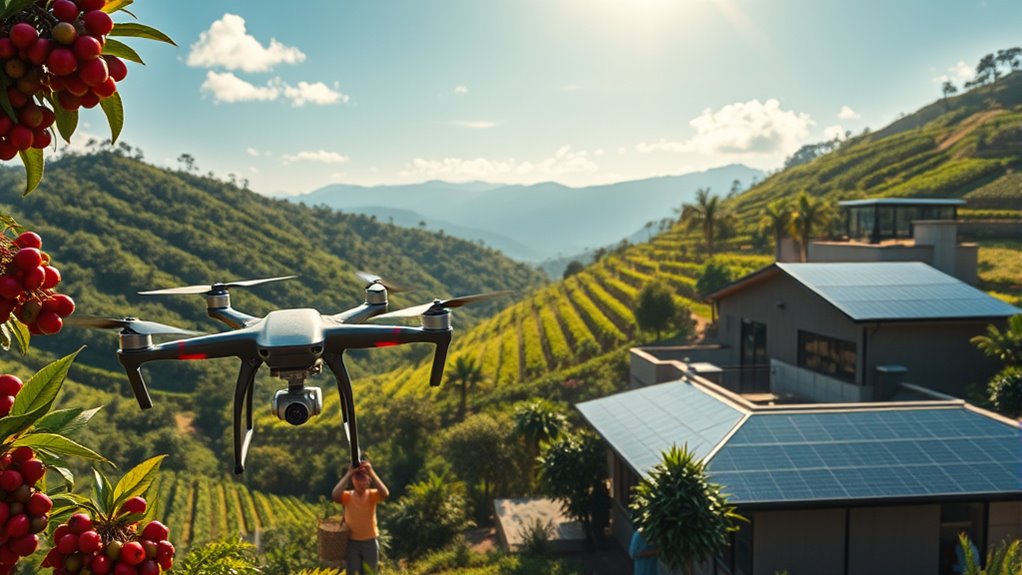
Have you ever wondered how the coffee you enjoy impacts the environment? The journey from farm to roastery involves more than just harvesting beans; it’s a complex process that considerably affects your carbon footprint. One essential aspect is sustainable farming, which aims to reduce environmental impacts while maintaining productivity. By adopting sustainable farming practices, farmers minimize the use of chemical fertilizers and pesticides, conserve water, and promote soil health. These methods help lower greenhouse gas emissions associated with traditional farming techniques. Additionally, sustainable farms often diversify crops or integrate shade-grown coffee, which enhances biodiversity and reduces the need for energy-intensive interventions. Such practices not only benefit the environment but also guarantee the long-term viability of coffee cultivation.
Sustainable farming reduces environmental impact and promotes long-term coffee cultivation.
Energy efficiency plays a key role in reducing the carbon footprint of coffee production. From the farm to the processing facilities, every step consumes energy, often derived from fossil fuels that release CO2 into the atmosphere. Implementing energy-efficient equipment and processes can greatly cut emissions. For instance, using solar-powered drying beds or energy-efficient milling machinery decreases reliance on non-renewable energy sources. Some farms even adopt renewable energy solutions, like wind or solar power, to meet their energy needs. When these practices are embraced, energy consumption drops, and the overall carbon footprint shrinks. This shift not only benefits the environment but can also lead to cost savings for farmers and producers, creating a more sustainable supply chain.
The journey continues at the roastery, where energy efficiency remains essential. Roasting coffee beans is an energy-intensive process, often requiring large amounts of electricity or gas. By investing in modern, energy-efficient roasting equipment, roasters can reduce their emissions while maintaining quality. Some roasters also pursue carbon offsets or renewable energy credits to further mitigate their environmental impact. The focus on energy efficiency doesn’t stop at equipment; optimizing logistics and transportation is equally important. Using fuel-efficient vehicles, consolidating shipments, and choosing local sources when possible all contribute to lowering overall emissions.
Understanding the importance of sustainable farming and energy efficiency helps you realize how much your coffee’s carbon footprint can be minimized. Supporting brands that prioritize eco-friendly practices ensures your coffee consumption aligns with environmental responsibility. The entire supply chain, from sustainable farm practices to energy-conscious roasting, plays a role in making your favorite beverage more sustainable. Incorporating audits and assessments into the supply chain can help identify areas for further improvement and ensure adherence to best practices. So next time you brew that perfect cup, remember the efforts behind it to reduce its environmental impact and appreciate the steps taken to make coffee more eco-friendly.
Frequently Asked Questions
How Do Coffee Farmers Track Their Carbon Footprint?
You track your coffee farm’s carbon footprint by monitoring soil carbon levels and implementing agroforestry practices. Soil testing helps you measure carbon stored in the soil, while agroforestry integrates trees that absorb CO2, reducing emissions. You record data regularly, use simple tools or apps, and compare results over time. This way, you can identify reduction strategies, improve sustainability, and showcase your commitment to eco-friendly coffee farming.
What Certifications Indicate Low-Carbon Coffee Products?
Think of it as hitting two birds with one stone—you get quality coffee and help the environment. Look for certifications like Rainforest Alliance, Fair Trade, and USDA Organic, which indicate low-carbon coffee products. These standards promote sustainable farming practices that reduce emissions. By choosing these, you support farmers committed to lowering their carbon footprint, ensuring your coffee is both ethical and eco-friendly.
How Does Transportation Impact Coffee’s Overall Carbon Emissions?
Transportation impacts coffee’s overall carbon emissions considerably through transportation emissions and supply chain logistics. When you consider how coffee travels from farms to roasteries, each stage involves emissions from trucks, ships, and planes. Efficient logistics can reduce these emissions, making the coffee more sustainable. Choosing direct shipping or local sourcing minimizes transportation-related carbon footprints, helping you enjoy coffee with a smaller environmental impact.
Are There Specific Coffee Varieties With Lower Environmental Impacts?
You’ll find that shade-grown, organic, and sustainably farmed coffee varieties often have lower environmental impacts. These options support sustainable farming practices, reduce chemical use, and promote biodiversity. Organic certification guarantees eco-friendly cultivation, while sustainable farming minimizes resource use and deforestation. By choosing these varieties, you actively reduce your coffee’s carbon footprint, helping the environment while enjoying a flavorful brew.
How Can Consumers Reduce Their Coffee-Related Carbon Footprint?
You can reduce your coffee-related carbon footprint by choosing shade-grown coffee, which requires less energy and pesticides, and supports biodiversity. Additionally, use reusable filters instead of disposable ones to cut waste. Opt for beans from sustainable sources, and brew only what you need to avoid waste. Small changes like these make a significant difference, helping the environment while you enjoy your coffee.
Conclusion
By understanding and tracking each step from farm to roastery, you can make more sustainable choices and reduce your coffee’s carbon footprint. Remember, “every little bit helps,” and your efforts can add up to a big impact. By embracing carbon accounting, you’re not just brewing a better cup of coffee—you’re helping protect the planet for generations to come. So, stay mindful, stay committed, and let your passion for great coffee drive positive change.