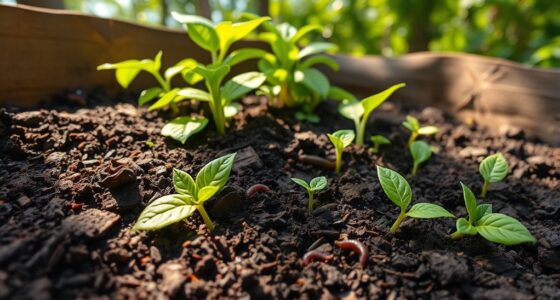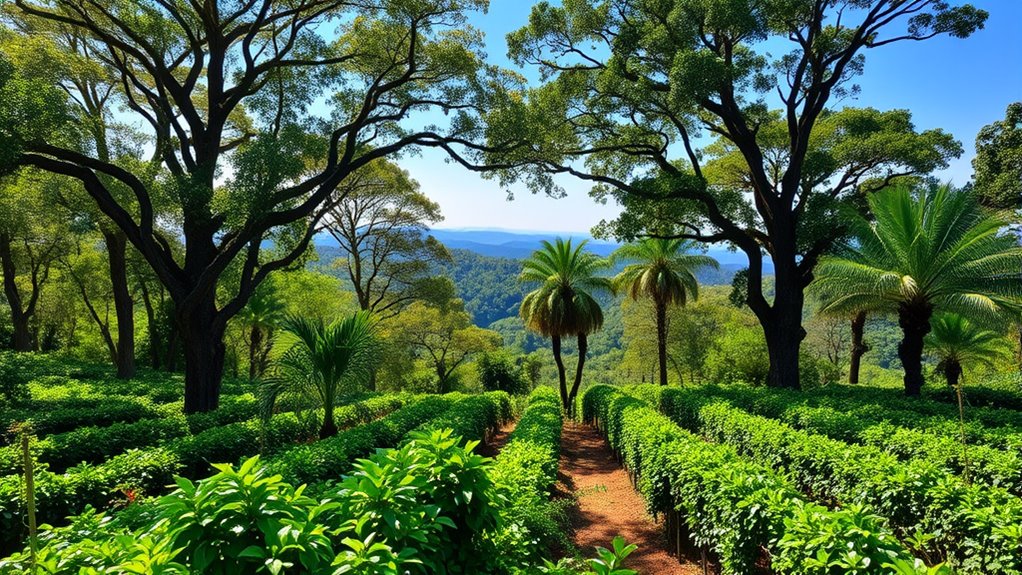

Agroforestry models for coffee work by integrating shade trees with coffee plants to create a sustainable system that improves yield, quality, and environmental health. You manage shade trees to regulate temperature, support soil fertility, and promote biodiversity while preventing over-shadowing. This balance helps protect your coffee plants and preserves resources over the long term. Caring for soil and choosing the right trees guarantees resilience and productivity—if you keep exploring, you’ll discover how these practices can maximize your farm’s potential.
Key Takeaways
- Shade management in agroforestry creates a microclimate that benefits coffee growth and quality.
- Native trees provide canopy cover, regulating temperature, wind, and supporting biodiversity.
- Proper pruning and soil fertility practices maintain healthy shade trees and soil, ensuring sustainable productivity.
- The synergy between shade trees and soil health enhances resilience to environmental stressors.
- Long-term agroforestry models promote ecological balance, resource conservation, and economic sustainability for coffee farmers.
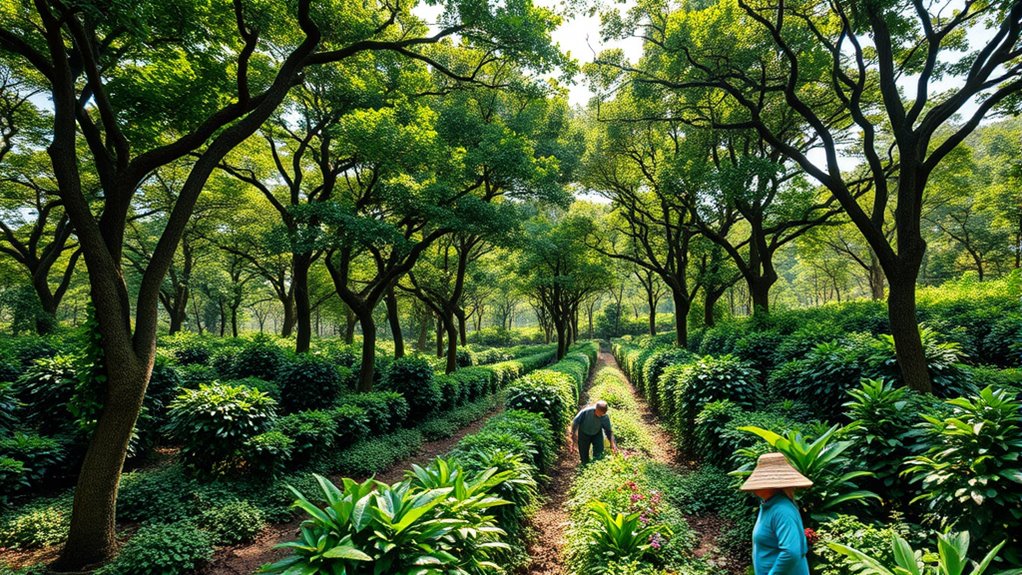
Agroforestry models for coffee are increasingly recognized as sustainable solutions that benefit both farmers and the environment. In these systems, shade management plays a critical role. You plant coffee under a canopy of native trees, which helps regulate temperature, reduce wind speed, and create a more stable microclimate. Proper shade management ensures that coffee plants receive just the right amount of sunlight, preventing heat stress and promoting healthy growth. By carefully selecting and maintaining the right mix of shade trees, you can optimize conditions for coffee production while also supporting biodiversity. This approach not only enhances the quality of your coffee but also contributes to ecological balance, making your farm more resilient to climate variability.
You’ll notice that managing shade and soil fertility requires ongoing attention. Pruning shade trees ensures that they don’t overshadow the coffee plants excessively, which could limit photosynthesis and reduce productivity. At the same time, you must monitor soil health regularly, adding organic amendments when necessary to keep fertility levels high. This balanced approach encourages a symbiotic relationship between the coffee plants and the shade trees, where both benefit. Trees provide shelter and maintain soil health, while healthy soil supports robust coffee plants. This synergy fosters a sustainable farming system that can adapt to changing environmental conditions.
Implementing effective shade management and maintaining soil fertility are foundational to the success of agroforestry models for coffee. They help you produce high-quality beans while also protecting natural resources. Additionally, integrating soil fertility practices enhances the resilience of your farm to climate variability. By adopting these practices, you create a more sustainable and resilient farm system that aligns environmental health with economic viability. Ultimately, these models demonstrate how thoughtful integration of trees into your coffee farm can lead to long-term benefits, ensuring your livelihood and the health of the ecosystem for years to come.
Frequently Asked Questions
What Are the Economic Benefits of Agroforestry for Coffee Farmers?
You gain economic benefits from agroforestry through improved market access, allowing you to sell diverse products like coffee and fruits at better prices. It also enhances land tenure security, giving you confidence to invest in sustainable practices. These models boost your income stability, reduce risks from market fluctuations, and open opportunities for premium certifications. Overall, agroforestry makes your farm more resilient and profitable in the long run.
How Do Agroforestry Models Impact Coffee Quality and Yield?
Agroforestry models boost coffee quality and yield by improving shade management and soil fertility. You’ll notice better bean flavor, as shade reduces temperature stress and preserves moisture. Additionally, diverse plantings enhance soil nutrients naturally, supporting healthy coffee plants. With ideal shade and enriched soil, you’ll see increased yields and improved coffee quality, creating a sustainable system that benefits both your crop and the environment.
What Challenges Are Faced When Implementing Agroforestry Systems?
When implementing agroforestry systems, you face challenges like managing shade to optimize coffee growth and prevent over-shading, which can reduce yields. Pest control becomes more complex because diverse plantings may attract pests or make them harder to manage. Additionally, balancing shade management with crop needs requires careful planning, and initial setup costs can be higher. You need ongoing maintenance and farmer training to overcome these hurdles effectively.
How Do Agroforestry Models Promote Biodiversity Conservation?
Imagine a vibrant tapestry where every thread counts—you’re part of it. Agroforestry models promote biodiversity by creating wildlife corridors, allowing animals to move freely and thrive. They also improve soil health, supporting diverse plant and insect life. This interconnected system fosters a balanced ecosystem, where coffee plants grow alongside native trees and wildlife, ensuring that biodiversity flourishes rather than diminishes. Your choices support a thriving, resilient environment.
What Are the Best Practices for Maintaining Agroforestry Coffee Systems?
To maintain your agroforestry coffee system effectively, focus on shade management by pruning trees regularly to guarantee ideal light and airflow. Enhance soil fertility through organic mulching and composting, which enriches the soil naturally. Avoid overharvesting and maintain diverse plant species to support ecosystem health. Consistent monitoring and adjusting your practices based on plant and soil health will help sustain productivity and environmental benefits in your coffee agroforestry system.
Conclusion
As you explore different agroforestry models for coffee, you’ll notice how nature naturally balances itself, turning your efforts into a thriving, sustainable system. Coincidentally, the shade trees that protect your coffee also attract beneficial insects, boosting your harvest. It’s almost like the land is working with you, not against you, creating a cycle of growth and harmony. Embracing these models, you’ll find the perfect blend of productivity and environmental care—without even trying.