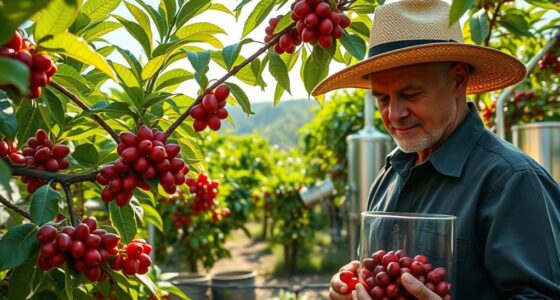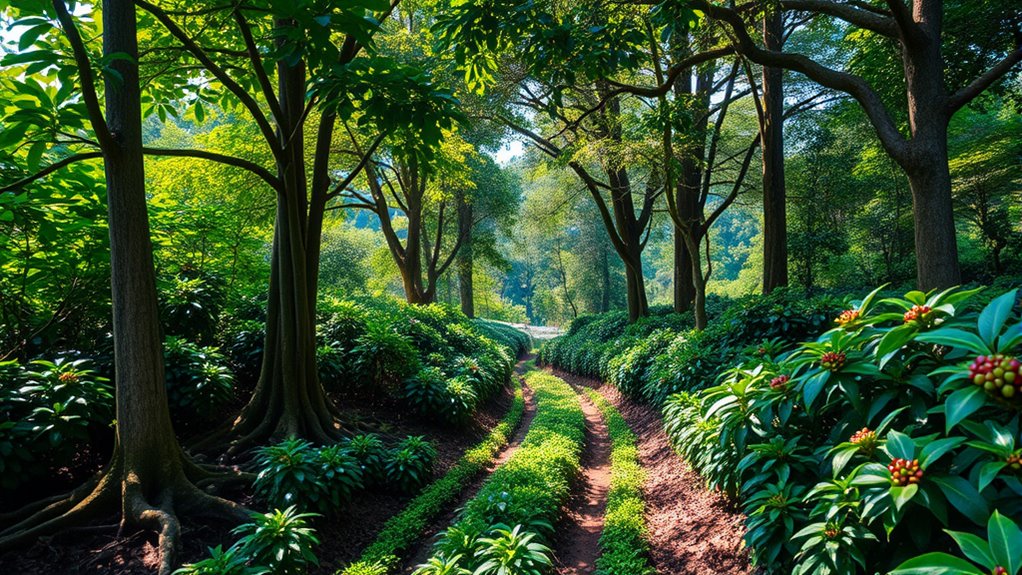

Agroforestry in coffee combines planting trees with your coffee crops to boost soil fertility, enhance biodiversity, and create a more resilient farm. By integrating native trees and plants, you provide habitats for wildlife, support pollinators, and naturally control pests. The trees also improve soil health by adding organic matter, preventing erosion, and maintaining water retention. Keep exploring to discover how these practices contribute to sustainable, eco-friendly coffee production.
Key Takeaways
- Integrating native trees provides shade, regulates temperature, and enhances coffee yield and quality.
- Trees enrich soil organic matter, improve fertility, and reduce erosion, supporting healthy coffee growth.
- Agroforestry boosts biodiversity by creating habitats for birds, insects, and pollinators, aiding natural pest control.
- Tree roots improve water retention, prevent soil erosion, and promote long-term soil health and stability.
- Overall, agroforestry fosters sustainable coffee farming by reducing chemical inputs and supporting ecosystem resilience.
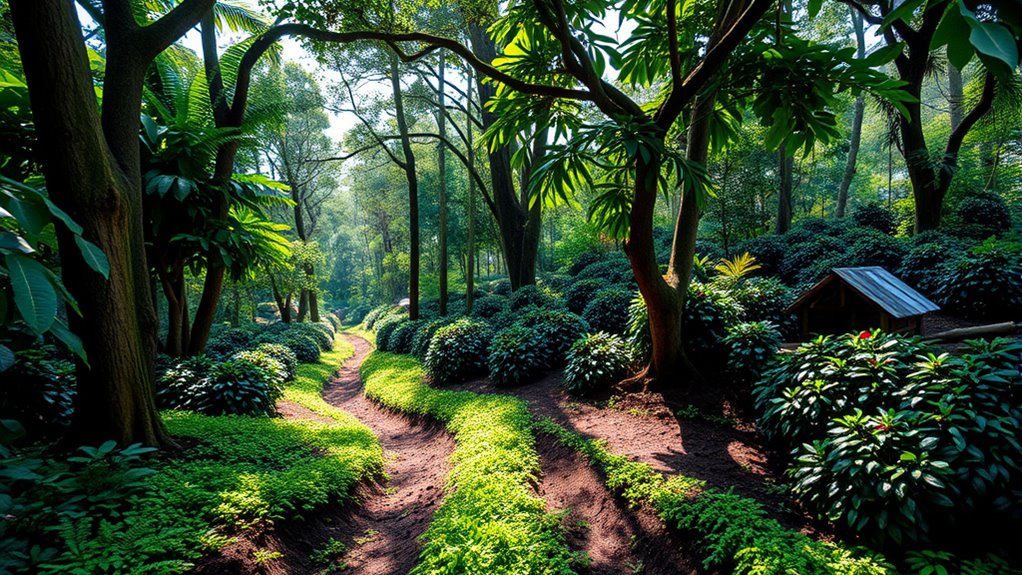
Have you ever wondered how farmers balance productivity with environmental sustainability? One key approach is agroforestry in coffee cultivation, where integrating trees into coffee farms offers numerous benefits. Central to this practice is shade management, which involves carefully selecting and positioning trees to provide ideal shade for coffee plants. Proper shade management helps regulate temperature, reduce water stress, and protect coffee from harsh elements, creating a more stable environment for growth. By thoughtfully managing shade levels, farmers can improve coffee yields and quality while also minimizing the need for synthetic inputs.
Shade trees also play an essential role in biodiversity enhancement. When you incorporate a variety of native trees and plants into your coffee farm, you create habitats that support a wide array of species—birds, insects, and other wildlife. This increased biodiversity benefits the entire ecosystem, naturally controlling pests and reducing the reliance on chemical pesticides. The presence of diverse flora encourages pollinators, which are indispensable for the health of coffee plants, and helps sustain a balanced, resilient environment. Furthermore, these trees often produce fruits, flowers, and leaves that enrich the soil, adding organic matter that improves soil fertility over time.
Maintaining a diverse canopy also offers long-term benefits for soil health. Tree roots help prevent erosion and improve water retention, creating a more resilient farm landscape. As the trees grow, their organic matter decomposes, enriching the soil with nutrients essential for coffee plants to thrive. This natural nutrient cycling reduces the need for chemical fertilizers, making your farm more sustainable and environmentally friendly. Additionally, the shade provided by trees moderates soil temperature, preventing overheating and maintaining a more consistent environment for microbial activity, which is essential for soil health. Incorporating perennial crops into agroforestry systems further supports soil stability and productivity over many years.
Frequently Asked Questions
How Does Agroforestry Impact Coffee Flavor Profiles?
Agroforestry considerably impacts your coffee’s flavor profile by boosting flavor complexity and aroma enhancement. The diverse trees and plants add subtle notes and nuances, creating a richer, more layered taste experience. As you enjoy your brew, you’ll notice how the natural shade and organic matter influence the beans, resulting in a well-rounded flavor with vibrant aromas. This sustainable approach elevates both the sensory qualities and environmental health of your coffee.
What Are the Economic Benefits of Agroforestry for Smallholder Farmers?
Think of agroforestry as planting a sturdy safety net beneath your coffee crop. It offers you market diversification, opening new avenues for income, and enhances income stability by reducing dependency on a single crop or market. By integrating trees, you can also access additional resources like fruits or timber. This diversified approach helps you weather economic storms, ensuring your farm remains resilient and profitable for years to come.
Which Tree Species Are Most Beneficial for Coffee Agroforestry?
You’ll benefit most from tree species like leguminous trees, which enhance soil nitrogen, and native shade trees that improve shade management. When selecting trees, prioritize those that provide proper canopy cover without overcrowding, ensuring good airflow and sunlight for your coffee plants. Incorporate a mix of species to support biodiversity, soil health, and pest control, ultimately boosting your coffee yield and sustainability.
How Does Agroforestry Influence Pest and Disease Management?
Imagine a lush coffee farm where the balance of nature holds the key. Agroforestry boosts pest regulation and disease suppression by attracting natural predators and creating a diverse environment that confuses pests. You’ll notice fewer infestations and healthier plants, reducing the need for chemicals. This harmony between trees and coffee plants enhances resilience, turning your farm into a thriving ecosystem where pests and diseases are kept in check naturally.
What Are the Long-Term Environmental Impacts of Agroforestry in Coffee Farms?
You’ll see long-term environmental benefits from agroforestry in coffee farms, including improved soil preservation and biodiversity enhancement. These practices help prevent erosion, maintain soil nutrients, and create habitats for diverse species. Over time, your farm becomes more resilient to climate change and pests, supporting a healthier ecosystem. By integrating trees and crops, you foster sustainability, ensuring your coffee production remains viable and environmentally friendly for future generations.
Conclusion
Think of your coffee farm as a vibrant, thriving forest where every tree is a guardian, shielding the soil and inviting countless creatures. By embracing agroforestry, you become the keeper of this lush sanctuary, fostering harmony among trees, soil, and biodiversity. Like a skilled gardener tending a delicate ecosystem, your efforts nurture resilience and richness. Together, you and your coffee farm can grow into a thriving, sustainable haven—an enduring symphony of life in every cup.