During pregnancy, it’s recommended that you limit your caffeine intake to about 200 mg per day, roughly one 12-ounce cup of coffee. This helps reduce risks like miscarriage, preterm birth, and low birth weight. Remember to count all sources, including tea, soft drinks, and medications. Moderation is key, and discussing your caffeine habits with your healthcare provider provides personalized guidance. Staying informed on these guidelines can support a healthier pregnancy journey. If you continue, you’ll discover more helpful tips.
Key Takeaways
- Most health authorities recommend limiting caffeine intake to ≤200 mg daily during pregnancy.
- An 8-ounce cup of brewed coffee typically contains about 95 mg caffeine, but content varies.
- Excessive caffeine consumption during pregnancy is linked to miscarriage, preterm birth, and low birth weight.
- Pregnant women should monitor all caffeine sources, including tea, soft drinks, and medications, to stay within safe limits.
- Consulting healthcare providers helps personalize caffeine intake guidelines for healthier pregnancy outcomes.
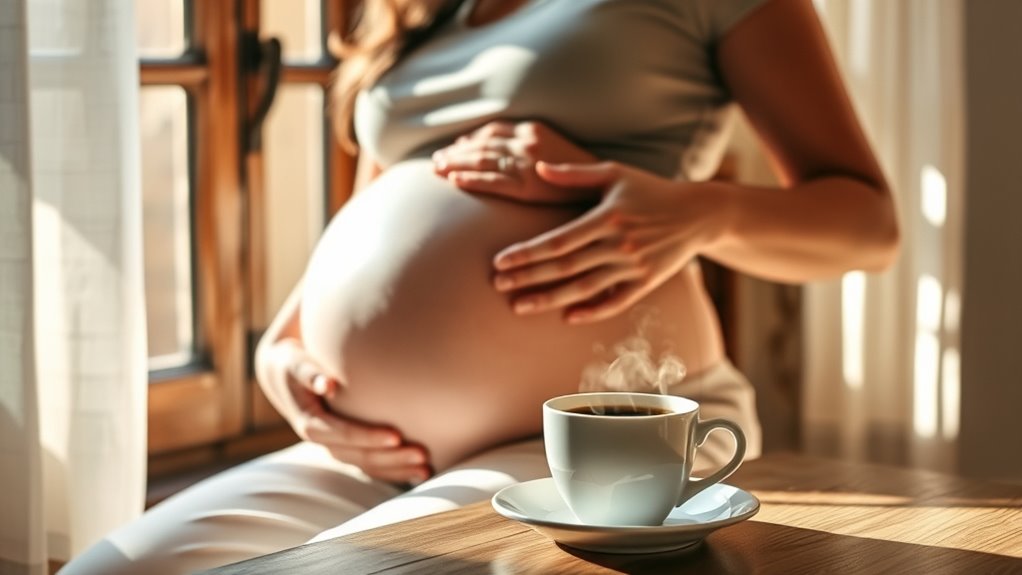
Have you ever wondered if drinking coffee during pregnancy is safe? It’s a common question, especially for those who rely on their daily caffeine fix to jump-start the day. The truth is, your caffeine intake can influence pregnancy outcomes, and understanding the current guidelines can help you make informed decisions. Experts agree that moderation is key, but it’s essential to know what that means in regards to actual caffeine consumption and potential pregnancy risks.
Understanding safe caffeine limits during pregnancy helps promote healthier outcomes.
When it comes to caffeine intake during pregnancy, most health authorities recommend limiting your consumption to about 200 milligrams per day. That’s roughly equivalent to one 12-ounce cup of coffee. Keeping your caffeine intake within this limit helps minimize the risk of pregnancy complications, such as miscarriage or preterm birth. Too much caffeine can cross the placenta and affect your developing baby, who has a limited ability to process it. As a result, high caffeine levels have been linked to pregnancy risks like low birth weight and even developmental delays.
It’s important to realize that caffeine isn’t only found in coffee. You’ll also find it in tea, soft drinks, energy drinks, and even some medications. So, tracking your total caffeine intake is a smart step to avoid exceeding recommended limits. For example, a typical 8-ounce cup of brewed coffee contains about 95 milligrams of caffeine, but this varies depending on the brewing method and coffee type. Tea usually has less caffeine, but some specialty teas and energy drinks can pack a punch, so always check labels and be mindful of your total daily caffeine consumption.
Many women wonder if they can safely indulge in their favorite coffee drinks during pregnancy. The answer depends on your overall caffeine intake, but in general, sticking to moderate amounts is considered safe. If you find yourself craving more, consider switching to decaffeinated options or herbal teas that don’t contain caffeine. Remember, every pregnancy is different, so it’s a good idea to discuss your caffeine habits with your healthcare provider. They can help you determine what’s best for your specific situation and reduce any pregnancy risks associated with excessive caffeine consumption. Additionally, understanding filtration methods used in beverages can help you make healthier choices during pregnancy.
Frequently Asked Questions
Are Decaffeinated Coffees Safe During Pregnancy?
Decaffeinated coffee is generally considered safe during pregnancy, but you should be mindful of decaffeinated safety and pregnancy caffeine levels. Although it contains less caffeine, trace amounts remain, so moderation is key. You might want to consult your healthcare provider to ensure your intake aligns with pregnancy guidelines. Drinking decaf can satisfy your coffee cravings without considerably impacting your pregnancy caffeine limits, making it a reasonable choice.
How Does Coffee Consumption Affect Fetal Development?
Coffee consumption can impact fetal development by affecting the fetal heart rate, as caffeine crosses the placenta through placental transfer. Too much caffeine may lead to increased fetal heart rate and other developmental concerns. You should limit your intake to reduce these risks. Drinking moderate amounts allows caffeine to pass safely without adversely affecting your baby’s growth. Always consult your healthcare provider for personalized guidance.
Can Coffee Influence Pregnancy Symptoms Like Nausea?
Yes, coffee can influence pregnancy symptoms like nausea. If you experience morning sickness, caffeine might worsen it for some women, while others find a small amount helps curb coffee cravings without triggering nausea. Keep in mind, high caffeine intake can increase dehydration and discomfort. Listen to your body, and consider reducing coffee if you notice it makes your nausea worse. Always consult your healthcare provider for personalized advice.
Is There a Safe Daily Caffeine Limit for Pregnant Women?
You should limit caffeine to about 200 mg daily during pregnancy, roughly one 12-ounce cup of coffee. Just like a delicate balance on a tightrope, your caffeine metabolism slows during pregnancy, especially in the first trimester, making it easier to overdo it. Staying within this limit helps reduce risks for your baby and aligns with pregnancy timing. Always consult your doctor for personalized advice.
How Does Coffee Intake Impact Pregnancy Complications?
Consuming too much coffee can increase your risk of pregnancy complications like gestational hypertension and placental abruption. Caffeine stimulates your nervous system, raising blood pressure and stressing your placenta. Limit your intake to reduce these risks. Staying within recommended guidelines helps protect your pregnancy, lowering the chances of these serious issues. Always consult your healthcare provider for personalized advice to keep you and your baby safe.
Conclusion
Just like a skilled navigator considers every star, you should weigh the guidelines carefully. Moderation is your guiding compass—limiting caffeine helps steer your pregnancy safely, much like avoiding treacherous waters. Remember, the journey’s destination is a healthy, happy baby. Stay informed, trust your instincts, and consult your healthcare provider—because, as the wise say, “a little caution goes a long way.” Your mindful choices today shape a brighter tomorrow.