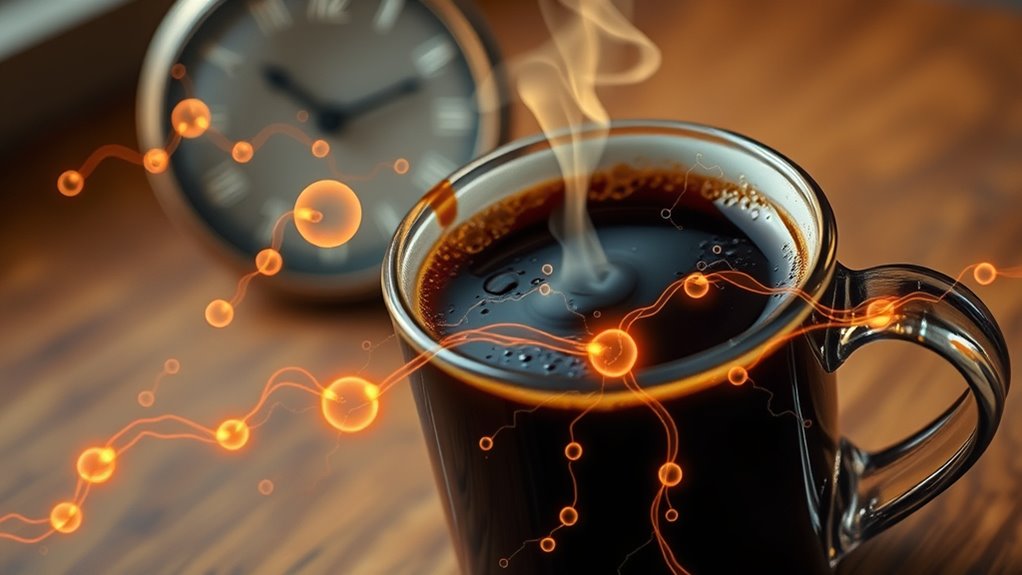

When you consume caffeine, it quickly enters your bloodstream, reaching peak levels within about an hour. It works by blocking adenosine receptors in your brain, preventing feelings of sleepiness and increasing alertness. The half-life of caffeine typically ranges from 3 to 5 hours, depending on factors like age, genetics, and liver health. As caffeine is broken down and excreted, its effects gradually fade—if you want to understand more about this process, keep exploring further.
Key Takeaways
- Caffeine is rapidly absorbed into the bloodstream, reaching peak levels within 30 to 60 minutes after ingestion.
- It primarily works by blocking adenosine receptors in the brain, reducing sleepiness and increasing alertness.
- The average half-life of caffeine ranges from 3 to 5 hours, but individual factors can extend or shorten this duration.
- Caffeine is metabolized in the liver into various compounds, which are eventually excreted through urine.
- As caffeine levels decrease, adenosine receptors are freed, restoring sleepiness and ending caffeine’s stimulating effects.
Ever wondered how that morning cup of coffee gives you a boost? It all starts when you take a sip, and caffeine quickly enters your bloodstream. Once inside, your body begins processing it through various metabolic pathways, which determine how long it stays active and how it influences your alertness. Caffeine’s primary action involves receptor binding, especially targeting adenosine receptors in your brain. Normally, adenosine binds to these receptors to promote relaxation and sleepiness. But caffeine, being structurally similar, binds to these receptors instead, blocking adenosine’s calming effect. This receptor binding is what makes you feel more awake and alert, as it prevents the usual drowsiness signals from taking hold.
Understanding the journey of caffeine through your body, it’s important to note that it’s absorbed rapidly. After drinking coffee, caffeine’s absorption begins within about 15 minutes, reaching peak blood levels roughly 30 to 60 minutes later. From there, your body starts metabolizing it mainly in the liver, where enzymes break it down into various metabolites. These metabolic pathways influence how long caffeine remains active in your system. For most people, the half-life of caffeine — the time it takes for half of it to be eliminated — ranges from three to five hours. Several factors, such as age, genetics, liver function, pregnancy, and even whether you’re a regular consumer, can affect this half-life. The longer it takes for your body to clear caffeine, the more prolonged its stimulating effects.
As caffeine is processed, it continues to bind to adenosine receptors, keeping you alert. But as your body metabolizes it, the amount of active caffeine decreases, and the adenosine receptors can once again be activated by natural adenosine. This process leads to the eventual subsiding of the caffeine’s effects, often resulting in a crash or feeling of fatigue once the caffeine levels drop notably. The metabolites produced during breakdown are eventually excreted through urine, completing the cycle. This entire process highlights how caffeine’s absorption, receptor binding, and metabolism are closely linked, shaping its effects and duration in your system.
Frequently Asked Questions
Does Caffeine Affect Everyone Equally?
No, caffeine doesn’t affect everyone equally. Your genetic variations influence how your body metabolizes caffeine, affecting its impact. If you have a faster metabolic rate, caffeine leaves your system quicker, so you might need more to feel alert. Conversely, a slower metabolic rate means caffeine stays longer, intensifying its effects. Personal differences like genetics and metabolic rates determine how caffeine influences your energy, alertness, and side effects.
How Does Age Influence Caffeine Metabolism?
As you age, your metabolism slows down due to age-related metabolic changes, making caffeine stay in your system longer. This can increase your sensitivity to caffeine, especially in elderly individuals, leading to more pronounced effects like jitters or sleep issues. You might find that smaller doses affect you more than before, so adjusting your intake is wise to avoid unwanted side effects and manage your caffeine sensitivity effectively.
Can Caffeine Dependency Develop Over Time?
Imagine your body as a fortress, gradually fortified against caffeine’s influence. Over time, you can develop dependency, with tolerance buildup making you crave more to feel the same boost. If you suddenly stop, withdrawal symptoms strike like a siege, causing headaches, fatigue, and irritability. Yes, caffeine dependency can develop over time, as your body adapts and relies on it, reinforcing the cycle of dependence.
What Are the Effects of Caffeine on Sleep Quality?
Caffeine can substantially affect your sleep quality by causing sleep disruption and REM suppression. When you consume caffeine later in the day, it blocks adenosine receptors, making it harder to fall asleep and reducing REM sleep. This leads to less restorative rest and leaves you feeling tired. To improve sleep, avoid caffeine at least 6 hours before bedtime, ensuring you get the restful sleep your body needs.
Are There Differences in Caffeine Absorption Between Beverages?
You’ll notice that caffeine absorption varies wildly between beverages—sometimes like a lightning bolt, other times like a gentle breeze. This is due to beverage composition; factors like milk, sugar, or acidity influence absorption rates. For example, black coffee absorbs quickly, while a latte slows down caffeine’s effects. So, your choice of drink directly impacts how fast caffeine hits your system and how long it sticks around.
Conclusion
Now that you understand how caffeine is absorbed and its half-life, you can better manage your intake. Think of caffeine as your modern alchemist, turning sleepy moments into alert ones. Just remember, moderation is key—too much can turn your energy boost into a crash. So, next time you sip your coffee, you’re not just enjoying a drink, you’re harnessing a tiny, powerful potion—like a wizard from the days of yore, wielding a little magic in your mug.