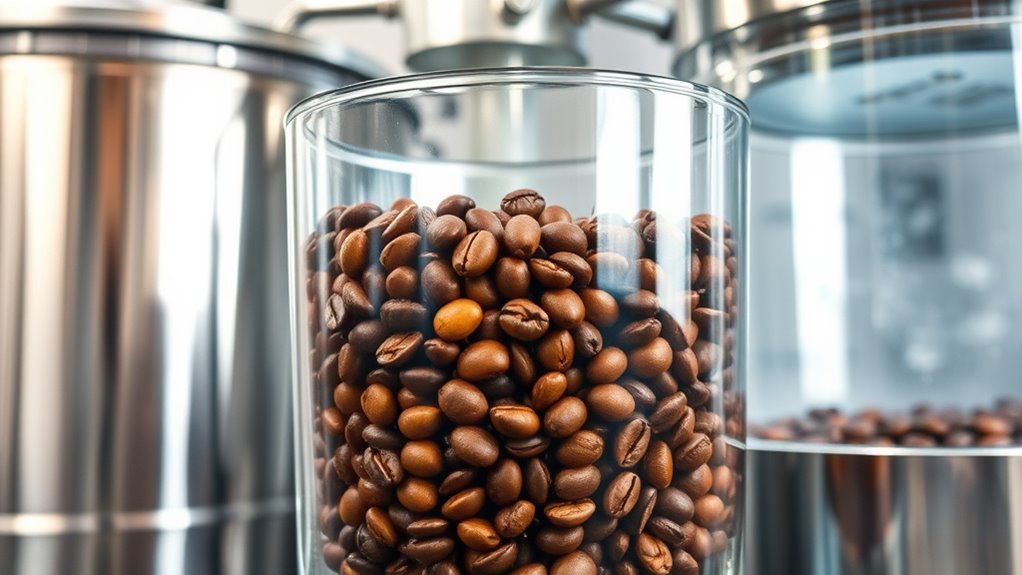

When choosing decaf coffee, it’s helpful to know the methods used and their safety. Chemical processes often remove most caffeine but can leave trace residues, raising safety concerns and potentially altering flavor. The Swiss Water and CO₂ methods avoid chemicals, making them safer options that better preserve flavor. If you’d like to explore how each method impacts safety, taste, and purity, you’ll find plenty of useful details ahead.

Get coffee and tea gear delivered free — and shop member deals
- Fast, free delivery on millions of items
- Access to Prime Big Deal Days deals on October 6–7
- Prime Video, Amazon Music and more included
Key Takeaways
- Swiss Water and CO₂ processes are chemical-free, reducing concerns about residual chemicals in decaffeinated coffee.
- Chemical methods (methylene chloride, ethyl acetate) effectively remove over 97% of caffeine but may leave trace residues.
- Swiss Water and CO₂ methods preserve more of the coffee’s original flavor profile compared to chemical processes.
- Safety regulations limit chemical residues, but consumer preference favors residue-free decaffeination methods.
- The choice of method impacts both flavor preservation and safety, with non-chemical options generally considered safer.

Decaffeinating coffee involves several methods, each with its own impact on safety and flavor. When you choose a decaf coffee, it’s important to consider how the process affects chemical residues and caffeine content. Some methods use chemicals to extract caffeine, raising questions about potential residues left behind. Others avoid chemicals altogether, focusing on natural processes to remove caffeine. Your choice influences not only the flavor of your coffee but also its safety and purity.
Decaffeinating methods vary in safety, flavor, and chemical residue concerns.
One common chemical method is the use of solvents like methylene chloride or ethyl acetate. These chemicals are effective at stripping caffeine but can leave trace residues if not properly managed. While regulatory agencies set strict limits to ensure safety, some consumers remain cautious about chemical residues, preferring decaffeination processes that are chemical-free. The caffeine content in these coffees is typically reduced by about 97% or more, but the process can sometimes alter flavor profiles slightly due to chemical interactions. If you’re sensitive to chemical residues, opting for decaf options processed without chemicals might give you peace of mind.
Another widely used method is the Swiss Water process, which relies on water and osmosis rather than chemicals. This method involves soaking coffee beans in hot water to dissolve caffeine, then passing this water through activated carbon filters that trap caffeine molecules. Because no chemicals are involved, you can enjoy a decaf that’s free from chemical residues. Plus, this process tends to preserve more of the coffee’s original flavor, making it a popular choice among purists. The caffeine content is reduced considerably, often more than 99%, but since the process is gentle, it doesn’t typically compromise flavor or aroma. Additionally, the preservation of flavor is a key advantage of this method, appealing to those who prioritize taste.
The carbon dioxide (CO₂) method is another advanced technique that uses supercritical CO₂ to extract caffeine. Under high pressure, CO₂ acts like a solvent but leaves behind minimal chemical residues, making it a safe and efficient option. This process is particularly good at maintaining the coffee’s nuanced flavors, so you get a decaf with a more authentic taste. The caffeine content is reduced by over 97%, and because CO₂ is a natural substance, it’s an eco-friendly choice as well.
In the end, your decision might come down to how much you care about chemical residues versus flavor preservation. All these methods effectively lower caffeine content, but they vary in their impact on safety and taste. By understanding how each process works, you can select a decaf that aligns with your preferences and health considerations.
As an affiliate, we earn on qualifying purchases.
Frequently Asked Questions
Are Decaf Coffee Methods Environmentally Sustainable?
Decaf coffee methods can be environmentally sustainable, especially when sourced through organic farming and fair trade certification. These practices promote eco-friendly cultivation, reduce chemical use, and support fair labor conditions. By choosing decaf options with these certifications, you help minimize environmental impact and promote sustainable agriculture. Opting for methods that prioritize eco-conscious processes guarantees your coffee consumption aligns with environmental responsibility and social fairness.
How Do Decaf Methods Affect Coffee Flavor Profiles?
Decaf methods impact flavor profiles by affecting flavor preservation differently. For example, Swiss Water and CO₂ processes preserve more of the beans’ original taste, offering a richer, more vibrant flavor. You’ll notice that some methods, like solvent-based ones, can slightly alter the coffee’s natural notes or introduce a faint chemical taste. Understanding decaf method impact helps you choose decaf options that best suit your flavor preferences.
Can Decaf Coffee Cause Allergic Reactions?
Decaf coffee can cause allergic reactions if you’re sensitive to certain proteins or components in coffee, just like regular coffee. If you have coffee sensitivities, you might experience symptoms such as itching, hives, or stomach upset after drinking decaf. It’s crucial to recognize that decaffeination methods don’t eliminate all potential allergens, so always check labels and consult with a healthcare professional if you suspect an allergy or sensitivity.
Is Decaf Coffee Safe for Pregnant Women?
They say “better safe than sorry,” and that’s especially true for pregnant women. Decaf coffee is generally safe during pregnancy, but you should still monitor caffeine intake. While decaf contains considerably less caffeine, it’s wise to consult your healthcare provider to ensure it fits your pregnancy safety plan. Moderation is key—enjoy your coffee, but stay mindful of your overall caffeine consumption.
How Long Does Decaffeination Process Take?
The decaffeination process typically takes about 8 to 12 hours, depending on the technique used. You should know that decaffeination techniques like Swiss Water and CO₂ aim to remove caffeine efficiently, often with minimal chemical residues. This process involves soaking or using pressurized gases, which helps preserve flavor while ensuring safety. So, if you’re curious, most decaf coffees are processed within a day, making them a quick yet safe choice.
Conclusion
When choosing a decaf method, safety and quality matter. Swiss Water and CO₂ processes are popular because they maintain flavor while minimizing chemicals. Did you know that over 90% of decaffeinated coffee is made using these safer methods? By understanding these techniques, you can enjoy your coffee worry-free. So next time, pick a decaf processed with your health in mind—your taste buds and well-being will thank you.
Halloween Picks
halloween
As an affiliate, we earn on qualifying purchases.