
Your coffee choice and brewing method greatly impact dental staining. Stronger brews like espresso and French press contain more pigments that cling to teeth, causing discoloration over time. Lighter roasts stain less but may affect taste. Acid levels and temperature also influence enamel erosion. To keep your smile bright, rinse afterward, use a straw, and maintain good dental habits. Keep exploring to discover more effective ways to protect your teeth from coffee stains.

Get coffee and tea gear delivered free with Prime
- Fast, free delivery on millions of items
- Prime Video, Amazon Music and more included
- Member-only deals all year
Key Takeaways
- Darker, concentrated brews like espresso and French press increase staining risk due to higher pigment content.
- Tannins in coffee cause color compounds to adhere to teeth, leading to discoloration over time.
- Using a straw and rinsing with water after coffee consumption can help minimize stain contact.
- Regular dental cleanings and whitening products can reduce and prevent coffee-related stains.
- Brewing methods impact pigment levels and acidity, influencing both staining potential and enamel health.
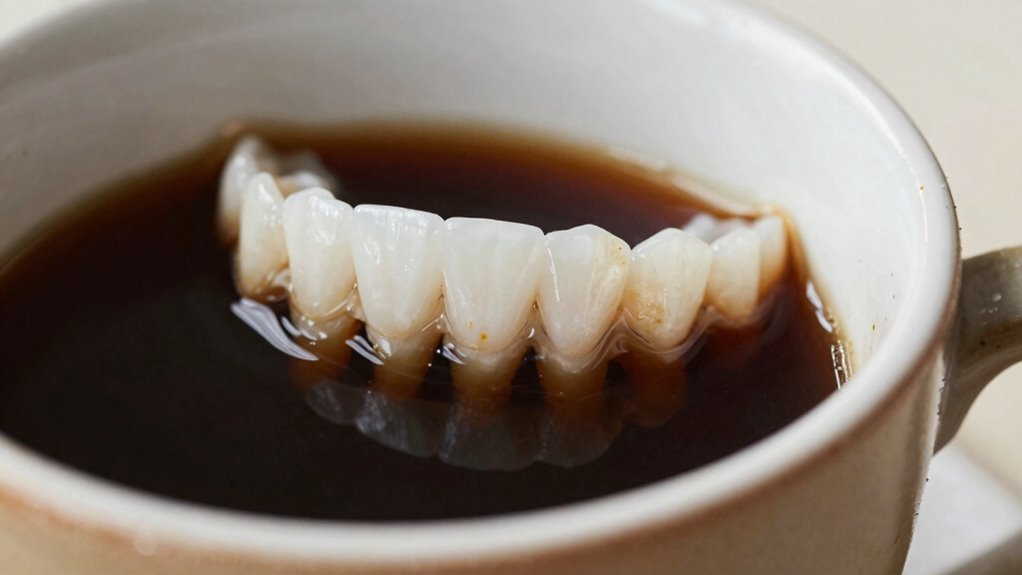
Many people enjoy their morning coffee, but few realize how it can affect their smile. Coffee brewing methods can influence just how much staining occurs over time. A darker, more concentrated brew might seem richer, but it also packs more pigments that cling to your enamel. Those stubborn stains can dull your smile, making it look less vibrant and healthy. That’s why understanding the connection between coffee brewing and dental staining is key if you want to keep your teeth sparkling.
The more you sip on black coffee without any additives, the more likely you are to notice discoloration. Coffee contains tannins, natural compounds that can cause color compounds to stick to your teeth. Over time, this builds up and leaves a yellowish or brownish tint. The good news is, you can still enjoy your favorite brew—just be aware of how your choice of brewing method impacts staining. For example, French press and espresso styles often produce stronger, darker coffee than drip coffee, increasing the risk of staining. Conversely, lighter roasts tend to have fewer pigments, although they might not satisfy your taste buds as much. Different brewing techniques can also influence the intensity of pigments in your coffee, which in turn affects how much staining occurs. Additionally, the antioxidant content in coffee can vary based on brewing methods, potentially influencing how it interacts with your teeth. Proper brewing techniques can also affect the acidity levels, which may impact enamel erosion and stain susceptibility. Using specific brewing methods can also alter the pH balance of your coffee, further affecting enamel health. It’s worth noting that some brewing methods may also influence the temperature of the coffee, impacting how quickly stains develop on your teeth.
French press and espresso increase staining risk; lighter roasts have fewer pigments but may taste different.
When it comes to tackling stains, dental whitening techniques offer effective solutions. These range from professional treatments like in-office bleaching to at-home whitening kits. Professional whitening can markedly reduce the appearance of coffee stains and restore your teeth’s brightness. But even if you prefer at-home methods, there are products designed to target coffee-induced discoloration. Regular use of whitening toothpaste with mild abrasives can help prevent stains from setting in, while whitening strips provide more noticeable results over time. Keep in mind that some whitening techniques work better on surface stains caused by coffee brewing than on deeper, intrinsic discoloration.
To preserve your smile, it’s best to combine good habits with effective whitening techniques. Rinse your mouth with water after drinking coffee to wash away pigments before they settle into your enamel. Use a straw when possible to minimize direct contact with your teeth. Additionally, stay consistent with dental check-ups and professional cleanings, which help remove surface stains and keep your teeth looking their best. Remember, while coffee might be a beloved morning ritual, being mindful of how it interacts with your dental health can prevent long-term staining and keep your smile bright. By understanding the role of coffee brewing and applying the right whitening techniques, you can enjoy your coffee without compromising your smile’s radiance.
whitening toothpaste for coffee stains
As an affiliate, we earn on qualifying purchases.
As an affiliate, we earn on qualifying purchases.
Frequently Asked Questions
Can Drinking Coffee Cause Permanent Tooth Discoloration?
Yes, drinking coffee can cause permanent tooth discoloration if you don’t maintain good dental hygiene. Coffee contains chromogens and tannins that stain teeth over time, especially with frequent consumption. While moderate coffee intake isn’t harmful to your overall health, neglecting proper dental hygiene can lead to lasting stains. To prevent permanent discoloration, brush regularly, visit your dentist, and consider using whitening products or treatments.
Are There Specific Coffee Types That Stain Teeth More?
Think of your teeth as a canvas, and certain coffee types as more vivid paints. Dark roasts and espresso, with their intense coffee brewing process, tend to stain teeth more than lighter brews. To keep your smile bright, opt for milder coffee varieties and practice frequent stain removal. Choosing your coffee wisely can help preserve your smile’s natural shine, much like a masterpiece needing careful preservation.
How Long Does Coffee Stain Teeth After Consumption?
Coffee can stain your teeth within minutes of consumption, especially if the coffee has a deep color. The stain starts to set as the coffee’s pigments attach to your enamel. To minimize this, rinse your mouth with water afterward and practice regular stain removal methods like brushing or professional cleanings. The longer the coffee stays on your teeth, the more intense the stain becomes, so quick action helps preserve your smile.
Do Whitening Products Work Effectively on Coffee Stains?
Absolutely, whitening products work wonders on coffee stains! They target the deep layers of dental enamel where coffee brewing leaves its lasting mark. While you might think stains are stubborn, professional or over-the-counter whitening treatments can dramatically brighten your smile. They effectively break down coffee’s tannins and pigments, restoring your teeth’s natural whiteness. So yes, if you’re battling coffee stains, whitening products are your best shot at a dazzling, stain-free smile!
Can Quitting Coffee Prevent Further Dental Staining?
Yes, quitting coffee can prevent further dental staining because it stops the constant exposure to staining compounds found in coffee brewing. Maintaining good dental hygiene, like regular brushing and flossing, also helps prevent new stains from forming. While stopping coffee reduces the risk, consistent dental care and professional cleanings are essential for keeping your teeth bright and minimizing stain buildup over time.
Conclusion
So, as you sip your morning brew, remember that coffee’s rich taste can come with a price—dental staining. But don’t let that darken your day or your smile. By practicing good oral hygiene, using whitening tools, and moderating your coffee intake, you hold the power to keep your teeth bright and beautiful. After all, your smile is your best accessory—shine it with confidence, not stain.
Fall Picks
fall essentials
As an affiliate, we earn on qualifying purchases.