To boost your athletic performance, drink coffee about 30 to 60 minutes before your workout so caffeine peaks during exercise, enhancing focus and endurance. Aim for 3 to 6 mg per kg of body weight, roughly 1-3 cups of coffee, but don’t exceed this to avoid jitters or other side effects. Adjust timing and amount based on your response, and avoid caffeine late in the day to prevent sleep disruptions. Keep exploring to release more tips.
Key Takeaways
- Consume coffee 30 to 60 minutes before exercise to maximize caffeine’s peak effects during activity.
- Typical effective caffeine dosage for performance enhancement ranges from 3 to 6 mg per kg of body weight.
- Individual responses vary; personal experimentation helps determine optimal timing and dosage.
- Avoid caffeine too close to bedtime to prevent sleep disruption and ensure proper recovery.
- Excessive caffeine intake may cause side effects like jitters or increased heart rate; moderate doses are recommended.
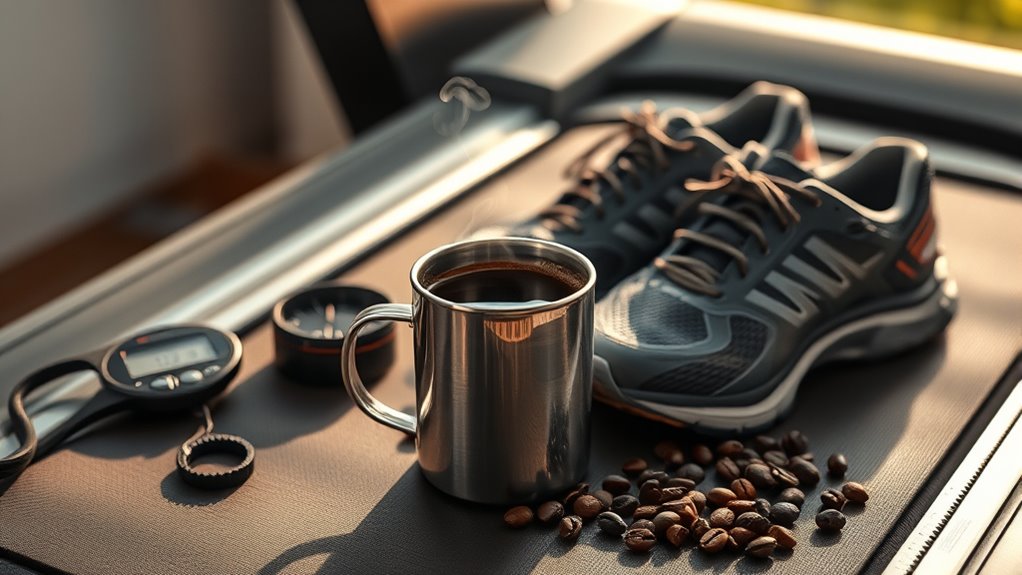
Have you ever wondered how your morning coffee might boost your athletic performance? The secret lies in how caffeine absorption works in your body and how it influences your workout energy. When you take a sip of coffee, caffeine is quickly absorbed through your stomach and small intestine, entering your bloodstream within about 15 minutes. From there, it travels to your brain, where it blocks the adenosine receptors that usually promote sleep and relaxation. This process leads to increased alertness and a feeling of heightened energy. Because caffeine absorption is rapid, you can often feel its stimulating effects quite soon after drinking coffee, which can be advantageous when you’re preparing for a workout or competition. Understanding caffeine absorption helps you time your coffee intake for maximum benefit. If you want to optimize your workout energy, drinking coffee about 30 to 60 minutes before exercising is generally recommended. This window allows enough time for caffeine to peak in your bloodstream, so you’re feeling its full effects during your session. When caffeine levels are at their highest, you’re likely to experience increased focus, quicker reaction times, and reduced perception of effort—all of which can improve your overall athletic performance. Keep in mind that individual responses vary; some people metabolize caffeine faster or slower, so it’s worth experimenting to find what timing works best for you. The right dosage also plays a essential role in how coffee influences your workout. Typically, a dose of 3 to 6 milligrams of caffeine per kilogram of body weight is considered effective for enhancing athletic performance. For most people, this means about one to three cups of coffee. Going beyond this range doesn’t necessarily mean better results and can lead to negative side effects like jitters, increased heart rate, or gastrointestinal discomfort. Starting with a moderate amount helps you assess how your body responds, allowing you to adjust accordingly. Remember, more isn’t always better; the goal is to find a balance that boosts your workout energy without causing unwanted side effects. Finally, timing is everything. Drinking coffee too early might mean its effects wear off before you hit your peak workout, while drinking too late could interfere with your sleep, which is essential for recovery. Aim to consume coffee roughly 30 minutes before your workout, and avoid having it too close to bedtime. By paying attention to caffeine absorption, timing, and dosage, you can harness the stimulating power of coffee to elevate your athletic performance safely and effectively.
Frequently Asked Questions
How Does Coffee Affect Hydration During Exercise?
Coffee can impact your hydration balance during exercise because its caffeine content acts as a mild diuretic, potentially causing electrolyte disruption and fluid loss. However, if you consume coffee in moderation, it typically won’t severely dehydrate you. To stay properly hydrated, balance your coffee intake with plenty of water and electrolyte-rich drinks, especially during prolonged or intense workouts. This way, you minimize dehydration risks while enjoying your caffeine boost.
Can Coffee Improve Endurance Over Long-Distance Workouts?
Yes, coffee can boost your endurance during long-distance workouts, acting like a secret weapon. To make the most of it, pay attention to your caffeine tolerance and time your workout accordingly. Drinking coffee about an hour before exercise can enhance stamina and focus, but too much or poorly timed caffeine might backfire. Experiment with timing to find what keeps you running smoothly without jitters or crashes.
Are There Any Age Restrictions for Coffee Consumption Before Exercise?
There are indeed age restrictions for coffee consumption before exercise, especially for youth athletes. You should be cautious, as caffeine affects children and teenagers differently, potentially leading to increased heart rate or sleep issues. It’s best to consult with a healthcare professional before allowing young athletes to consume coffee before workouts. For youth, moderate or no caffeine intake is generally recommended to guarantee safe and healthy athletic performance.
How Does Caffeine Interact With Sports Supplements?
Imagine you’re taking a pre-workout supplement with amino acids while drinking coffee. Caffeine synergism can boost alertness and energy, but it may also cause supplement interference, leading to overstimulation or jitteriness. Caffeine interacts with sports supplements differently, depending on ingredients. You should monitor your intake to avoid negative effects, especially with stimulant-based products, ensuring you benefit from the synergy without risking adverse reactions.
What Are the Long-Term Effects of Regular Coffee Intake on Athletic Performance?
Regular coffee intake can boost your athletic performance by enhancing your metabolic impact and triggering a hormonal response that improves endurance and alertness. However, long-term use might lead to tolerance, reducing these benefits over time, and could disrupt sleep or cause dehydration. You should monitor how your body responds and adjust intake accordingly to maintain ideal performance without adverse effects.
Conclusion
By timing your coffee just right and dosing wisely, you unlock a secret weapon that fuels your athletic journey. Think of caffeine as a spark igniting your inner fire, propelling you over hurdles and through finish lines. When used thoughtfully, it becomes your loyal ally, turning every workout into a blazing trail of potential. So, sip strategically, unleash your energy, and watch as your performance soars like a mighty eagle riding the wind.