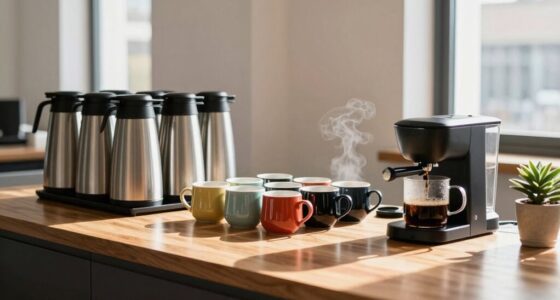
Caffeine from coffee can trigger anxiety or worsen existing symptoms, especially if you’re sensitive or consume large amounts. Your tolerance varies, so some people can drink multiple cups without issues, while others feel jittery or anxious even with small doses. Brewing methods and coffee choices, like light roasts or decaf, can help manage effects. If you’re curious about how to enjoy coffee without anxiety, exploring these tips can make a difference.

Get coffee and tea gear delivered free — and shop member deals
- Fast, free delivery on millions of items
- Access to Prime Big Deal Days deals on October 6–7
- Prime Video, Amazon Music and more included
Key Takeaways
- Personal caffeine sensitivity influences how coffee triggers anxiety symptoms.
- Brewing methods and caffeine content affect individual tolerance and anxiety risks.
- Regular coffee consumption can lead to increased tolerance, reducing anxiety triggers over time.
- Sudden reduction or withdrawal from caffeine may cause irritability and fatigue.
- Adjusting brewing techniques and intake levels helps balance alertness and minimize anxiety.

For many people, coffee is a daily staple that provides a much-needed energy boost. It’s part of your morning routine, a quick pick-me-up during the afternoon slump, or a social activity with friends. But for some, that morning cup can also trigger feelings of anxiety or exacerbate existing anxiety symptoms. This primarily depends on your caffeine sensitivity, which varies from person to person. If you notice that even a small amount of coffee makes you jittery or anxious, you might have a higher caffeine sensitivity. On the other hand, if you can drink multiple cups without any noticeable effects, your tolerance might be higher. Understanding your sensitivity is key to managing how coffee impacts your mental health.
Your brewing methods play a significant role in how much caffeine you consume and how it affects you. For example, espresso and French press brewing methods tend to extract more caffeine compared to drip coffee or cold brew. An espresso shot, though smaller in volume, often contains a concentrated dose of caffeine that can hit you hard if you’re sensitive. Cold brew, on the other hand, is usually brewed over a longer period, resulting in a smoother, less acidic drink that can still contain a high caffeine content if consumed in large quantities. If you’re prone to anxiety, choosing brewing methods that produce lower caffeine levels or diluting your coffee can help mitigate negative effects.
Adjusting your brewing techniques could be a practical way to reduce caffeine intake without giving up coffee entirely. For instance, opting for lighter roasts typically means less caffeine than darker roasts, contrary to popular belief. Additionally, using a paper filter in drip brewing can slightly reduce caffeine content compared to French press or espresso. If you’re particularly sensitive, you might also consider decaffeinated options, which contain only trace amounts of caffeine but still allow you to enjoy the taste and ritual of coffee. Being aware of the role of personal finance management in your overall well-being can help you make more mindful choices about your caffeine consumption and its impact on your mental health.
It’s important to recognize that your body’s response to caffeine can change over time. Regular consumption might lead to increased tolerance, making you less aware of its anxiety-provoking effects. Conversely, reducing intake suddenly can cause withdrawal symptoms, including irritability and fatigue, which can also influence your anxiety levels. Paying attention to your body’s signals and adjusting your brewing methods and caffeine intake accordingly can help you enjoy coffee without compromising your mental health. Ultimately, understanding your caffeine sensitivity and experimenting with different brewing techniques allows you to strike a balance that keeps you alert without triggering unnecessary anxiety.
As an affiliate, we earn on qualifying purchases.
Frequently Asked Questions
Can Decaffeinated Coffee Still Trigger Anxiety Symptoms?
Decaffeinated coffee can still trigger anxiety symptoms, contrary to common misconceptions. While it contains less caffeine, it may still cause anxiety symptom overlap because of other compounds like chlorogenic acids and residual caffeine. If you’re sensitive, you might notice jitters or nervousness even with decaf. Pay attention to your body’s responses and consider reducing your intake if you experience these symptoms, as decaf isn’t always risk-free for anxiety-prone individuals.
How Does Coffee Affect Anxiety in Different Age Groups?
Did you know that age-related sensitivity to caffeine varies significantly? In children and teens, developmental differences make them more prone to anxiety symptoms from coffee, while adults often develop a tolerance over time. As you age, your body’s response can change, influencing how coffee impacts your anxiety levels. So, if you’re concerned about anxiety, it’s important to take into account these age-related factors and adjust your coffee intake accordingly.
Are There Specific Coffee Brewing Methods That Reduce Anxiety Risk?
You can reduce anxiety risk by choosing brewing techniques that control caffeine extraction, like cold brew or pour-over. Cold brew, with its slower extraction, results in lower caffeine levels, making it gentler on your nerves. Pour-over allows you to control brewing time precisely, avoiding over-extraction. These methods help manage caffeine intake, minimizing anxiety triggers while still enjoying your coffee.
What Are Alternative Beverages for Anxiety-Sensitive Individuals?
Think of herbal infusions and non-caffeinated drinks as gentle rain soothing a storm, calming your nerves. If you’re sensitive to anxiety, swapping coffee for chamomile, peppermint, or rooibos tea can help. These beverages are soothing alternatives that won’t spike your adrenaline. Embrace these calming drinks to nurture your peace of mind, turning your daily routine into a tranquil oasis rather than a stormy sea.
How Quickly Can Coffee Consumption Influence Anxiety Levels?
You’ll notice caffeine absorption into your bloodstream within about 15 minutes of drinking coffee. This quick absorption can trigger your stress response, often leading to heightened anxiety levels, especially if you’re sensitive. The effects peak around 30 to 60 minutes, so your anxiety might increase during this window. If you’re prone to anxiety, consider limiting your intake or choosing lower-caffeine options to avoid overstimulating your nervous system.
Conclusion
Remember, your coffee intake can be a double-edged sword—fueling your day or fueling your anxiety. By recognizing your triggers and building tolerance, you hold the power to tame the beast within. Don’t let caffeine turn your calm into chaos; you’re stronger than that! With mindful choices, you’ll keep anxiety at bay and enjoy your coffee’s delightful boost without turning into a jittery mess. Your peace of mind is worth more than any caffeine rush!
Fall Picks
fall essentials
As an affiliate, we earn on qualifying purchases.