
A water softener mainly safeguards your espresso machine by removing minerals like calcium and magnesium that cause scale buildup, which can damage internal parts and shorten its lifespan. A filter improves water quality and taste by removing chlorine, sediments, and contaminants but doesn’t prevent scale. To fully protect and ensure the best flavor, combining both might be ideal. Keep exploring to find out which option suits your needs best.
Key Takeaways
- Water softeners prevent mineral buildup and scale in espresso machines by removing calcium and magnesium ions.
- Water filters improve water taste and remove impurities but do not significantly prevent scale formation.
- Softeners extend machine lifespan by reducing deposits, while filters enhance water quality and flavor.
- Combining both systems offers comprehensive protection for optimal machine performance and longevity.
- Choice depends on whether scale prevention (softener) or water quality and taste (filter) is the priority.
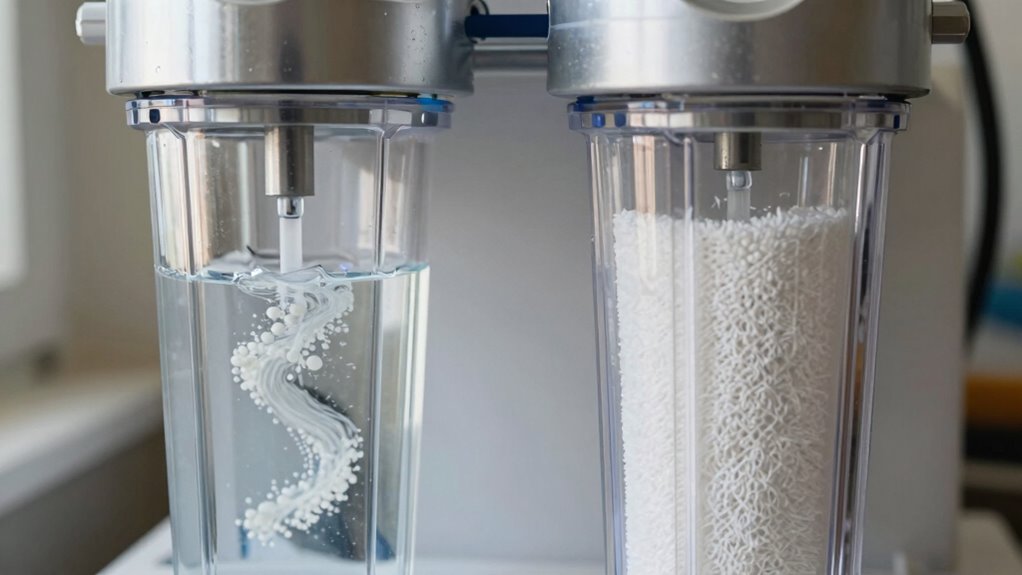
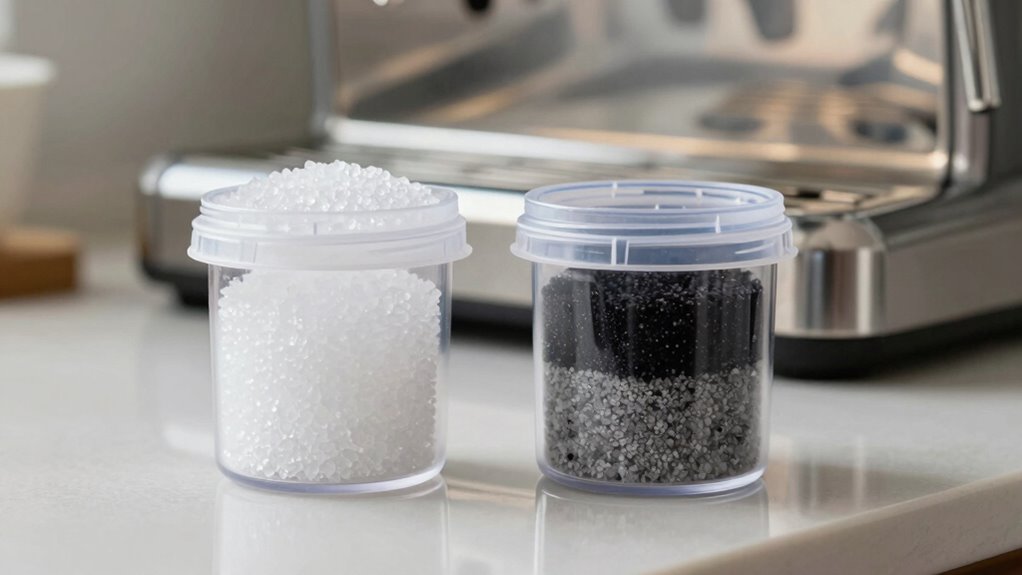
Are you unsure whether a water softener or a water filter is right for your home? If you’re aiming to protect your espresso machine, understanding how each option works is essential. A water softener primarily focuses on scale prevention by removing minerals like calcium and magnesium that cause hard water. Hard water can lead to mineral buildup inside your machine, which not only hampers its performance but also shortens its lifespan. By using a water softener, you’re tackling this issue head-on, preventing those stubborn deposits from forming in your machine’s boiler or pipes. This process involves exchanging hard water ions with sodium or potassium ions, effectively reducing the mineral content and making the water gentler on your espresso equipment.
On the other hand, a water filter targets mineral removal more broadly, filtering out various impurities that can affect the taste and quality of your coffee. Filters often use activated carbon or other media to trap contaminants such as chlorine, sediment, and volatile organic compounds. This results in water that’s not only cleaner but also better tasting—crucial for brewing high-quality espresso. While some filters do reduce mineral content, they typically do not remove enough minerals to prevent scale buildup in your machine. Instead, they focus on improving water clarity and eliminating substances that could negatively influence flavor or cause minor damage over time.
Choosing between a water softener and a filter depends on your specific needs. If your main concern is preventing scale buildup that could clog your espresso machine or damage its internal components, a water softener is your best bet. It ensures that the minerals responsible for scale are substantially reduced, keeping your machine running smoothly and extending its lifespan. Conversely, if you’re more interested in improving overall water quality and taste, a high-quality water filter can effectively remove chlorine, sediments, and other impurities that might compromise your coffee’s flavor.
For ideal protection, some homeowners opt for a combination of both. Using a water softener to handle mineral-related issues and a filter to improve taste and remove contaminants offers thorough water treatment. This pairing ensures your espresso machine benefits from both scale prevention and mineral removal, giving you consistently great coffee while minimizing maintenance and repair costs. Ultimately, understanding your water’s composition and your priorities will guide you to the right choice, helping you enjoy perfect espresso every time without worry about mineral buildup or impurities affecting your brew.
Additionally, considering the cost and maintenance of each system can influence your decision, as softeners and filters may require different upkeep to stay effective.
Frequently Asked Questions
Can Both Water Softeners and Filters Be Used Together?
Yes, you can use both water softeners and filters together. Combining them enhances water treatment, protecting your espresso machine more effectively. Just keep in mind that using both may increase maintenance frequency, as filters need regular replacement and softeners require periodic regeneration. Monitoring your water quality and following manufacturer guidelines ensures ideal protection and performance, reducing mineral buildup and extending your machine’s lifespan.
How Often Should I Replace My Water Softener or Filter?
Think of your water softener or filter as the heartbeat of your espresso machine; you need to keep it in rhythm. You should replace your filter every 2-3 months and your softener resin every 6-12 months, depending on water usage and quality. Follow your maintenance schedule closely, and watch for replacement indicators like reduced flow rate or noticeable taste changes to guarantee ideal protection.
Do Softeners or Filters Affect the Taste of Espresso?
Softeners and filters can impact the taste of your espresso. Softeners often reduce mineral taste, making your coffee less bitter, while filters improve water clarity, resulting in a cleaner, purer flavor. If your water is overly hard or contains impurities, you might notice a dull or off taste. Regularly maintaining your softener or filter ensures your espresso remains vibrant and flavorful, with ideal mineral balance and clarity.
Are There Specific Brands Recommended for Espresso Machine Protection?
You’ll want to explore top brand recommendations to protect your espresso machine effectively. Keep an eye on product reviews from trusted sources, as they reveal which brands stand out in durability and performance. While some brands excel in filtration, others specialize in softening water. Don’t settle for less—research thoroughly, compare reviews, and choose a brand that guarantees your machine’s longevity. Your perfect shot depends on the right choice.
What Is the Long-Term Cost Comparison Between Softeners and Filters?
You’ll find that filters tend to be more cost-efficient over the long term since they usually have lower upfront costs and require less maintenance. Water softeners, while more expensive initially, can reduce maintenance expenses by preventing scale buildup that damages your espresso machine. Consider your water quality and usage to determine which option offers better long-term savings, balancing initial costs with ongoing maintenance expenses for ideal protection and cost efficiency.
Conclusion
So, whether you choose a water softener or a filter, remember—your espresso machine’s survival depends on it! Without proper protection, mineral buildup can turn your prized machine into a rusted relic faster than you can say “espresso shot.” Don’t gamble with your coffee dreams—arm yourself with the ultimate defense and keep your machine running like a champion. Trust me, your future self will thank you for making the right choice today!