
If you want convenience and energy savings, automating with a smart kettle is worth it, especially if you prefer voice control, scheduling, and temperature precision. They can simplify your routines and reduce waste, but they come at a higher cost and complexity. Manual kettles are straightforward, reliable, and more affordable, making them perfect if you prefer simplicity. To find out which option truly fits your lifestyle, exploring the details can help you make the best choice.
Key Takeaways
- Automating temperature control and scheduling in smart kettles saves energy and enhances morning routines.
- Manual kettles are more reliable and cost-effective for basic boiling needs without automation.
- Smart kettles offer remote operation and alerts, increasing convenience for busy or multitasking users.
- The higher cost and complexity of smart kettles may outweigh benefits for users who prefer simplicity.
- For energy efficiency and automation, smart kettles are worth considering; for durability and affordability, manual models suffice.
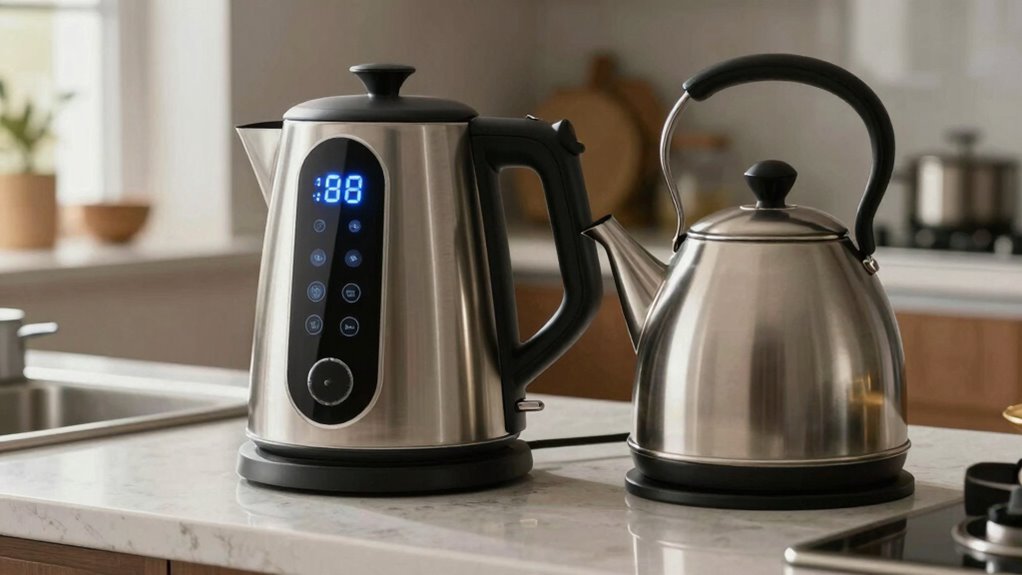
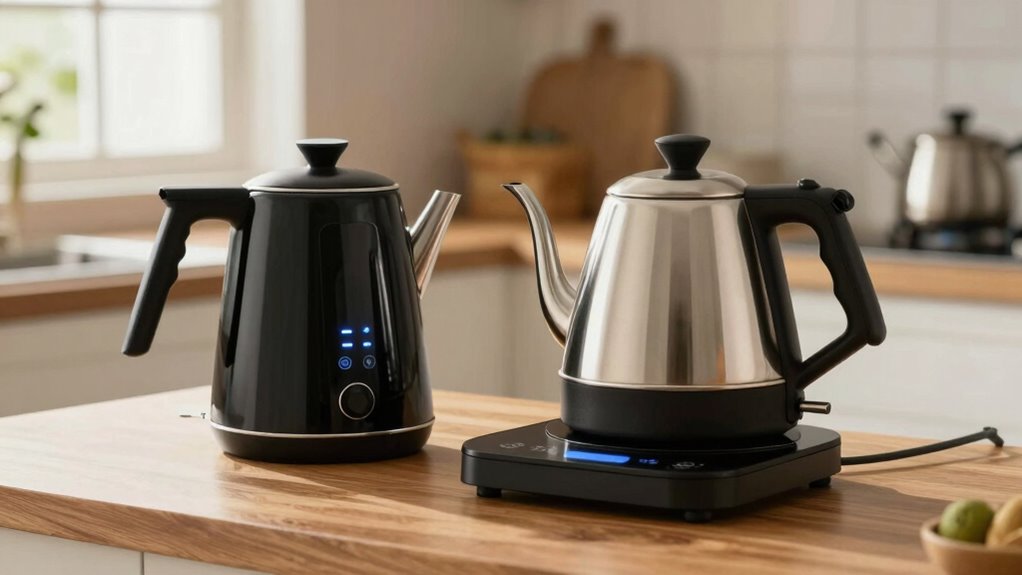
When choosing a kettle, you might wonder whether a smart kettle or a manual one best suits your needs. The decision often comes down to two main factors: energy efficiency and user convenience. Smart kettles are designed to offer advanced features that can help you save energy and make your routine more seamless. For instance, many smart models allow you to set precise temperatures, schedule boiling times, or control the kettle remotely via smartphone apps. These features not only give you better control over how much energy you use but also help prevent waste, like boiling more water than necessary. In contrast, manual kettles are straightforward and don’t rely on technology, which means they tend to use energy in a simple, direct way. They boil water on demand, so you only use energy when you need hot water. This can be advantageous if you prefer a no-fuss approach and are concerned about adding digital devices to your kitchen. Additionally, the technology used in home appliances can influence the durability and maintenance needs of smart kettles versus manual ones.
Choosing between a smart and manual kettle depends on your preferences for energy efficiency and convenience.
User convenience is another key aspect to contemplate. Smart kettles shine here because they can integrate with your smart home system, allowing you to start boiling water with a voice command or a tap on your phone. Imagine waking up and asking your smart speaker to prepare your tea—independent of your physical location or whether your hands are full. Some models even offer features like keeping water at a specific temperature for hours or alerting you when the water reaches the desired level. This level of automation can make your morning routine smoother and require less effort. However, it’s worth noting that smart kettles often come with a learning curve and a higher price point, which might not be ideal if you prefer simple, reliable appliances.
Manual kettles, on the other hand, excel in user convenience through their simplicity. They’re easy to operate—fill, boil, and pour—and require no setup or app management. If you’re someone who values straightforward appliances that get the job done without fuss, a manual kettle might be more appealing. Plus, they tend to be more durable and cost less upfront, making them a practical choice for many households.
Ultimately, your choice depends on how much you value automation and technological integration versus simplicity and cost. If you want to maximize energy efficiency and enjoy the convenience of remote control or scheduling, a smart kettle offers clear advantages. But if you prefer a reliable, no-nonsense device that boils water quickly without extra features, a manual kettle remains a dependable, efficient choice.
Frequently Asked Questions
How Much Energy Do Smart Kettles Save Compared to Manual Ones?
Smart kettles typically save you around 10-20% on energy efficiency compared to manual ones, mainly because they optimize power consumption by heating only the needed water. You’ll notice less power waste, especially with features like auto shut-off and temperature control. By choosing a smart kettle, you actively reduce unnecessary energy use, making your daily routine more eco-friendly and cost-effective over time.
Are Smart Kettles Compatible With All Smart Home Systems?
Smart kettles aren’t compatible with all smart home systems, so you might face device integration challenges. Before buying, check whether your existing smart home setup supports the kettle’s brand or platform, like Alexa, Google Home, or Apple HomeKit. Some models work seamlessly, while others require additional bridges or apps. If compatibility is uncertain, consult the manufacturer’s details to guarantee smooth integration and avoid frustration later.
Do Smart Kettles Require Regular Software Updates?
Did you know that over 80% of smart device users perform regular software updates? Smart kettles do require software updates to stay secure and function effectively. These updates are part of their maintenance requirements, ensuring features work smoothly and vulnerabilities are patched. You should check for updates periodically, much like other smart home devices, to keep your kettle running efficiently and safely.
What Is the Typical Lifespan Difference Between Smart and Manual Kettles?
Smart kettles tend to have a slightly shorter lifespan than manual kettles due to their electronic components, but they often come with better warranty coverage. You might find that manual kettles last around 5-10 years with proper care, while smart kettles may last about 3-7 years. Regular maintenance and choosing models with strong durability can help extend their lifespan, regardless of the type.
Are There Safety Concerns With Automated Boiling Features?
Automated boiling features can raise safety concerns, but proper safety protocols help mitigate risks. Look for kettles with an emergency shutdown function, which automatically turns off the appliance if it detects overheating or other issues. Regularly checking for faults, keeping the kettle away from water spills, and following manufacturer instructions guarantee safe use. With these precautions, automation enhances convenience without compromising safety.
Conclusion
In the end, choosing between a smart or manual kettle depends on what you value most. If you enjoy convenience and tech-savvy features, a smart kettle is like having a personal barista at your fingertips. But if simplicity and reliability matter more, a manual kettle is your trusted companion. Think of it as the trusty old bicycle compared to a sleek e-bike—both get you there, but one offers a smoother ride. It’s all about what suits your lifestyle best.