Plumbed-in espresso machines at home offer the benefit of a continuous, reliable water supply, making your brew process seamless and reducing refills. However, they require proper installation, regular maintenance, and high-quality water filtration to prevent mineral buildup and damage. Hidden factors include dependence on professional setup, potential repair costs, and ensuring a stable water connection. To really understand how to get the most from these systems, keep exploring the details ahead.
Key Takeaways
- Plumbed-in espresso machines offer continuous access to fresh water, reducing refills and waiting times.
- Proper installation and regular maintenance, including descaling and filter checks, are essential for longevity.
- Water filtration improves espresso taste and protects internal components from mineral buildup.
- Dependence on a stable water line and professional setup can increase installation complexity and costs.
- Hidden risks include potential repair costs from scale buildup and operational issues if maintenance is neglected.
If you love espresso and want a seamless brewing experience, a plumbed-in espresso machine can transform your home setup. No more filling reservoirs or waiting for water to heat; instead, this system connects directly to your water line, giving you continuous access to fresh water. But before you make the switch, understanding maintenance tips and water filtration is essential to keep your machine running smoothly and guarantee the quality of your espresso.
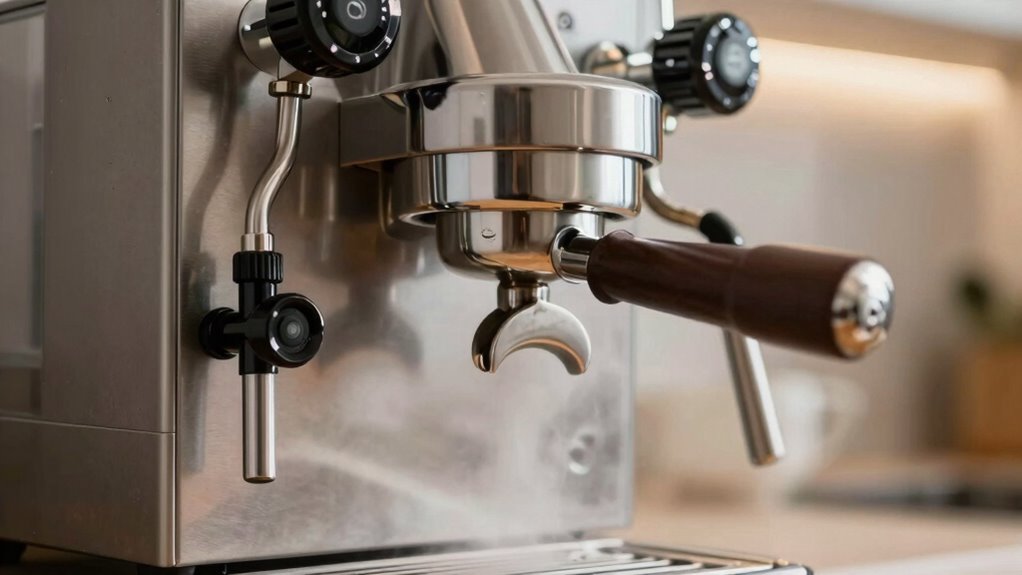
Maintenance tips are essential to prolong the lifespan of your plumbed-in espresso machine. Regular cleaning is a must, especially around the brew head, portafilter, and steam wands, to prevent buildup and ensure optimal extraction. Because these machines are connected directly to water supplies, mineral deposits from hard water can cause scale buildup, which may impair performance over time. Installing a water softener or descaling regularly helps mitigate this issue. Additionally, checking and replacing filters as needed is vital—many plumbed-in systems incorporate water filtration to improve water quality and taste. This not only enhances the flavor of your espresso but also protects internal components from mineral deposits that can clog or damage the machine.
Regular cleaning and filter checks extend your espresso machine’s lifespan and ensure optimal flavor.
Water filtration plays a significant role in maintaining your machine’s efficiency. When you connect directly to your water line, impurities like chlorine, heavy metals, and minerals can compromise the taste of your coffee and cause internal wear. Using a high-quality water filter reduces these impurities, ensuring each shot of espresso is fresh and flavorful. It also minimizes scale buildup, which can otherwise lead to costly repairs and downtime. Be sure to follow the manufacturer’s recommendations for filter replacement intervals to keep your water clean and your machine in top shape.
Another hidden part of owning a plumbed-in espresso machine is understanding the importance of proper installation. You need a reliable, stable water connection with appropriate pressure and flow rates. Failing to do this can lead to inconsistent brewing conditions or even damage to your system. Some installations require professional setup to ensure everything is correctly fitted and sealed, preventing leaks or pressure issues.
Frequently Asked Questions
How Much Does a Plumbed-In Espresso System Typically Cost?
A plumbed-in espresso system usually costs between $1,500 and $5,000, depending on features and brand. When considering pricing considerations, think about installation costs and maintenance, which can add up. Although the initial investment may seem high, you could enjoy long-term savings by avoiding frequent refills and minimizing waste. Ultimately, balancing upfront costs with ongoing expenses will help you choose the best system for your home.
What Is the Average Installation Time for a Plumbed-In Setup?
The installation timeline for a plumbed-in espresso system usually takes about 2 to 4 hours, depending on setup complexity. You might find it quicker if your plumbing connections are straightforward, but more complex setups with additional plumbing or electrical work could extend the time. To guarantee a smooth process, plan for some extra time and consider hiring a professional if you’re unsure about the installation steps.
Can I Retrofit My Existing Espresso Machine to Be Plumbed-In?
You can retrofit your existing espresso machine to be plumbed-in, but feasibility depends on your machine’s design. About 60% of machines are compatible with retrofit kits, but system compatibility varies. Check if your machine has a compatible water inlet and internal plumbing. If it does, installing a retrofit kit is often straightforward. Otherwise, upgrading to a dedicated plumbed-in model might be your best option for seamless integration.
How Often Do Plumbed-In Systems Require Maintenance?
You should plan on performing routine checks on your plumbed-in espresso system every few months. This helps guarantee water quality stays high and prevents mineral buildup. Regular maintenance might include cleaning filters, inspecting hoses, and flushing the system. Keep an eye on water quality, and if you notice any changes in taste or performance, address them promptly to keep your espresso tasting great and your system running smoothly.
Are There Specific Water Filters Recommended for These Systems?
You should select water filters compatible with your plumbed-in espresso system to guarantee peak performance. Check the manufacturer’s recommendations for water filter compatibility and follow the suggested filter replacement schedule to prevent mineral buildup and maintain water quality. Regularly replacing the filter, usually every 2-3 months, helps keep your espresso tasting great while protecting your machine from potential damage caused by impurities.
Conclusion
Now that you know the pros and cons of plumbed-in espresso machines, you can decide if it’s right for you. Imagine Sarah, who installed one in her small café and loved how it streamlined her mornings. At home, it could mean effortless, professional-quality coffee every day. Just weigh the installation effort against the convenience. If you want a sleek, reliable setup that saves time, a plumbed-in machine might be your perfect brew partner.