When home roasting, your green coffee beans go through five key stages: first, selection—choosing high-quality, fresh beans for the best flavor. Next, roasting begins as heat transforms the beans from green to yellow, then light brown, and finally darker shades. You’ll hear cracks marking these stages, indicating roast levels. Proper equipment and technique help control this process, ensuring consistent results. Keep exploring to learn how each step shapes your perfect cup of coffee.
Key Takeaways
- Green beans undergo five stages: fresh green, yellowing, light roast, medium roast, and dark roast, each affecting flavor and aroma.
- Proper storage in a cool, dark place preserves bean freshness through all roasting stages.
- Roasting equipment choice influences heat application and control over the bean’s transformation.
- Visual and auditory cues—color changes and crack sounds—guide progression through each roasting stage.
- Mastering the stages ensures optimal flavor development and consistency in home-roasted coffee.
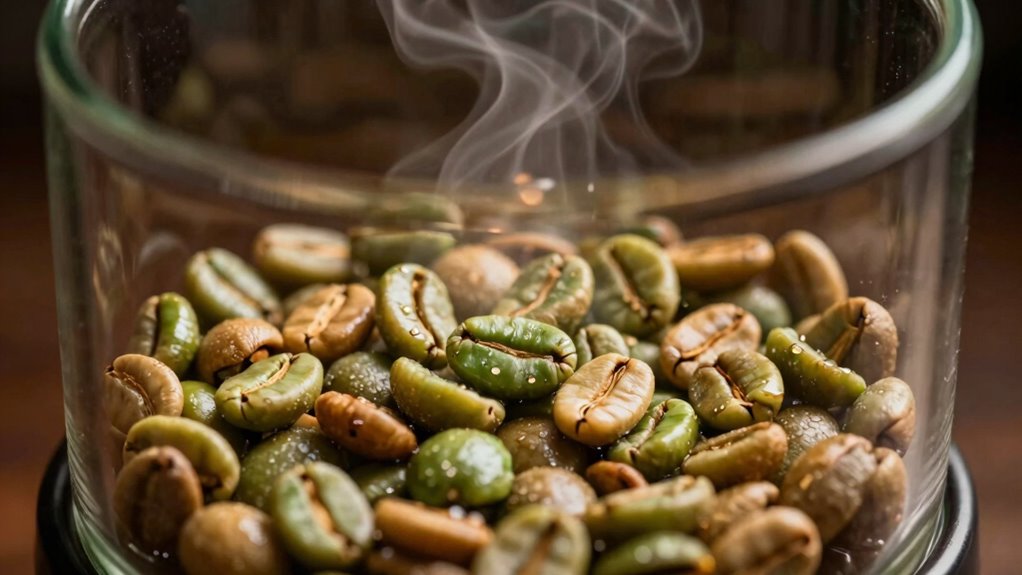
Roasting coffee at home lets you enjoy fresh, customized beans right from your kitchen. One of the most important steps in this process is selecting the right green beans. Your green bean selection sets the foundation for the flavor profile you want to achieve. Look for high-quality, fresh beans from reputable sources. Consider factors like origin, roast level preference, and processing method. Different regions produce beans with unique characteristics—whether you prefer the bright acidity of African beans or the full-bodied richness of Latin American varieties. The freshness of your green beans is key; aim to buy from vendors that sell recently harvested beans, and store them properly in a cool, dark place until you’re ready to roast. Proper storage techniques are essential for maintaining bean freshness and flavor over time.
Choose fresh, high-quality green beans from reputable sources to craft your perfect home-roasted coffee.
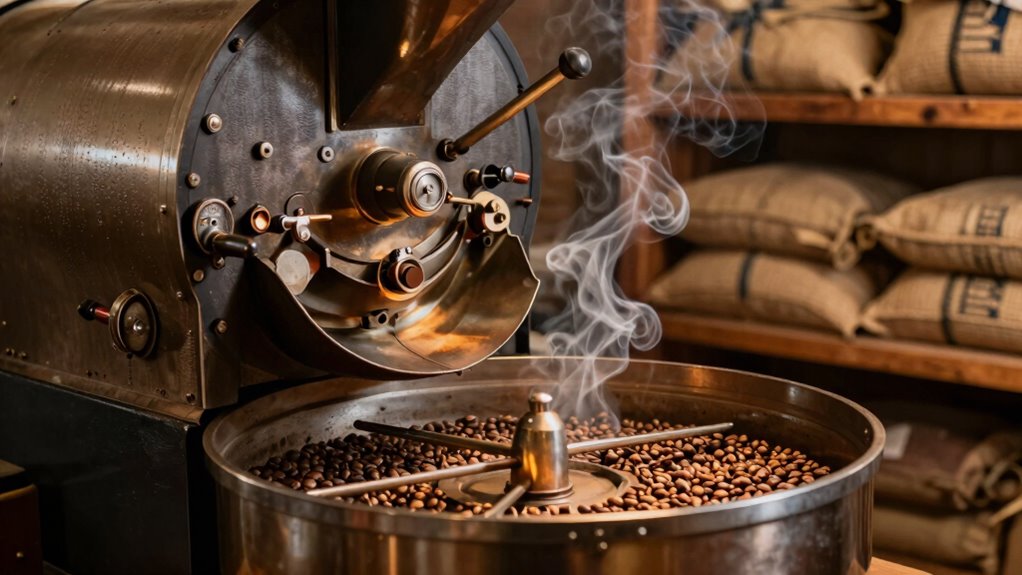
Once you’ve chosen your green beans, the next step involves picking the right roasting equipment choices. Your options range from simple stovetop pans to dedicated home roasting machines. If you’re just starting out, a cast-iron skillet or a popcorn popper can work well, offering a straightforward way to learn the basics. However, if you plan to roast frequently or want more control over the process, investing in a dedicated coffee roaster might be worthwhile. These machines often come with temperature controls and chaff collection systems, making it easier to achieve consistent results. Whichever equipment you choose, verify it heats evenly to prevent uneven roasting and potential scorch marks. Proper ventilation is also essential, as roasting releases smoke and chaff that can quickly fill your kitchen.
As you move into the actual roasting, your equipment choices influence your technique. For example, with a popcorn popper, you’ll need to manually stir the beans and monitor the process closely. With a drum roaster, you can set the temperature and let the machine do much of the work. Regardless of the equipment, keep a close eye on the color change of your beans, from green to yellow, then to light brown, and finally to darker shades for a darker roast. Listening for the first and second crack sounds will help you gauge the roast level. Your green bean selection and roasting equipment choices are interconnected; selecting quality beans makes it easier to develop your preferred flavor profile, while the right equipment helps you control the roast to bring out those flavors.
In the end, both careful green bean selection and thoughtful equipment choices are essential for mastering home coffee roasting. They allow you to craft beans that are fresh and tailored to your taste, giving you control over every stage of the process. With practice, you’ll refine your technique and develop a personal touch that transforms simple green beans into aromatic, flavorful coffee right from your own kitchen.

Neretva Espresso Grinder, 2 in 1 Professional Coffee Bean Grinder Stainless Steel Suit 51~58mm Portafilter Burr Coffee Grinder 30 Precise Setting&Anti-Static for Espresso/French Press/Drip/Moka-Silver
PROFESSIONAL CONICAL BURR COFFEE GRINDER- WIth new upgraded 3.0 conical burr grinding technoloy, the coffee grinder ensures that...
As an affiliate, we earn on qualifying purchases.
Frequently Asked Questions
What Equipment Is Best for Home Coffee Roasting?
For home coffee roasting, you should choose roasting equipment options that suit your needs and space. A popcorn popper, dedicated roaster, or even a cast-iron skillet can work well. When selecting green bean options, look for high-quality, fresh beans. Your choice of equipment impacts how evenly you roast, so pick something that allows you to control heat and airflow. This way, you can enjoy consistently delicious roasted beans at home.
How Do I Store Roasted Beans Properly?
Imagine sealing in the rich aroma of your freshly roasted beans. To store them properly, use an airtight container in a cool, dark place to preserve their freshness. Avoid clear jars or the fridge, as temperature swings and light can degrade flavor. Follow these storage tips to keep your beans vibrant and flavorful, ensuring each brew delivers the same delightful aroma and taste as the day you roasted them.
Can I Roast Different Coffee Bean Varieties at Home?
Yes, you can roast different coffee bean varieties at home. Experimenting with varietal flavors is rewarding, but keep in mind that bean freshness impacts flavor, so use fresh beans for the best results. Each variety may roast differently, so adjust your approach accordingly. Tasting the unique characteristics of each bean helps you refine your technique and truly enjoy the diverse flavors that different coffee varieties offer.
How Long Does the Roasting Process Typically Take?
Roasting your beans usually takes about 10 to 15 minutes, depending on your roasting duration and heat control. Did you know that even a minute’s difference in roasting time can substantially change the flavor? You need to carefully monitor heat control throughout the process to achieve your desired roast level. By paying close attention, you’ll ensure your beans reach that perfect balance of aroma, flavor, and body.
Is Home Roasting Safe Without Professional Training?
You can safely roast coffee at home without professional training if you prioritize home safety and understand roasting risks. Always use proper equipment in a well-ventilated area, keep a fire extinguisher nearby, and stay attentive during the process. Educate yourself on common roasting dangers like overheating or fires, and never leave your setup unattended. With caution and preparation, you can enjoy roasting coffee safely and effectively.

Coffee Grinder, Viesimple Gen 4, Single Dose Burr Coffee Grinders with Magnetic Dosing Cup, Electric Coffee Bean Grinder with Anti-Static Design, Espresso Grinder Compact & Quiet for Home Use Black
THE DO-IT-ALL GRINDER:The electric coffee grinder is a powerful all-purpose coffee grinder featuring 5-blade of 48 mm conical...
As an affiliate, we earn on qualifying purchases.
Conclusion
Now that you understand the 5 essential stages of home coffee roasting, you’re ready to start your journey. Remember, roasting your own beans not only saves money but also gives you a unique flavor experience. Did you know that the global coffee industry produces over 10 million tons annually? By roasting at home, you’re part of a movement that values freshness and craftsmanship. So, go ahead—embrace the process and enjoy your perfect cup every time!

Fellow Opus Conical Burr Coffee Grinder – Electric Espresso Grinder for Home Use, 41 Adjustable Settings for Drip, French Press, Cold Brew & More, 40mm Stainless Steel Burrs, Matte Black
THE DO-IT-ALL GRINDER: Opus is a powerful all-purpose grinder that grinds for the full range of coffee brewing...
As an affiliate, we earn on qualifying purchases.

Fresh Roast SR800 Coffee Roaster – Roast Coffee at Home – Variable Heat and Fan Control – Digital Display – Roasts 6–8 oz (170–226g) Per Batch – Easy to Use – Fast Roast Time
Fresh and flavorfull coffee guaranteed - Why roast coffee at home? Commercially roasted whole bean coffee starts to...
As an affiliate, we earn on qualifying purchases.