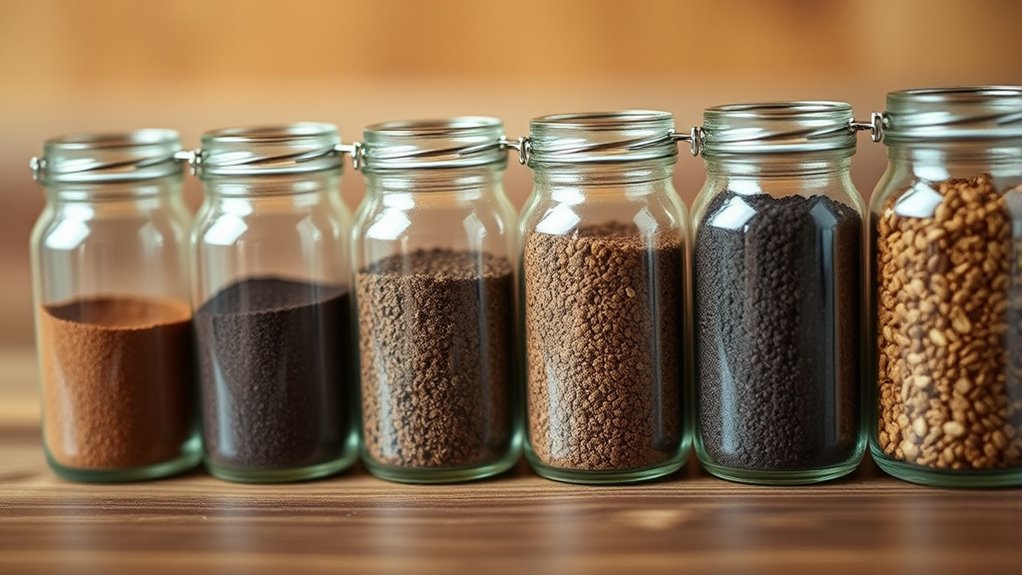

Choosing the right grind size for your brewing method is key to a great cup. For espresso, go very fine to guarantee proper pressure extraction. French press and cold brew need coarser grinds to slow down extraction and avoid over-brewing. Medium to medium-coarse is perfect for drip coffee, while Chemex or pour-over often use medium grounds for balanced flavor. Keep experimenting with different sizes to hit that perfect brew—more details are just a step away.
Key Takeaways
- Different brewing methods require specific grind sizes to optimize extraction and flavor; for example, espresso needs a fine grind, while French press uses coarse grounds.
- Matching grind size to brew method ensures proper water flow, bloom, and extraction time, preventing under- or over-extraction.
- Use a grind chart to select the appropriate particle size for each method, improving consistency and overall coffee quality.
- Fine grinds increase surface area for quick extraction in espresso, whereas coarse grinds slow down extraction for methods like cold brew.
- Properly matched grind size enhances aroma, flavor, and body, providing a balanced and satisfying coffee experience.
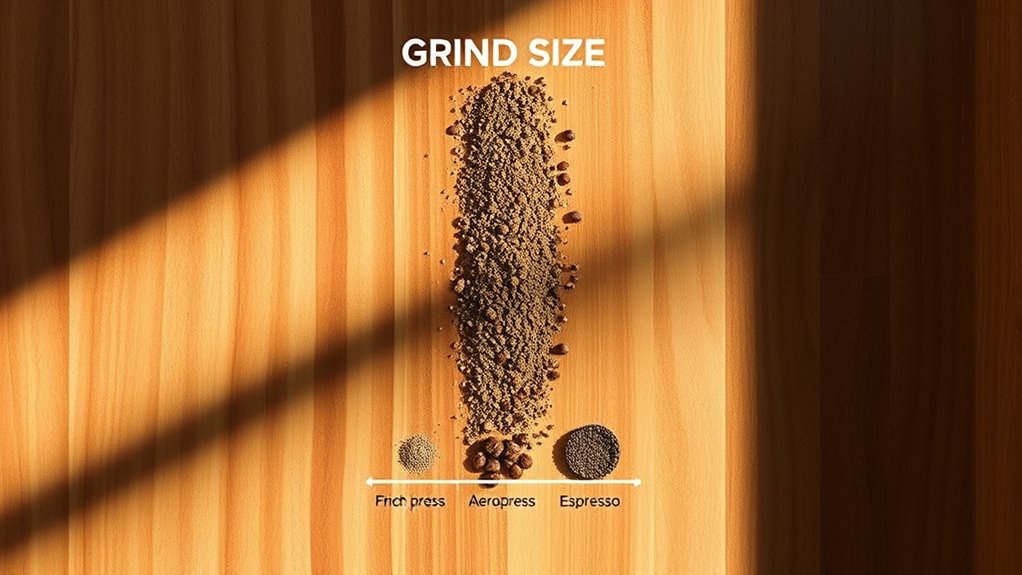
Ever wondered how the right grind size can make or break your coffee experience? It’s a vital factor because it directly influences how your coffee extracts, affecting flavor, aroma, and overall quality. When you’re preparing coffee, the grind size determines how quickly water interacts with the coffee grounds. Getting this just right can mean the difference between a perfectly balanced brew and one that’s over or under-extracted.
The right grind size is essential for balanced, flavorful coffee extraction.
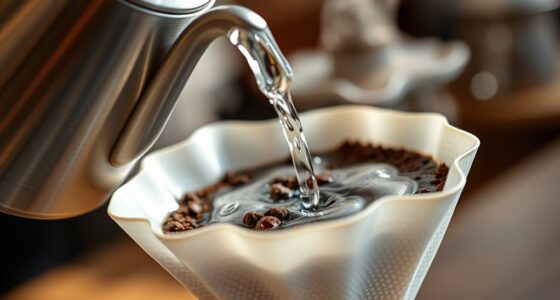
One of the most important stages in brewing coffee is the bloom phase. During this initial step, you pour hot water over the grounds, causing them to release carbon dioxide and swell. The size of your grind significantly impacts this process. A medium or coarse grind, for example, allows water to flow evenly through the grounds during the bloom, ensuring proper expansion and release of gases. If your grind is too fine, the bloom phase can become sluggish because water struggles to penetrate the grounds evenly, leading to uneven extraction. Conversely, a grind that’s too coarse might result in a weak bloom, which can cause issues down the line. The bloom phase sets the stage for extraction, so a well-executed bloom helps maximize extraction time—the period during which water interacts with the coffee to dissolve flavors. When the grind size is correctly matched to your brewing method, the extraction time becomes consistent, allowing for a balanced flavor profile. Too short, and you risk under-extraction, leading to sour or watery notes; too long, and you risk over-extraction, producing bitter or harsh flavors.
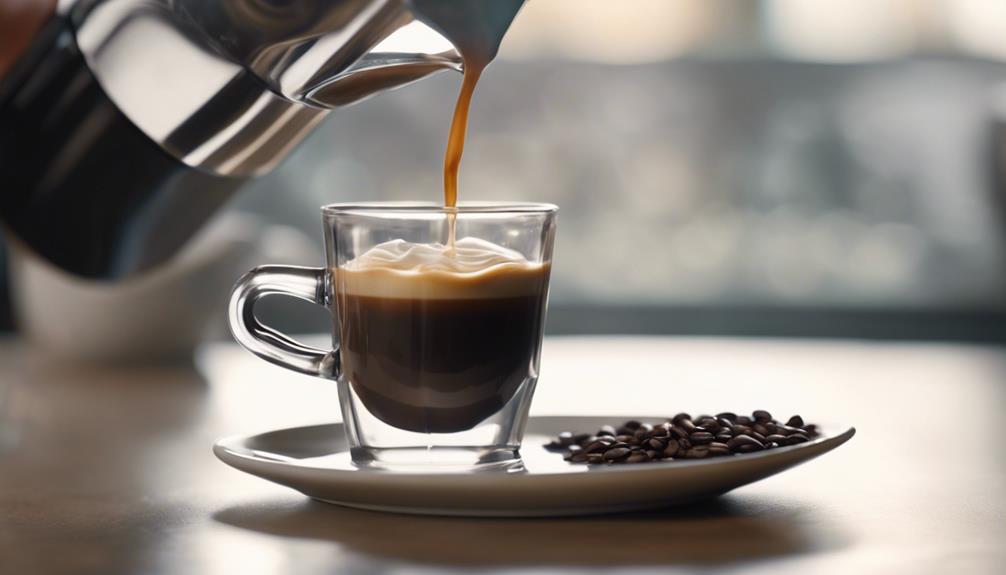
Understanding how grind size affects extraction time is key to mastering your brew. For example, espresso demands a very fine grind because the water passes through the coffee quickly under high pressure. This short extraction time requires a precise, even grind to ensure the water extracts all the rich flavors within seconds. On the other hand, French press or cold brew methods use coarser grinds, which extend extraction time and prevent over-extraction. These larger particles create more resistance, allowing for a slower, more controlled extraction, which yields a fuller body and richer taste. Additionally, the consistency of grind size plays a crucial role, as uneven particles can lead to uneven extraction and inconsistent flavor.
In essence, matching your grind size to your brewing method isn’t just about convenience—it’s about control. It’s about guaranteeing your coffee’s bloom phase occurs effectively and that extraction time is just right to unleash the full potential of your beans. When you pay attention to these details, you’ll find that your coffee consistently turns out better—more flavorful, aromatic, and satisfying. It’s a simple adjustment that can elevate your entire coffee experience, helping you brew with confidence and precision every single time.
Frequently Asked Questions
How Does Grind Size Affect Brewing Time?
Your grind size directly impacts brew time; a coarser grind results in a shorter brew time, while a finer grind extends it. Consistent grind size guarantees even extraction, preventing over- or under-brewing. If your grind is inconsistent, it can lead to unpredictable brew times and uneven flavor. Adjusting your grind to match your brewing method helps control brew time and improves overall flavor, making your coffee experience more enjoyable.
Can I Adjust Grind Size During Brewing?
You can adjust grind size during brewing, but it’s not ideal. Small changes can impact extraction, so aim for consistent grind size and freshly ground coffee for the best flavor. If you notice your brew’s too weak or bitter, slightly tweaking the grind size may help, but do so gradually. Keep your coffee bean freshness high and maintain grind size consistency for peak results and better control over your brew.
What’s the Best Grinder Type for Precise Grind Sizes?
Think of your grinder as a master sculptor. A burr grinder is like a precision chisel, offering consistent, fine-tuned control over grind sizes, perfect for espresso or pour-over. In contrast, a blade grinder is more like a rough hammer, less precise and ideal for quick, coarse grinds. For the best results, choose a burr grinder to craft each cup with artistry and exactness.
How Does Altitude Impact Grind Size Choices?
Altitude effects can influence your grind size choices because lower air pressure at higher elevations causes water to boil at a lower temperature, affecting extraction. You might need a slightly finer grind to compensate for quicker extraction, or a coarser grind if extraction becomes too bitter. Adjusting grind size based on altitude guarantees your brew maintains ideal flavor, so experiment to find the perfect balance for your specific location.
Are There Health Concerns With Very Fine or Coarse Grinds?
Think of grind size safety as a delicate dance—you want to avoid stepping on toes. Very fine grinds can cause over-extraction, leading to bitter flavors and potential health concerns like increased acrylamide formation. Coarse grinds, on the other hand, might produce under-extracted coffee, which can cause gastrointestinal discomfort. For ideal coffee health and taste, stick to recommended grind sizes, ensuring you’re not compromising safety for flavor.
Conclusion
Now that you know how to match your grind size to your brew method, you’ll brew better coffee every time. Did you know that using the right grind can improve extraction efficiency by up to 30%? That means richer flavor and fewer bitter notes. So, next time you brew, remember: the perfect grind isn’t just a detail—it’s the secret to your best cup yet. Happy brewing!