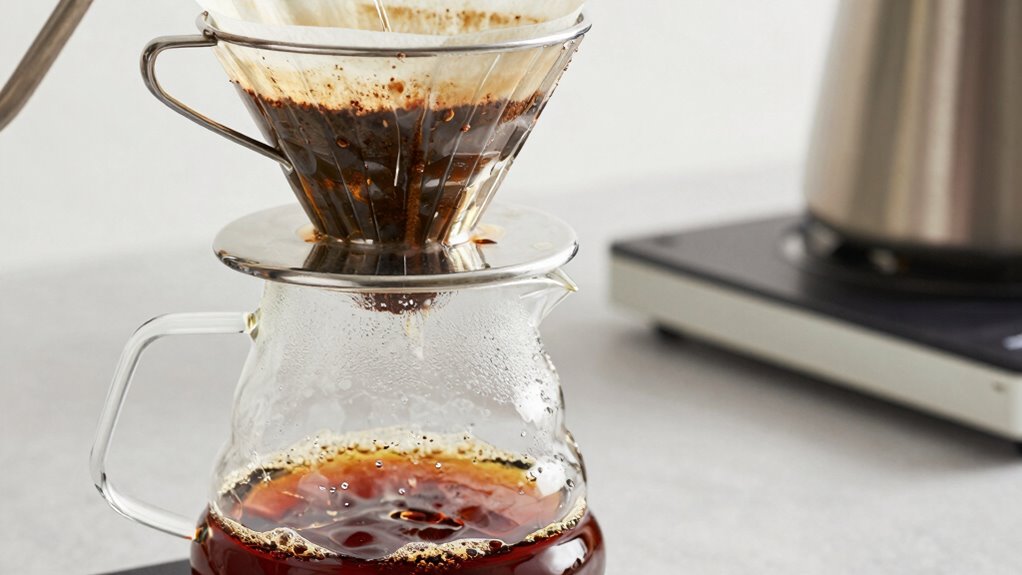
If your drip coffee tastes flat, the most common fix is to check your water-to-coffee ratio. Using too much water can dilute flavors, while too little causes over-extraction and bitterness. Finding the right balance guarantees your brew is flavorful and well-rounded. Precise measurements with a scale help you adjust consistently. Keep experimenting with your ratio, and you’ll discover richer, more vibrant tastes—by understanding this key factor, you’ll make better coffee every time.
Key Takeaways
- An incorrect water-to-coffee ratio can dilute flavors, making your coffee taste flat and weak.
- Using too much water results in under-extraction, dulling the coffee’s natural aroma and flavor.
- Too little water causes over-extraction, which can lead to a dull, overly bitter taste that feels flat.
- Precise measurement of coffee and water ensures balanced extraction and vibrant flavor.
- Adjusting the ratio based on brew method and coffee type helps restore full-bodied, flavorful drip coffee.
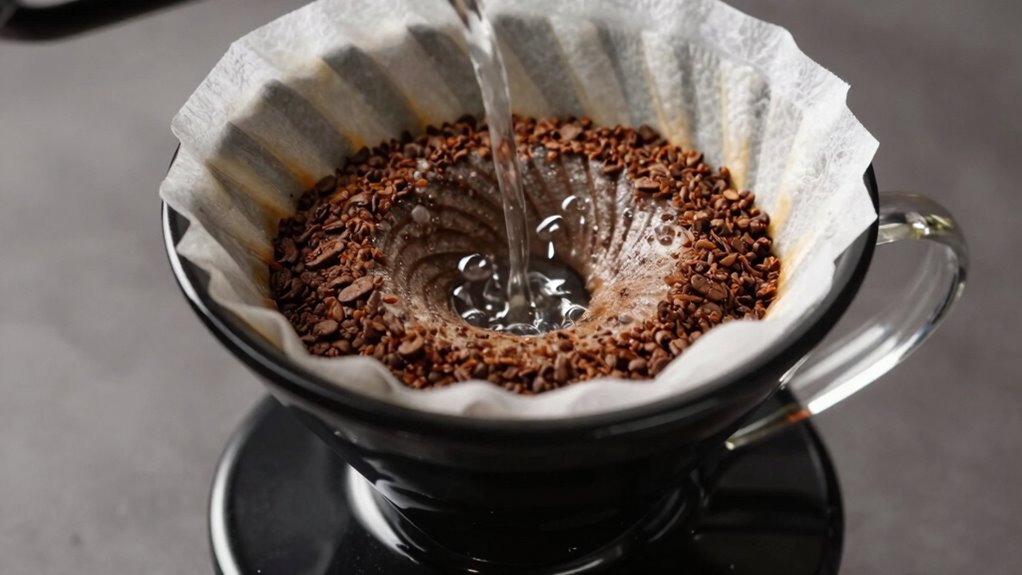
The water-to-coffee ratio is a crucial factor that can make or break your brew’s flavor. When you’re aiming for a rich, balanced cup, understanding how this ratio impacts brew strength and extraction balance is essential. If your coffee tastes flat or weak, it’s often because the ratio isn’t optimized. Too much water dilutes the coffee’s flavors, resulting in a watered-down taste, while too little water can lead to over-extraction, making your brew bitter or overly intense. Striking the right balance ensures that your coffee’s true character shines through without being overpowered or muted.
Getting the ratio right influences the brew strength—how intense or mild your coffee feels on the palate. If you use too much water relative to coffee grounds, the brew will be weak, lacking depth and body. Conversely, if you’re too conservative with water, the resulting coffee could be overly strong or harsh, masking subtle flavors. The key is to find that sweet spot where the strength complements the beans’ inherent qualities. This isn’t just about personal preference; it’s about creating a consistent extraction process that extracts desirable flavors while leaving behind undesirable bitterness or sourness.
Extraction balance is another critical factor influenced by the water-to-coffee ratio. Proper extraction occurs when water interacts with coffee grounds in a way that dissolves the right amount of soluble compounds. When you have too much water, extraction becomes uneven—some flavors get washed out, leaving a bland taste. Too little water, and you risk over-extracting, which brings out harsh or bitter notes. Adjusting the ratio helps ensure that the extraction process is smooth and well-rounded, giving you a brew that’s both flavorful and balanced. You want your coffee to be neither under-extracted nor over-extracted, and that’s where control over this ratio becomes vital.
In practice, measuring your coffee and water with precision can dramatically improve your brewing results. Use a scale to weigh your grounds and water accurately, following recommended ratios for your brewing method. Experiment a little—small tweaks can greatly impact brew strength and extraction balance. Remember, consistency is key. Once you find the right ratio, stick with it, and your coffee will taste consistently better—more vibrant, more balanced, and less flat. Additionally, understanding the science behind sound waves and their influence on extraction can help optimize your brewing process further. Understanding and adjusting the water-to-coffee ratio empowers you to craft a cup that truly highlights your beans’ potential.
Frequently Asked Questions
How Does Water Temperature Affect Coffee Flavor?
You’ll notice that water temperature impacts your coffee flavor because it influences water density and thermal stability. When water is too hot, it extracts bitter compounds, making your coffee taste flat or harsh. Cooler water may under-extract, leaving flavors dull. Ideally, you want water around 195-205°F to maintain thermal stability, ensuring ideal extraction. This balance helps release the coffee’s full flavor profile without over- or under-extracting.
Can the Type of Water Impact Coffee Taste?
Yes, the type of water you use impacts your coffee’s flavor. Water mineral content affects extraction, so hard water with high minerals can make coffee taste bitter or flat. Using water filtration helps remove impurities and excess minerals, allowing the true flavors to shine. Opt for filtered water with balanced mineral levels to enhance your coffee’s richness and clarity, ensuring a better overall taste experience.
What Brewing Methods Are Most Sensitive to Water Ratio?
Think of brewing as a delicate dance—certain methods, like pour-over and espresso, are especially sensitive to water ratio. You must pay close attention to water quality and how it interacts with your brewing equipment. Too much or too little water can turn your coffee into a flat disappointment, so measure precisely. These methods require precision, almost like tuning an instrument, to reveal the full flavor potential.
How Does Grind Size Influence Extraction With Different Ratios?
Your grind size and consistency directly affect extraction when you change water-to-coffee ratios. Finer grinds increase surface area, extracting more flavor quickly, which can lead to over-extraction if the ratio is high. Larger, coarser particles extract more slowly, so adjusting the ratio helps balance flavor. Keep your particle size uniform for even extraction, and tweak the ratio to match your grind size for ideal, well-rounded coffee.
Is It Better to Measure Water and Coffee Precisely?
Measuring water and coffee precisely is essential for achieving coffee clarity and brewing consistency. While it might seem tedious, using a scale guarantees your ratios stay accurate, preventing flat or overly bitter brews. Precise measurements help you fine-tune flavor balance, making every cup reliably great. Think of it as the foundation of good coffee—without it, even the best beans can fall flat. So, invest in good tools for perfect results.
Conclusion
If your drip coffee still tastes flat, tweaking the water-to-coffee ratio could be your game-changer. Don’t worry if it feels like a small change—sometimes, a slight adjustment makes all the difference. Remember, brewing is about personal preference, so experiment until you find the perfect balance for your taste buds. With just a little fine-tuning, you’ll enjoy a richer, more satisfying cup every time.