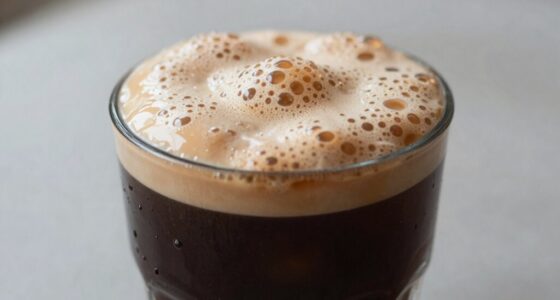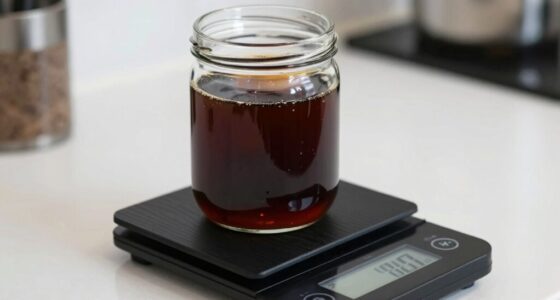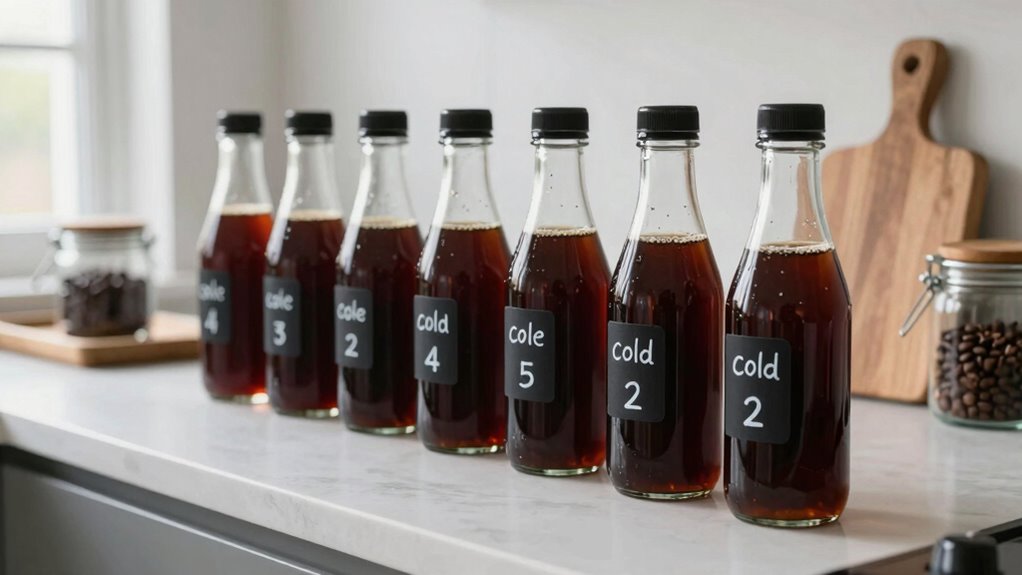

To keep your cold brew safe and tasty, store it in a clean, airtight container in the refrigerator below 40°F and consume it within 5 to 7 days. Proper storage prevents bacterial growth and flavor loss. If it smells sour or looks off, it’s best to discard it. Freezing in ice cubes can extend its life but may slightly alter the flavor. For more tips on maintaining its freshness, keep going.
Key Takeaways
- Consume refrigerated cold brew within 5 to 7 days for optimal freshness and flavor.
- Store cold brew in airtight containers in the refrigerator below 40°F (4°C).
- Signs of spoilage include sour smell, off odor, or changes in appearance; discard if present.
- Freezing cold brew in ice cubes extends shelf life but may affect flavor slightly.
- Always prioritize safety by discarding cold brew if there are signs of spoilage or after the recommended storage period.

Cold brew coffee is known for its smooth, rich flavor and convenient make-ahead preparation, but understanding how long it stays fresh is key to enjoying it at its best. When you keep your cold brew properly stored, you preserve its flavor and ensure it remains safe to drink. It’s essential to follow the right storage best practices because exposure to air, light, and heat can accelerate flavor degradation and promote bacterial growth.
To maximize freshness, always transfer your cold brew to a clean, airtight container. This helps prevent oxidation, which can dull the flavor and introduce unwanted off-notes. Keep the container sealed tightly after each use to minimize air contact. Store your cold brew in the refrigerator at a consistent temperature, ideally below 40°F (4°C). This cold environment slows down microbial activity and keeps your brew tasting fresh longer. Avoid leaving it on the countertop or in warm places, as fluctuating temperatures can cause spoilage and compromise flavor quality.
Proper storage is about more than just the container; your handling habits matter too. Always pour out the amount you plan to drink and return the rest to the fridge promptly. This reduces the time the brew spends at room temperature, where bacteria can flourish. If you notice any change in smell, appearance, or taste—such as a sour or off odor—it’s best to discard the remaining cold brew. These signs indicate that microbial activity has begun, and drinking it could pose health risks.
In terms of flavor preservation, consuming your cold brew within a week of brewing is generally recommended. While it may still be safe to drink slightly beyond this window, the flavor will likely diminish, and you might notice a bitter or stale taste. To enjoy the best possible flavor, consider using your cold brew within five to seven days. For longer storage, you could freeze individual portions in ice cube trays, but keep in mind that freezing may slightly alter the flavor and texture once thawed.

Takeya Tritan Cold Brew Coffee Maker – Airtight Pitcher with Leak-Free Lid – BPA-Free Cold Brew Maker with Silicone Handle – Dishwasher-Safe Pitcher for Homemade Cold Brew – 1 Quart, Black
The Deluxe Cold Brew Coffee Maker is a durable BPA Free Tritan pitcher with an airtight lid and…
As an affiliate, we earn on qualifying purchases.
As an affiliate, we earn on qualifying purchases.
Frequently Asked Questions
Can I Freeze Cold Brew to Extend Its Shelf Life?
Yes, you can freeze cold brew to extend its shelf life. Use freezing techniques like pouring it into ice cube trays or airtight containers, leaving some space for expansion. When you’re ready to enjoy it, follow thawing guidelines by transferring it to the fridge and letting it thaw slowly overnight. This way, you preserve its flavor and freshness without compromising quality.
Does Adding Milk or Creamer Affect Cold Brew’s Freshness?
Imagine your cold brew as a delicate garden, thriving in a fresh morning dew. Adding milk or creamer introduces a new element—like a gentle rain—that can hasten milk spoilage if left unchecked. Milk spoilage causes your drink to sour faster, while creamer stability varies based on ingredients. To keep your cold brew tasting its best, consume it within a day or two after adding dairy, and store it properly.
How Can I Tell if Cold Brew Has Gone Bad?
You can tell if cold brew has gone bad by checking its storage temperature and flavor. If it smells sour or off, tastes bitter, or has a noticeable flavor change, it’s likely spoiled. Also, if it’s been stored at room temperature for more than 24 hours, discard it. Always store cold brew in the fridge, ideally below 40°F, to maintain freshness and prevent spoilage.
Is Store-Bought Cold Brew Safer Than Homemade?
Store-bought cold brew tends to be safer than homemade because it’s usually processed and packaged under strict hygiene standards, reducing contamination risks. However, you should still pay attention to storage duration—typically up to two weeks in the fridge—and always check for signs of spoilage before drinking. Homemade cold brew may have a shorter shelf life and higher contamination risks, so you need to be more cautious and consume it promptly.
What Are the Signs of Bacterial Growth in Cold Brew?
You’ll notice signs of bacterial growth in your cold brew through fermentation indicators like a sour smell or fizzy bubbles, indicating fermentation is occurring. Mold development appears as fuzzy patches or discoloration on the surface. If you see any of these signs, it’s best to discard the cold brew. Always trust your senses—if it smells or looks off, don’t risk drinking it, as bacteria and mold can cause health issues.
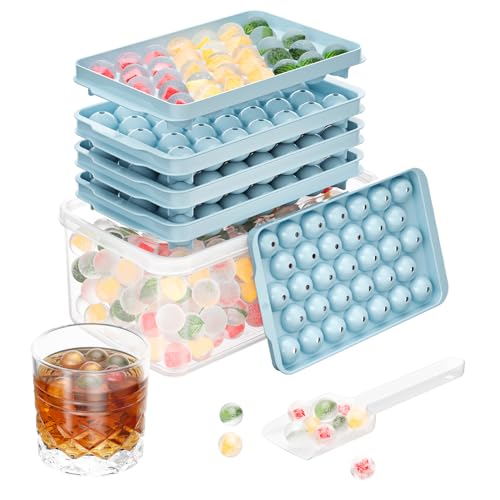
Optish 3 Pack Ice Trays for Freezer, 99 PCS Ice Cube Tray with Lid and Bin, Round Ice Cube Mold, Circle Ice Maker for Chilling Drinks (0.8 inch, Blue)
Easy to Use: Simply Put water into ice cube tray, the excess water will flow out through the…
As an affiliate, we earn on qualifying purchases.
As an affiliate, we earn on qualifying purchases.
Conclusion
Now that you know how long cold brew stays fresh, imagine pouring a glass on a sunny morning, the rich aroma swirling as you take your first sip. If it’s been sitting too long, that vibrant color dulls, and the flavor loses its spark, like a sunset fading into dusk. To enjoy that bold, smooth taste, keep your cold brew refrigerated and sip it within the recommended time. Cheers to savoring every drop at its best!

Stock Your Home Half Gallon Glass Bottle with Lid (1 Pack) 64 Oz Jugs and 3 White Caps, Reusable Food Grade Container for Refrigerator, Bottles for Juice, Oat or Plant Milks, Water, Honey
Sustainable Glass: Made of premium quality, lead-free material, our crystal clear glass jugs are a great alternative to…
As an affiliate, we earn on qualifying purchases.
As an affiliate, we earn on qualifying purchases.

Toddy® Cold Brew System
Lifestyle
As an affiliate, we earn on qualifying purchases.
As an affiliate, we earn on qualifying purchases.