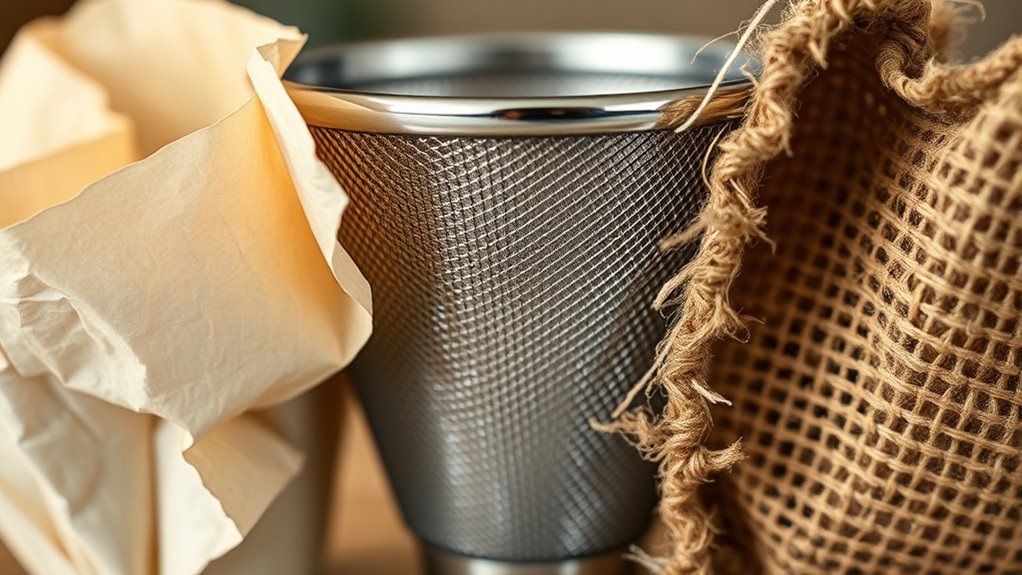

Choosing between paper, metal, and cloth filters affects your coffee’s taste and texture. Paper filters produce a clean, bright flavor by trapping oils and fine particles, making your brew milder and more delicate. Metal filters allow more oils and tiny particles through, creating a richer and fuller-bodied cup with a textured feel. Cloth filters offer a balance, delivering clearer flavors with a smooth softness. To discover how each impacts your favorite brew, explore beyond the surface.
Key Takeaways
- Paper filters produce a lighter, crisper cup by trapping oils, highlighting subtle flavor nuances.
- Metal filters allow more oils and particles, resulting in a richer, fuller-bodied, and sometimes grittier taste.
- Cloth filters balance clarity and richness, offering a smooth yet slightly complex flavor profile.
- The microstructure of cloth filters influences flavor extraction, adding unique softness and depth.
- Reusable filters (metal and cloth) often yield bolder, more textured flavors compared to the cleaner profile of paper filters.
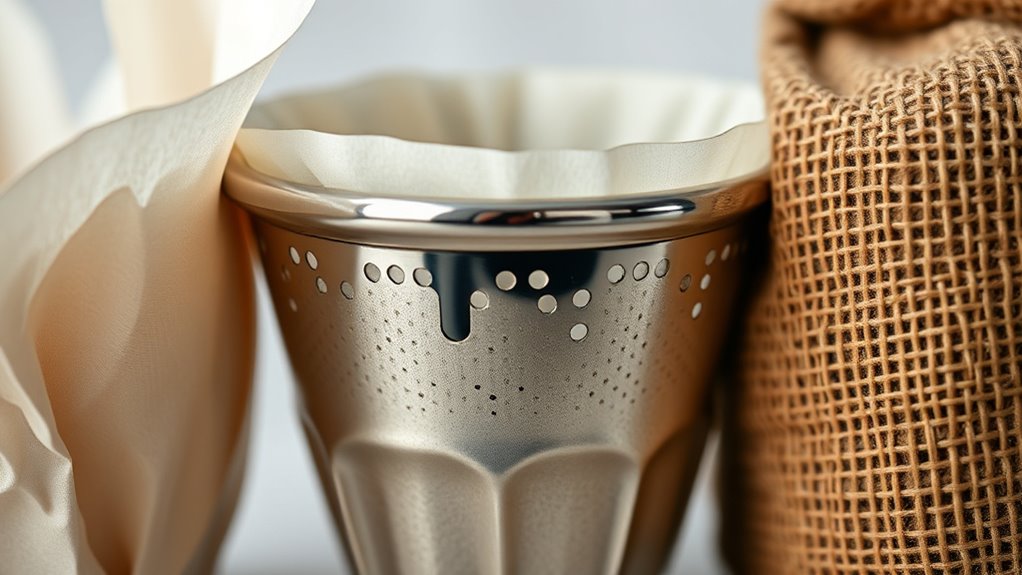
When choosing a coffee filter, understanding the differences between paper, metal, and cloth options can help you make the best choice for your brewing style. Each type influences the final cup’s brew strength and flavor clarity in distinct ways. If you prefer a lighter, cleaner brew, paper filters are your go-to. They trap most oils and fine particles, resulting in a cup with a crisp, bright flavor profile. The clear distinction between flavors allows you to taste subtle notes that might be masked with other filters. Because paper filters absorb some oils, your coffee’s overall brew strength tends to be slightly milder, but the clarity makes it easier to identify individual flavor nuances. This option is ideal if you appreciate a clean, smooth cup without any sediment or oily residue. Additionally, paper filters are often biodegradable, making them an environmentally friendly choice.
Metal filters, on the other hand, provide a different experience. Made typically from stainless steel or gold-plated mesh, they are reusable and durable. They allow more oils and fine particles to pass through, often leading to a richer, fuller-bodied brew. This increased oil content enhances the brew’s strength, giving you a more robust and intense flavor. The flavor clarity, however, is less pronounced because the oils and tiny particles contribute to a more textured, sometimes slightly gritty mouthfeel. If you enjoy a bolder coffee with more body and depth, a metal filter might be your best choice. Plus, since they don’t absorb oils like paper filters, you get a more authentic representation of the coffee’s original oils, which can elevate the taste complexity.
Cloth filters offer a middle ground. Usually made from cotton or other natural fibers, they are reusable and environmentally friendly. Cloth filters tend to produce a brew that balances strength and clarity. They allow some oils through but filter out the finest particles, resulting in a smooth yet rich cup. The flavor clarity isn’t as stark as with paper filters, but it’s sharper than with metal. You’ll notice a good balance of body and subtlety, making cloth filters popular among those who want a versatile brewing experience. They also tend to retain some oils, contributing to a fuller flavor without sacrificing too much clarity. The different textures and materials of cloth filters can influence the taste, often adding a slight softness that enhances the overall mouthfeel. Some experts also suggest that the microstructure of cloth filters can influence flavor extraction, providing a unique taste profile.
Frequently Asked Questions
Which Filter Type Is Most Eco-Friendly?
You’ll find that cloth filters are the most eco-friendly because they’re reusable, reducing waste and lowering environmental impact over time. Metal filters also score high due to their durability and recyclability considerations, although they may require more energy to produce. Paper filters, while convenient, are less eco-friendly since they’re disposable and generate waste. Overall, choosing reusable cloth or metal filters helps minimize your environmental footprint.
Do Filters Impact Coffee Temperature?
Filters do impact coffee temperature by influencing temperature stability. Metal filters, with their heat-retaining material, keep your brew warmer longer, like a cozy blanket wrapping your cup. Cloth filters moderate flow, preventing rapid cooling and maintaining warmth. Paper filters, however, can cause slight temperature drops as they absorb some heat, making your coffee less hot over time. So, your choice of filter material directly shapes the warmth and enjoyment of your coffee.
How Do Filters Affect Brewing Time?
Filters can influence brewing time by affecting how quickly water passes through the coffee. A clogged filter slows down extraction, leading to longer brewing times and potential inconsistencies. Metal filters tend to allow faster flow, reducing brewing time, while paper filters may cause slight delays due to their finer structure. To maintain brewing consistency, verify your filters are not clogged and are suitable for your brewing method.
Are Cloth Filters Reusable or Disposable?
Cloth filters are reusable, making them eco-friendly and cost-effective. You simply rinse and dry them after each use, but you’ll want to address reusability concerns by cleaning thoroughly to prevent buildup. When it’s time to dispose of a cloth filter, you can wash it or, if worn out, replace it. Proper disposal methods include recycling if possible or composting, ensuring you minimize waste and maximize sustainability.
Can Filter Material Influence Caffeine Extraction?
Yes, filter material can influence caffeine extraction. Different materials, like paper, metal, or cloth, have varying porosity and surface properties, affecting how quickly and efficiently caffeine passes through. For example, metal filters typically allow more caffeine to extract compared to paper or cloth filters, which may trap some caffeine. Your choice of filter material can consequently impact the strength and flavor profile of your brew, making it a key factor in your coffee experience.
Conclusion
Ultimately, your choice of filter fuels flavor, fun, and fuss. Paper filters provide pure, pristine sips, while metal filters maximize mouthfeel with minimal fuss. Cloth filters combine charm with charm, creating a charmingly complex cup. Decide based on your desired drink dynamics—delicate, bold, or balanced. Whichever filter you favor, find your flavor, fuel your fascination, and forge your perfect coffee experience. Your filter, your flavor, your fun—freely, fearlessly, and fully.