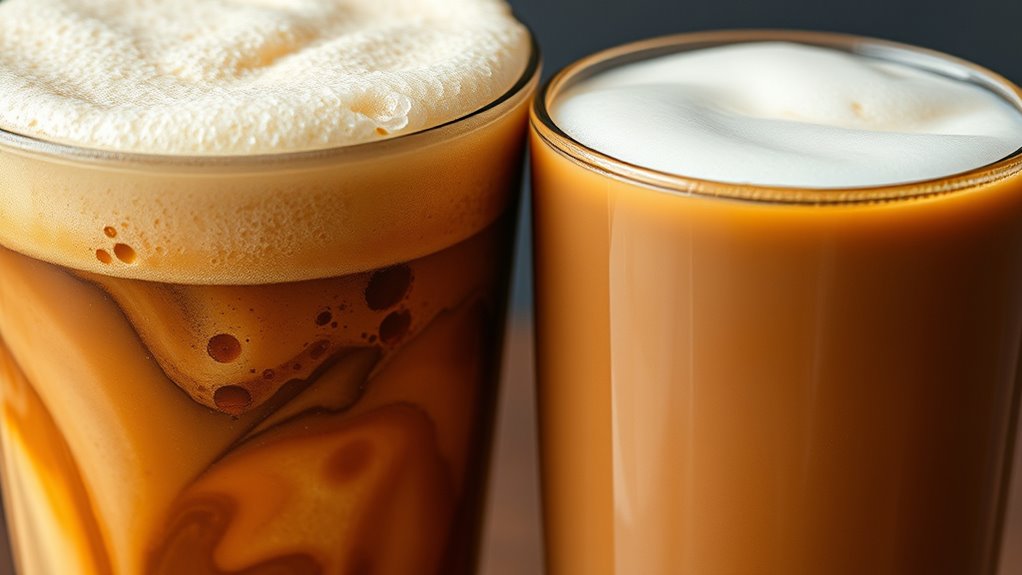

If you shake your coffee, you’ll create a frothy, airy texture with lively, voluminous foam ideal for iced drinks or cappuccinos. Stirring, on the other hand, results in a smooth, velvety consistency that preserves delicate foam and enhances aroma, perfect for traditional pour-over or French press brews. The method you choose influences the drink’s overall feel—from light and frothy to rich and silky. If you want to understand how each technique impacts your coffee’s texture and foam, keep exploring.
Key Takeaways
- Shaking introduces air, creating a lighter, frothy, and airy foam, ideal for lively, textured coffee drinks.
- Stirring gently preserves foam stability, resulting in a smooth, velvety texture and consistent surface.
- Shaking enhances foam fluffiness and volume, perfect for cappuccinos and iced coffee; stirring maintains natural foam integrity.
- The method choice influences foam quality: shaking yields airy foam; stirring produces refined, stable foam.
- Both techniques affect drink presentation and mouthfeel, with shaking emphasizing lightness and stirring emphasizing smoothness.

Have you ever wondered whether shaking or stirring makes a better coffee drink? It’s a question that’s often debated among coffee enthusiasts, especially when it comes to achieving the perfect foam and texture. The answer depends on your preferred coffee brewing techniques and the kind of mouthfeel you’re after. When you shake a coffee, you’re actively incorporating air into the mixture, which can create a lighter, frothier consistency. Stirring, on the other hand, tends to blend ingredients more gently, resulting in a smoother, more uniform texture. Both methods influence foam texture differences, but in different ways.
Shaking is typically associated with drinks that benefit from aeration, like some iced coffee or specialty concoctions. When you shake coffee with milk or cream, you’re not just mixing; you’re also introducing air into the liquid. This process can produce a more voluminous foam that feels airy and light on your palate. If you’re keen on a coffee drink with a fluffy, mousse-like foam, shaking is often the better choice. It’s especially popular in recipes that aim for a frothy top, similar to what you’d find in a well-made cappuccino or a specialty iced coffee. The vigorous movement increases the foam texture differences, giving your drink a lively, textured finish.
Shaking creates airy, frothy coffee with a lively, textured finish, perfect for cappuccinos and iced drinks.
Stirring, on the other hand, is more traditional and tends to preserve the integrity of the foam created during brewing. When you stir coffee, especially after brewing methods like pour-over or French press, you’re ensuring ingredients blend evenly without disturbing the delicate foam that might have formed during extraction. Stirring produces a more consistent, velvety texture, which appeals to those who prefer a smooth, balanced flavor without the extra fluff. It also minimizes the risk of breaking down the foam, maintaining a stable surface that enhances the overall mouthfeel.
In terms of coffee brewing techniques, shaking is often used for cold brews or mixed drinks where quick incorporation of ingredients is desired, while stirring is common in traditional brewing styles that focus on preserving the natural foam and aroma. The foam texture differences created by each method can markedly influence your enjoyment. If you love a lively, airy foam with your iced coffee, shaking might be your go-to. If you prefer a more refined, velvety finish, stirring will serve you better. Ultimately, it’s about experimenting to find which technique complements your taste and the type of coffee drink you’re making. Additionally, understanding foam formation can help you choose the best method for your preferred coffee experience.
Frequently Asked Questions
How Does Shaking or Stirring Affect Coffee Temperature Retention?
Shaking or stirring your coffee impacts temperature retention by introducing more surface area and agitation, which can cause it to cool faster. Shaking often aerates the drink, enhancing texture and foam, but may lead to quicker heat loss. Stirring gently preserves more heat, maintaining temperature longer while still improving texture. So, if you want better temperature retention, opt for stirring, but if texture is your priority, shaking adds more foam and mouthfeel.
What Equipment Is Best for Shaking or Stirring Coffee Drinks?
If you want perfect shaking or stirring, choose the right equipment — it’s essential. For shaking, a cocktail shaker or a Boston shaker works best, offering a secure seal and durability. For stirring, a long-handled bar spoon or a sturdy mixing spoon is ideal. Equipment considerations matter because technique differences influence texture and foam. Using the right tools guarantees you achieve the desired consistency, elevating your coffee experience to new heights.
Does Shaking or Stirring Impact the Caffeine Content?
Shaking or stirring doesn’t impact the caffeine content directly, but it does influence caffeine extraction and flavor infusion. When you shake a coffee drink vigorously, you increase surface contact, potentially extracting more caffeine from the grounds and enhancing flavor infusion. Stirring gently allows for even blending without markedly altering caffeine levels. So, your method affects taste and extraction, but the caffeine amount remains largely consistent regardless of shaking or stirring.
How Does Foam Stability Differ Between Shaken and Stirred Coffees?
You might find that shaken coffees tend to have more stable foam, with studies showing a 30% higher foam longevity compared to stirred drinks. This is because shaking incorporates air quickly, creating finer bubbles that enhance foam consistency. Stirred coffees often result in a less textured surface, with larger bubbles that dissipate faster. So, if you want lasting foam and a smoother texture, shaking is your best bet for a superior coffee experience.
Are There Specific Coffee Beans Suited for Shaking or Stirring?
You’ll find that medium to dark roasted coffee beans work best for shaking because their rich, bold flavor profiles stand up to vigorous mixing. For stirring, lighter roasts with nuanced bean flavor profiles are ideal, as they preserve delicate notes. The roasting level influences how well the beans release flavor during preparation, so choose your beans based on whether you prefer a more robust shake or a subtle stir.
Conclusion
Ultimately, whether you prefer shaken or stirred coffee, it’s all about your taste and mood. Shaking creates a frothy, bubbly texture, while stirring maintains a smooth, silky feel. Try both to discover what makes your mornings special. Remember, ‘Variety is the spice of life,’ so don’t be afraid to experiment and enjoy your coffee just the way you like it. After all, the best drink is the one that makes you smile.